Alligator Rivers
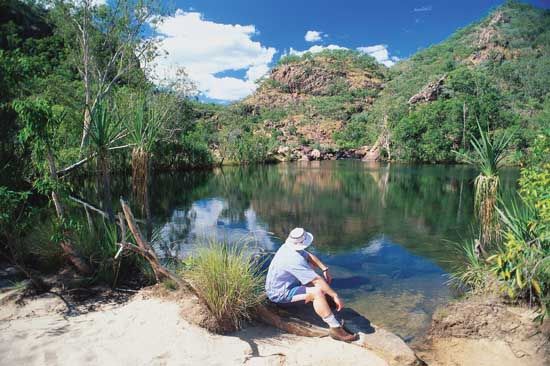
The Alligator Rivers are three perennial rivers located in the northeastern Northern Territory of Australia. They flow into the Van Diemen Gulf, an inlet of…
What is Alligator Rivers?
The Alligator Rivers are three perennial rivers located in the northeastern Northern Territory of Australia. They flow into the Van Diemen Gulf, an inlet of the Timor Sea.
The name is a misnomer; the rivers were named by Captain Phillip Parker King between 1818 and 1820 because he mistakenly believed the crocodiles inhabiting the swampy, jungle-fringed areas were alligators. In reality, alligators are not indigenous to Australia.1
The region consists of three main waterways:
- South Alligator River: Rises near the former uranium mining base of El Sherana and flows north for about 100 miles (160 km).
- East Alligator River: Rises in Arnhem Land and flows northwesterly for nearly 100 miles.
- West Alligator River: Runs for approximately 50 miles (80 km), generally paralleling the South Alligator.1
The area encompasses the famous Kakadu National Park.1
What is the difference between an alligator and a crocodile?
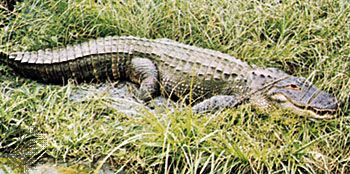
Although alligators and crocodiles share many physical traits—such as long snouts, powerful tails, and bony-plated backs—they belong to different families and can be distinguished by several key characteristics.3
Physical Differences
- Snout Shape: Alligators have a broad, U-shaped snout, whereas crocodiles possess a narrower, V-shaped snout.3
- Teeth: When their mouths are closed, an alligator’s lower teeth are typically hidden. In contrast, a crocodile’s upper and lower teeth interdigitate, making the large fourth tooth on the bottom jaw clearly visible.34
- Color: Alligators generally appear gray or black, while crocodiles tend to be olive or tan.3
Habitat and Behavior
- Environment: Crocodiles are typically found in saltwater habitats, while alligators prefer freshwater areas.3
- Temperament: Crocodiles are generally considered more aggressive than alligators.3
While these reptiles are often feared, many species are currently critically endangered due to habitat loss and overhunting, making conservation efforts essential for their survival.5
What makes Kakadu National Park a significant protected area?
Kakadu National Park is a globally significant protected area in Australia’s Northern Territory, recognized as a UNESCO World Heritage site for its exceptional natural and cultural value.78
Cultural Significance
The park is a vital repository of Aboriginal history, with evidence of human settlement dating back 50,000 years. It contains thousands of rock art sites, some up to 20,000 years old, which hold immense religious and ceremonial importance. Today, the park remains home to several hundred Aboriginal people and is jointly managed by traditional owners and the federal government.78
Natural Diversity
Spanning 7,700 square miles, the park features diverse landforms, including the Arnhem Land plateau, floodplains, and mangrove-lined estuaries. This varied terrain supports extraordinary biodiversity, including over 1,600 plant species, 10,000 types of insects, and hundreds of species of mammals, birds, reptiles, and fish.7
What are some other famous landmarks located in Australia’s Northern Territory?
Beyond Kakadu National Park, Australia’s Northern Territory is home to several other iconic landmarks and protected areas:
- Uluru–Kata Tjuta National Park: This site features Uluru/Ayers Rock, the world’s largest monolith, and the Olgas (Kata Tjuta), a group of weathered rock formations. Both are UNESCO World Heritage sites recognized for their immense cultural and natural significance.79
- MacDonnell Ranges: Extending east and west of Alice Springs, this mountain system is known for its parallel ridges of quartzite and sandstone, as well as spectacular gorges like Simpson Gap and Standley Chasm.8
- Litchfield Park: Located near Darwin, this park is a popular destination for its natural beauty and is managed by the Northern Territory Conservation Commission.9
- Alice Springs Desert Park: Situated in the southern part of the territory, this park showcases the unique flora and fauna of the arid central Australian environment.9
Sources
- Alligator Rivers — Encyclopædia Britannica
- Everglades - Natural environment — Encyclopædia Britannica
- What’s the Difference Between Alligators and Crocodiles? — Encyclopædia Britannica
- crocodile - Distribution and abundance — Encyclopædia Britannica
- crocodile - Annotated classification — Encyclopædia Britannica
- crocodile - Behavior — Encyclopædia Britannica
- Kakadu National Park — Encyclopædia Britannica
- Northern Territory - Sports and recreation — Encyclopædia Britannica
- Uluru/Ayers Rock — Encyclopædia Britannica
- list of cities and towns in Australia - Northern Territory — Encyclopædia Britannica
- Alice Springs — Encyclopædia Britannica
- MacDonnell Ranges — Encyclopædia Britannica
- Northern Territory - Cultural institutions — Encyclopædia Britannica
Published on · 3 min read