Altamira
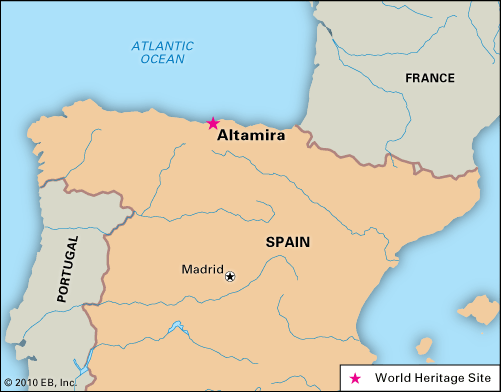
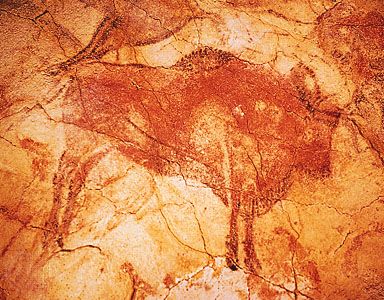
The Altamira cave in northern Spain is renowned for its sophisticated Paleolithic art, which includes a variety of techniques and subjects:
What types of prehistoric art can be found in the Altamira Cave?
The Altamira cave in northern Spain is renowned for its sophisticated Paleolithic art, which includes a variety of techniques and subjects:
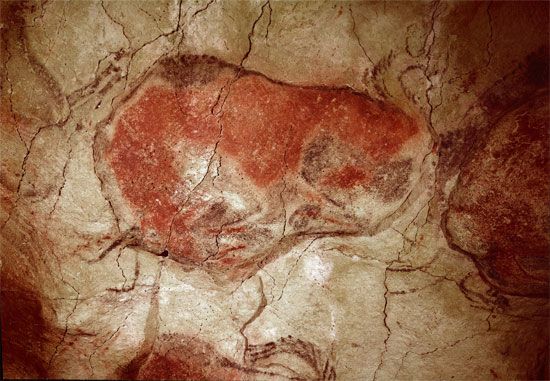
- Paintings and Engravings: The cave features both paintings and engravings, often used in combination. For instance, many bison figures were first engraved into the rock before being filled with color. Artists frequently utilized the natural contours of the cave walls to provide a three-dimensional quality to their work.1
- Pigments: The paintings are executed in a vivid bichrome of red and black, with some violet tones. The black pigment is primarily composed of charcoal.1
- Subjects: The imagery is dominated by bison, but also includes horses, a large doe, and other creatures rendered in simpler styles.
- Human Representations: The cave contains eight anthropomorphic figures, as well as handprints and hand stencils.1
Beyond the walls, archaeologists have also discovered engraved animal shoulder blades within the cave’s vestibule.1
How old are the paintings in the Altamira Cave, and what techniques were used to create them?
The paintings in the Altamira cave are estimated to date from approximately 14,820 to 13,130 years ago, a period associated with the Magdalenian culture.1
Artists employed sophisticated techniques to create these works:
- Combination of Media: Many figures, particularly the iconic bison, were first engraved into the rock surface before being painted.1
- Pigments and Application: The paintings utilize a vivid bichrome of red and black, with some violet tones. The black pigment is primarily composed of charcoal, while other colors were derived from natural earth pigments like ocher. These were applied using various methods, including smearing with hands, dabbing with fur pads to create tonal gradations, and potentially using feathers or frayed twigs for fine details like manes and tails.134
- Exploiting Natural Features: Artists intentionally utilized the natural contours and irregularities of the cave walls to provide a three-dimensional quality and sense of volume to the animals.13
How has modern technology been used to study and document the Altamira Cave paintings?
Modern technology has been essential in both dating and preserving the fragile prehistoric art within the Altamira cave.
- Radiocarbon Dating: Scientists have utilized radiocarbon dating to analyze the charcoal used in the black pigments of the paintings. By the turn of the 21st century, this method allowed researchers to establish a precise chronological range for the ceiling art, dating it to approximately 14,820 to 13,130 years ago.1
- Facsimile Technology: To protect the original site from the environmental damage caused by human presence, experts have created high-fidelity replicas. In 2001, an exact facsimile of the cave’s decorated chamber, entrance, and mouth was opened to the public near the original site. This allows visitors to experience the art without compromising the integrity of the actual cave environment.14
- Conservation Management: Ongoing scientific monitoring has been critical to managing the cave’s climate. Due to the sensitivity of the paintings, the site has undergone periods of closure and restricted access to ensure the long-term preservation of these World Heritage treasures. World Heritage treasures.4
What animals are depicted in the Altamira Cave paintings, and what might this tell us about the local environment during that time?
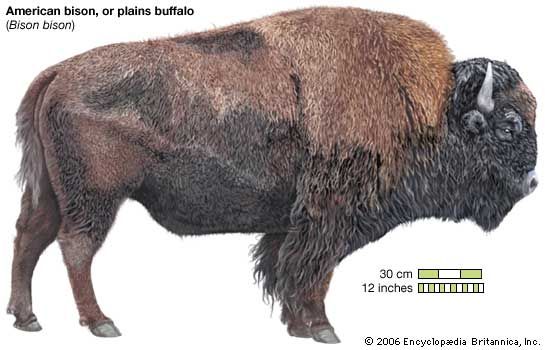
The paintings in the Altamira cave feature a variety of animals, with bison being the most prominent figures. Other animals depicted include horses and deer, such as a large doe measuring over eight feet in length.61
These depictions provide significant insight into the local environment and the lives of the Magdalenian people who created them:
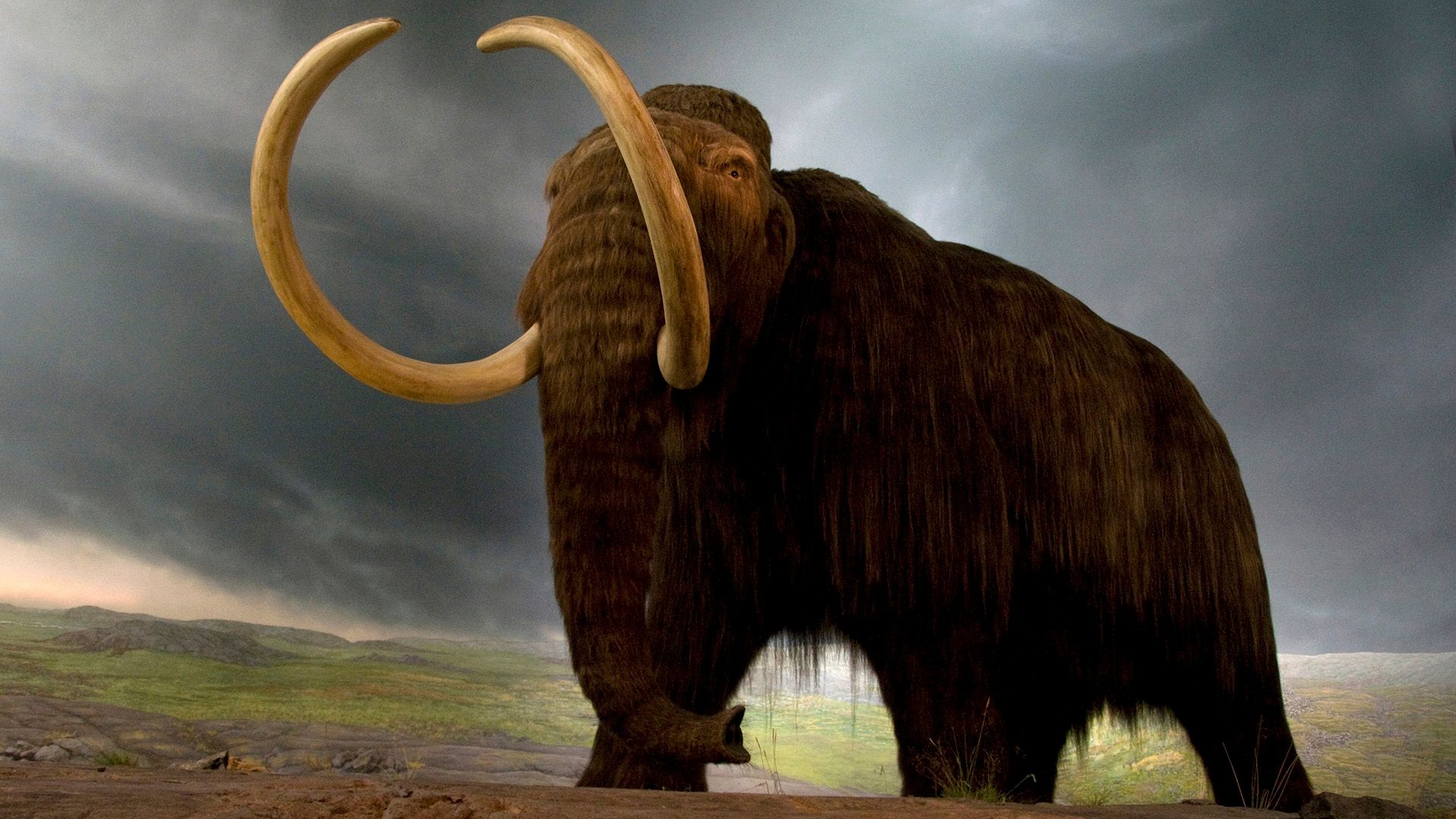
- Cold-Weather Fauna: The presence of these animals, along with others like mammoths, aurochs, and woolly rhinoceroses found in similar regional cave art, indicates that the area experienced a cold, near-glacial climate during the time the caves were visited.78
- Abundant Resources: The Magdalenian culture thrived during a period when large herds of reindeer, wild horses, and bison were plentiful. This abundance of food provided the stability and leisure time necessary for the development of such sophisticated artistic traditions.8
- Human-Animal Relationship: The focus on these specific animals suggests they played a central role in the mental and spiritual world of the Upper Paleolithic people. Beyond their role as a food source, these animals were likely subjects of hunting rites, animalism, or “sympathetic magic,” where the art may have served as a ritualistic attempt to ensure the continued abundance of game.58
Sources
- Altamira — Encyclopædia Britannica
- Cave art — Encyclopædia Britannica
- Painting - Fresco — Encyclopædia Britannica
- 11 Caves That Made History - Altamira Cave — Encyclopædia Britannica
- Magdalenian culture — Encyclopædia Britannica
- Rock art - Cave painting in Europe — Encyclopædia Britannica
- prehistoric religion - Hunting rites and animal cults — Encyclopædia Britannica
- Spain - Prehistory — Encyclopædia Britannica
Published on · 4 min read