Are All Dairy Cattle Female?
No, not all dairy cattle are female. While only female cattle—known as cows—produce milk, male cattle, or bulls, are essential to the industry for breeding…
Are all dairy cattle female?
No, not all dairy cattle are female. While only female cattle—known as cows—produce milk, male cattle, or bulls, are essential to the industry for breeding purposes.1
Milk production is a sex-limited character, meaning that while both sexes carry the genes for it, only females express the trait. Because dairy bulls can be large, powerful, and aggressive, most modern dairy operations utilize artificial insemination rather than keeping bulls on-site. Consequently, bulls are typically housed at specialized facilities where they are selected through selective breeding to pass on desirable genetic traits for high milk production to the next generation.12
How does artificial insemination work in the dairy industry?
Artificial insemination is a widely used practice in the dairy industry that allows for the efficient propagation of desirable genetic traits. By bypassing natural mating, this technique enables a single high-quality bull to sire thousands of offspring annually, compared to the 30 to 50 calves typically produced through natural breeding.31
The process generally involves the following steps:
- Selection: Bulls with superior genetic capacity for milk production are identified and housed in specialized facilities, often operated by farmer cooperatives.45
- Collection and Processing: Semen is collected from these bulls and diluted.3
- Cryopreservation: The semen is deep-frozen, allowing it to be stored for long periods without losing fertility and shipped globally.35
- Insemination: When needed, the semen is thawed and introduced into the female’s reproductive tract by a trained operator.3
This method is highly effective for herd improvement, as it allows producers to apply rigorous progeny testing to select the best sires. Today, approximately 70 percent of dairy cattle are bred using this technology, which has been instrumental in the consistent genetic gain in milk production observed over the 20th and 21st centuries.41
What are the main differences between dairy cattle and beef cattle?
The primary distinction between dairy and beef cattle lies in their selective breeding, which has optimized them for different economic purposes.
Key Differences
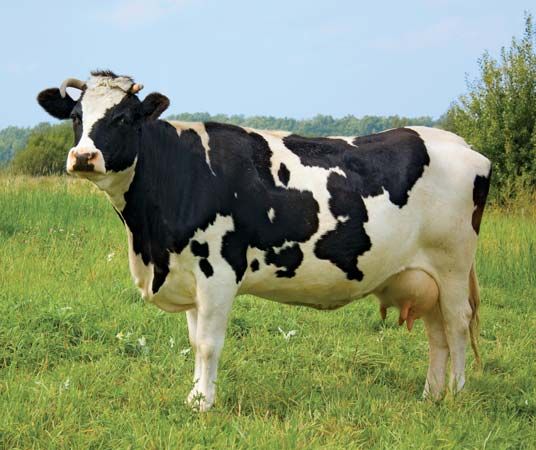
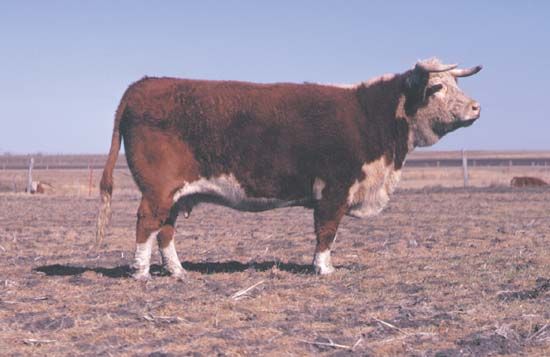
- Primary Objective: Dairy cattle, such as the Holstein-Friesian, are bred specifically to produce large quantities of milk. In contrast, beef cattle, such as the Hereford, are bred to produce muscle and meat.2
- Physical Characteristics: Beef cattle tend to be much heftier than dairy cows, as their physiology is focused on weight gain. Dairy cows often possess a more wedge-shaped or angular body structure.27
- Management Systems: Dairy operations are typically more intensive because cows must be handled daily for milking. Beef cattle are generally farmed in less intensive systems.2
- Breeding Focus: Dairy breeding emphasizes milk yield and specific milk components like fat and protein. Beef breeding focuses on growth rates, fat content of the meat, disease resistance, and environmental adaptability.27
While some dual-purpose breeds exist to provide both milk and meat, most commercial herds are highly specialized.7
How have selective breeding practices changed milk production over time?
Selective breeding has fundamentally transformed milk production by enabling consistent genetic improvement in dairy cattle over the 20th and 21st centuries. This progress has been driven by several key advancements:41
- Progeny Testing: Breeders evaluate a bull’s genetic value by analyzing the milk production records of his daughters. By selecting the best-performing sires to produce the next generation, the industry has achieved steady genetic gains.94
- Artificial Insemination (AI): The adoption of AI, supported by advances in semen freezing, has allowed a single superior bull to sire thousands of offspring annually, compared to only 30 to 50 through natural breeding. This technology ensures that the most desirable genetic traits are rapidly disseminated across the population.491
- Genomic Testing: More recently, breeders have moved beyond waiting for daughters to mature. By reading a bull’s DNA, they can now estimate his milk-producing potential at a much younger age, further accelerating the pace of improvement.9
While these methods have significantly increased milk yields, they also require careful management, as high production can sometimes negatively correlate with fertility traits.10
Sources
- Are all dairy cattle female? — Encyclopædia Britannica
- Cow - Domestication and economic production — Encyclopædia Britannica
- artificial insemination — Encyclopædia Britannica
- Animal breeding - Progeny testing — Encyclopædia Britannica
- Origins of agriculture - Artificial breeding — Encyclopædia Britannica
- Dairying — Encyclopædia Britannica
- Dairy cattle breeds — Encyclopædia Britannica
- Cow - Dairy cattle breeds — Encyclopædia Britannica
- Why are Holstein cows so popular? — Encyclopædia Britannica
- Animal breeding - Breeding objectives — Encyclopædia Britannica
- Animal breeding - Heritability and genetic correlations in breeding — Encyclopædia Britannica
Published on · 3 min read