Arroyo
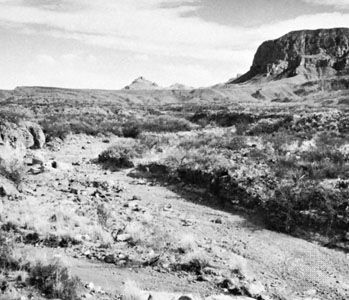
An arroyo is a dry channel located in semiarid or desert regions that is subject to flash flooding during seasonal or irregular rainstorms. These features…
What is an arroyo, and how does it differ from other types of water channels?
An arroyo is a dry channel located in semiarid or desert regions that is subject to flash flooding during seasonal or irregular rainstorms. These features are also known as dry washes, wadis, or oueds in various parts of the world.1
Arroyos differ from water channels in humid regions in several key ways:
- Flow Regime: Unlike perennial streams that flow year-round, arroyos are ephemeral; they are dry most of the time and only contain water following intense rainfall.12
- Channel Geometry: While humid-region gullies are often V-shaped, arroyos are characterized by flat-floored trenches. Their beds are typically flat in cross section.21
- Erosion and Sedimentation: Arroyos exhibit rapid rates of erosion, transportation, and deposition. They often feature high width-to-depth ratios and may develop “stepped” profiles known as discontinuous gullies, which are shaped by processes like piping and headcutting.12
- Downstream Behavior: Most ephemeral streams become shallower downstream as water is lost to evaporation and percolation into the dry bed, sometimes ending in mudflows.12
In which regions of the world are arroyos commonly found?
Arroyos are primarily found in semiarid and desert regions across the globe, where they are shaped by seasonal or irregular rainstorms.1
While the term “arroyo” or “dry wash” is commonly used in the southwestern United States, these ephemeral water channels appear under different names in other parts of the world. For instance, they are known as wadis or oueds in North Africa and Saudi Arabia. These features are defined by their ability to carry water only during intense, transitory flooding events, after which they return to a dry state.1
How do seasonal changes affect the water flow in arroyos?
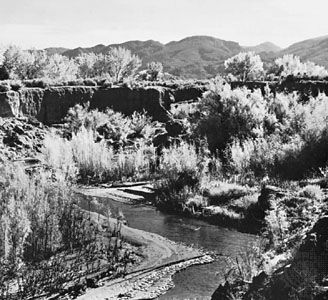
Arroyos are ephemeral channels that remain dry for most of the year, meaning their water flow is not governed by the steady, predictable seasonal regimes seen in perennial rivers. Instead, flow in an arroyo is triggered by intense, irregular rainstorms or seasonal weather events, which can cause sudden and violent flash flooding.
Because these channels are located in arid or semiarid regions, they lack the continuous vegetation cover that typically stabilizes soil. Consequently, when seasonal rains occur, the resulting surface runoff is rapid and carries high sediment loads. This process often leads to significant erosion and deposition within the channel during a single flood event.12
As the floodwaters move downstream, the volume of flow often decreases due to high rates of evaporation and percolation into the dry, sandy stream bed. In many cases, this process causes the flood to dissipate entirely, sometimes ending in a terminal mudflow rather than reaching a larger body of water.12
What causes flash floods in desert environments?
Flash floods in desert environments are primarily triggered by intense, rare rainstorms that overwhelm the landscape. Because arid regions lack sufficient moisture to support abundant vegetation, the ground remains largely unprotected, allowing even infrequent rainfall to act with significant force.7
Several terrain factors exacerbate these events:
- Impervious Surfaces: Deserts often feature large areas of hardpan, exposed rock, or other surfaces that prevent water from soaking into the ground.8
- Steep Slopes: The presence of mountains, hills, or narrow slot canyons causes water to collect and accelerate rapidly, leading to sudden, destructive torrents.89
- Lack of Vegetation: The absence of thick plant cover—sometimes worsened by recent wildfire activity—removes natural barriers that would otherwise slow surface runoff and encourage soil absorption.89
As climate change continues to warm the atmosphere, its increased capacity to hold moisture may lead to heavier precipitation, potentially increasing the frequency and intensity of these flash flood events in already vulnerable regions.8
Sources
- arroyo — Encyclopædia Britannica
- arroyo — Merriam-Webster
- arroyos — Merriam-Webster
- arroyo — Merriam-Webster
- river - Variation of stream regime — Encyclopædia Britannica
- Sahara - Climate of the Sahara — Encyclopædia Britannica
- Flash flood — Encyclopædia Britannica
- Flash flood: Top Questions — Encyclopædia Britannica
- valley - Arid zone — Encyclopædia Britannica
- river - Principles governing distribution and flow — Encyclopædia Britannica
Published on · 3 min read