River
Humans have long harnessed rivers to support civilization through energy production, transportation, and agriculture.
What are some ways that humans harness rivers for energy, transportation, and agriculture?
Humans have long harnessed rivers to support civilization through energy production, transportation, and agriculture.
Energy
Rivers are a primary source of hydroelectric power, which converts the potential energy of falling or flowing water into electricity using turbines and generators. This is often achieved by constructing dams to create a “head,” or elevation difference, that drives the system. Additionally, rivers provide essential cooling water for industrial facilities, including petrochemical and steel plants.12
Transportation
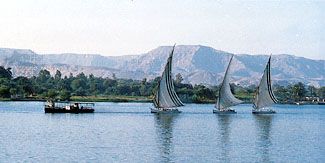
Rivers serve as vital corridors for trade and travel. Through river engineering, humans stabilize channels and use locks to navigate varying water levels, allowing vessels to bypass natural obstacles. Major waterways, such as the St. Lawrence Seaway, facilitate the movement of freight, while smaller rivers support recreational boating and local commerce.234
Agriculture
Irrigation is perhaps the oldest and most critical use of river water, enabling farming in arid regions by diverting water through canals, barrages, and pumps. Modern techniques include:256
- Surface irrigation: Using gravity to flood fields.6
- Sprinkler systems: Spraying water to ensure efficient distribution.56
- Drip and subirrigation: Delivering water directly to plant roots to minimize waste.6
While these practices are essential for food security, they can lead to environmental challenges like soil salinization and ecosystem disruption if not managed sustainably.789
How do rivers contribute to the water cycle on Earth?
Rivers play a vital role in the Earth’s water cycle by acting as essential conduits that transport water across the landscape and return it to the oceans.1011
Their contribution to this cycle involves several key processes:
- Collection and Transport: Rivers are nourished by precipitation, direct runoff, meltwater, and groundwater discharge. They collect this water and deliver it to the oceans, effectively balancing the water vapor that is transported overland and precipitated as rain or snow.1012
- Interconnection: Rivers serve as a bridge between different components of the hydrosphere. They communicate directly with groundwater tables; when the water table is higher than a river, it contributes to the stream’s base flow, and conversely, rivers can recharge aquifers through seepage.1011
- Water Loss: While rivers transport water, they also lose it back to the atmosphere through evaporation and to the land through percolation into aquifers, which are critical steps in the continuous recycling of Earth’s water.1011
Collectively, these processes ensure that water is constantly cycled through land ice, soil, lakes, and river channels.10
How do seasonal changes affect river flow and water levels?
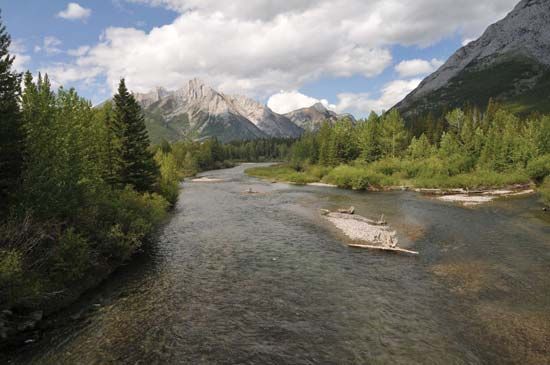
Seasonal changes significantly influence river flow and water levels, primarily through meteorological factors like precipitation, temperature, and the timing of snowmelt.15
Seasonal Drivers of River Flow
- Snowmelt and Thaw: In many regions, winter precipitation is stored as snowpack. During the spring thaw, this stored water is released, often causing river levels to rise significantly. For northward-flowing rivers, this process can be complex; if the upper reaches thaw while lower sections remain frozen, ice jams can lead to severe flooding.1516
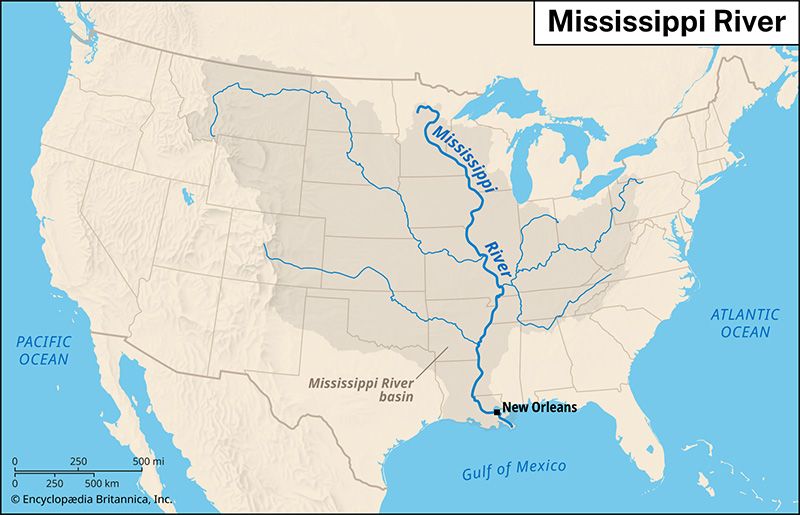
- Precipitation Patterns: River levels often track closely with seasonal rainfall. For example, the Mississippi River system typically swells in the spring due to a combination of melting snow and increased rainfall in its southern drainage basins. Conversely, in the American Southwest, rivers often experience their highest flows in winter, while dwindling during the summer months.16
- Evaporation: Seasons characterized by high temperatures and increased evaporation can lead to a marked falloff in river levels, even in systems that remain active throughout the year.1516
Monitoring and Variability
Hydrologists use a hydrograph to record these changes in water level and discharge over time. While some rivers maintain relatively stable flows, others exhibit extreme seasonal variability; for instance, the ratio of maximum to minimum flow can be as high as 35 to 1 for the Columbia River 1 for the Columbia River. These patterns can be further complicated by artificial controls like dams and diversions, which are often used to manage water levels for human needs.171815
How do rivers impact human settlements and civilizations?
Rivers have been fundamental to the development of human settlements and civilizations throughout history, serving as the lifeblood for agriculture, trade, and urban growth.
Foundations of Civilization
Many of the world’s earliest “hydraulic civilizations” emerged in fertile river valleys, such as the Tigris-Euphrates, the Nile, the Indus, and the Huang He. These rivers provided essential water for irrigation and deposited nutrient-rich silt, enabling the food surpluses necessary for the rise of towns and cities. The management of these water resources required complex community structures and engineering, leading to the development of early irrigation systems and flood defenses.220
Economic and Industrial Impact
Beyond agriculture, rivers have historically functioned as primary corridors for exploration, trade, and communication. In modern times, they remain vital for:2
- Transportation: Major rivers like the Rhine and the St. Lawrence Seaway facilitate significant freight traffic.20
- Energy: Hydroelectric power generation, such as that provided by the Akosombo Dam, supports industrial needs and domestic electricity access.120
- Industry: Rivers supply water for cooling in power plants and manufacturing processes.20
Challenges and Risks
While rivers sustain civilizations, they also present significant risks. Human reliance on rivers can lead to environmental degradation, such as soil salinization or the spread of waterborne diseases. Furthermore, large-scale infrastructure projects like dams can displace thousands of people and disrupt natural ecosystems, sometimes leading to catastrophic flooding when water management fails.21
Sources
- river - Significance to trade , agriculture, and industry — Encyclopædia Britannica
- river - Significance in early human settlements — Encyclopædia Britannica
- hydroelectric power — Encyclopædia Britannica
- canals and inland waterways - Locks — Encyclopædia Britannica
- canals and inland waterways - Characteristics of basic types — Encyclopædia Britannica
- Origins of agriculture - Irrigation — Encyclopædia Britannica
- water infrastructure in India - Irrigation systems — Encyclopædia Britannica
- Tigris-Euphrates river system: Top Questions — Encyclopædia Britannica
- pollution in India - Pollutant buildup in rivers — Encyclopædia Britannica
- river — Encyclopædia Britannica
- river - Principles governing distribution and flow — Encyclopædia Britannica
- hydrosphere - Groundwaters and river runoff — Encyclopædia Britannica
- runoff — Encyclopædia Britannica
- aquifer — Encyclopædia Britannica
- lake - Water level fluctuations — Encyclopædia Britannica
- North America - Rivers — Encyclopædia Britannica
- river - Peak discharge and flooding — Encyclopædia Britannica
- hydrograph — Merriam-Webster
- river - Effects of climatic change — Encyclopædia Britannica
- Akosombo Dam — Encyclopædia Britannica
Published on · 4 min read