Impact Structure
The primary difference between simple and complex impact craters lies in their size and the geological processes that occur after the initial excavation.
What is the difference between simple and complex impact craters?
The primary difference between simple and complex impact craters lies in their size and the geological processes that occur after the initial excavation.1
- Simple Craters: These are relatively small, bowl-shaped depressions. Their formation process concludes once the excavation of material is complete, resulting in a stable, parabolic cavity.1
- Complex Craters: As impact craters increase in size, the initial parabolic hole becomes too large to remain structurally stable and undergoes a “modification stage”. During this phase, the crater collapses, creating distinct features such as flat floors, central peaks, or raised circular rings caused by the rebound of subsurface material. Additionally, complex craters often exhibit downward faulting along the inner rim, which forms terraces of large rock blocks.1
While simple craters are defined by their initial excavation, complex craters are defined by this subsequent collapse and structural reorganization. Very large craters that feature widely spaced, inward-facing faults known as megaterraces are specifically classified as impact basins.1
How do scientists identify and confirm the existence of an impact structure?
Identifying and confirming an ancient impact structure on Earth is challenging because surface features like crater walls, fused silica glass, and meteorite fragments are often degraded or destroyed over time by erosion and weathering.
Because these surface indicators are frequently lost, scientists rely primarily on the presence of subsurface shock structures to confirm an impact. The most definitive evidence is the discovery of shatter cones. These are conically shaped structures that form in the bedrock directly beneath the point of impact. They radiate in a distinctive pattern that cannot be produced by other natural geological processes, making them a reliable criterion for identification even when found in drill core samples.3
While other geological processes like volcanism and plate tectonics can alter or eliminate surface craters, the unique intensity of the shock that creates shatter cones serves as a permanent signature of a hypervelocity impact event.34
What is an impact structure in geology, and how is it formed?
An impact structure is the geological remnant of an ancient meteorite impact on Earth’s surface, typically appearing as a circular scar of crushed and deformed bedrock. Because surface features like crater walls and meteorite fragments are often degraded by erosion and weathering over time, these structures are primarily identified by subsurface evidence of extreme shock.7
The Formation Process
Impact structures are created through a hypervelocity impact, where an asteroidal or cometary object strikes a planetary surface at speeds of several tens of kilometers per second. This process is comparable to an atomic bomb explosion, releasing massive amounts of kinetic energy in a localized area.1
- Shock Wave Generation: Upon impact, shock waves are imparted to both the surface and the projectile, vaporizing the meteorite and creating zones of melted and crushed material.1
- Excavation: A subsequent release wave generates pressure gradients that project material upward and outward, forming a parabolic bowl-shaped depression.1
- Modification: For larger impacts, the initial cavity is unstable and undergoes a modification stage, leading to features like flat floors, central peaks, or raised rings.1
What are some of the most famous impact structures on Earth, and what can we learn from them?
Impact structures provide a window into Earth’s violent history, offering critical insights into planetary evolution, mass extinction events, and the geological processes triggered by hypervelocity collisions.
Notable Impact Structures
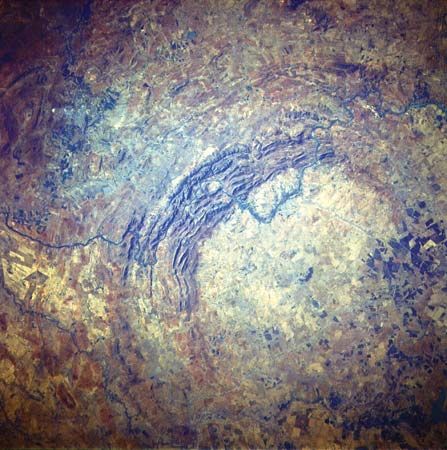
- Vredefort Dome: Located in South Africa, this is the largest and second-oldest known impact structure on Earth, dating back approximately 2.023 billion years. It serves as a primary site for studying deep-crustal deformation, as the impact caused underlying granite to shift upward, creating a massive central dome.103
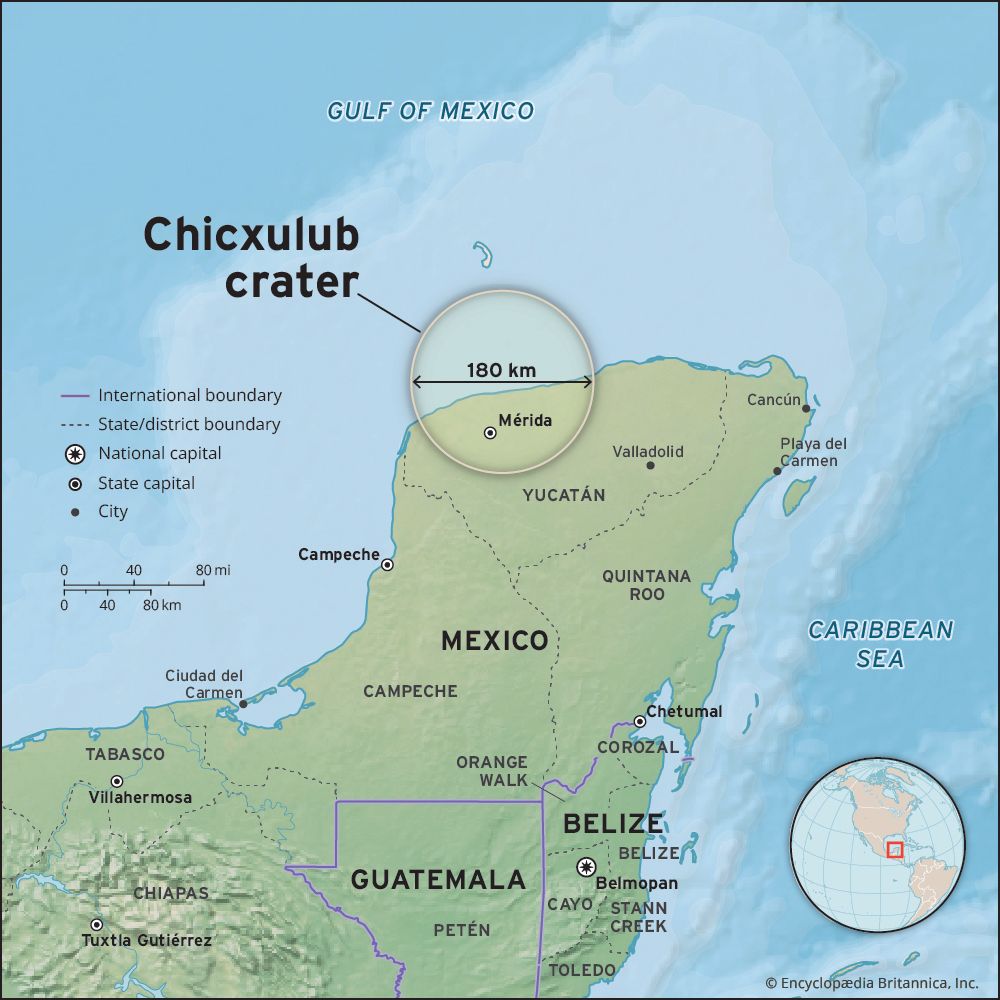
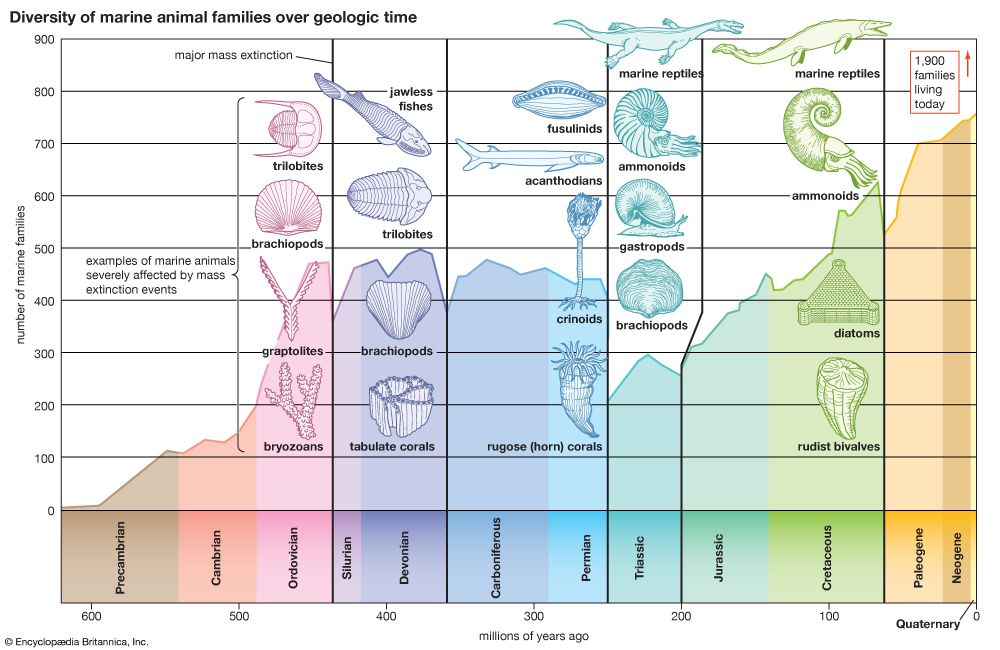
- Chicxulub Crater: Buried beneath the Yucatán Peninsula in Mexico, this 180-km-wide crater was formed 66 million years ago. It is perhaps the most famous impact site due to its direct link to the K–T extinction event, which resulted in the loss of approximately 80 percent of all species, including the dinosaurs.18
What We Learn from Them
Studying these structures allows scientists to reconstruct the mechanics of impact cratering, such as how shock waves vaporize rock and how complex craters develop central peaks or ring structures. Furthermore, these sites provide evidence of global environmental shifts; for instance, the Chicxulub impact revealed how the release of sulfur and dust into the atmosphere can trigger rapid climate change and acid rain, fundamentally altering the course of life on Earth.118
Sources
- Meteorite crater - The impact-cratering process — Encyclopædia Britannica
- Meteor and meteoroid - Meteorites —meteoroids that survive atmospheric entry — Encyclopædia Britannica
- impact structure — Encyclopædia Britannica
- Meteorite crater - Meteorite craters as measures of geologic activity — Encyclopædia Britannica
- metamorphic rock - Major features — Encyclopædia Britannica
- metamorphic rock — Encyclopædia Britannica
- Meteorite crater — Encyclopædia Britannica
- Chicxulub crater: Top Questions — Encyclopædia Britannica
- geology - Structural geology — Encyclopædia Britannica
- Vredefort Dome — Encyclopædia Britannica
- Chicxulub crater — Encyclopædia Britannica
Published on · 3 min read