Avadavat
The avadavat (species Amandava amandava) is a small, plump bird measuring approximately 8 centimeters (3 inches) in length. Belonging to the waxbill group…
What is Avadavat?
The avadavat (species Amandava amandava) is a small, plump bird measuring approximately 8 centimeters (3 inches) in length. Belonging to the waxbill group within the order Passeriformes, it is native to southern and southeastern Asia, though it has also been introduced to regions like Hawaii.12
The bird is a popular choice for aviculture and is frequently kept as a cage bird. Its appearance varies significantly based on sex and season:12
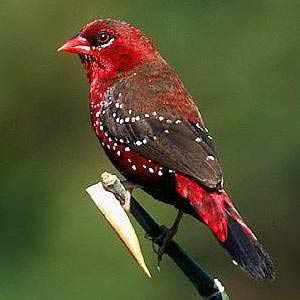
- Breeding Males: Display a striking scarlet or bright red plumage with brown mottling and white speckling, which has earned the species the common name “strawberry finch.”12
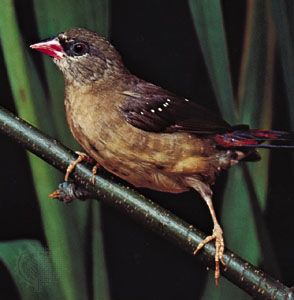
- Females and Non-breeding Males: Typically exhibit an olive-brown coloration above and a grayish-buff tone below.2
The name “avadavat” is an irregular derivation from Ahmadabad, an Indian city from which these birds were historically imported to Europe.2
What are the main characteristics of waxbill birds?
Waxbills are small, Old World songbirds belonging to the family Estrildidae. They are named for their distinctive, conical bills, which are often a vibrant red, resembling the color of sealing wax.3
Key characteristics of these birds include:
- Physical Appearance: They typically measure between 7.5 and 15 cm (3 to 6 inches) in length and possess short, stout bills and short legs. While many species are brown or grayish with fine barring, they display a wide variety of colors and patterns, including touches of red, yellow, or black.43
- Diet and Behavior: Waxbills are primarily seedeaters that forage in compact, gregarious flocks. They are ground feeders that also consume berries and insects.34
- Habitat and Nesting: Most species are native to the Old World and are known to nest in tall grass.34
- Vocalization: They are generally considered poor singers, as their songs are often characterized by a mix of chirps, buzzes, and chatters.4
Due to their lively nature, bright colors, and adaptability, they are popular among bird fanciers as cage birds.4
How do male and female avadavats differ in appearance?
Male and female avadavats exhibit distinct differences in their plumage, particularly during the breeding season.
- Males: When in breeding plumage, the male is characterized by a vibrant, bright red color, accented with brown mottling and white speckling. This striking appearance is why the species is frequently referred to as the strawberry finch.1
- Females: In contrast, female avadavats typically lack the intense red coloration and bold patterns found on the breeding male, adhering to the common avian trend where males display more brilliance and pattern than their female counterparts.5
What is the natural habitat of the strawberry finch?
The strawberry finch, also known as the avadavat, is primarily found in the marshes and meadows of southern Asia. Additionally, this species has been introduced to Hawaii, where it has established populations.1
Sources
- Avadavat — Encyclopædia Britannica
- avadavat — Merriam-Webster
- waxbill — Encyclopædia Britannica
- Estrildidae — Encyclopædia Britannica
- Plumage — Encyclopædia Britannica
Published on · 2 min read