Season
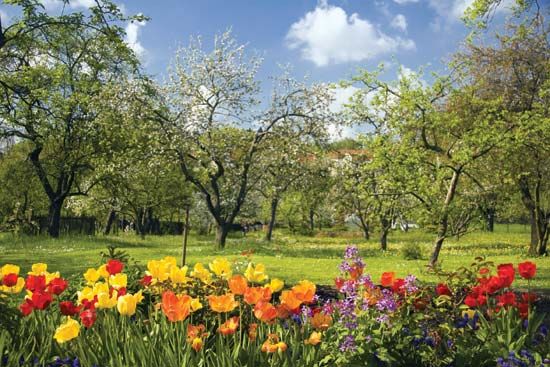
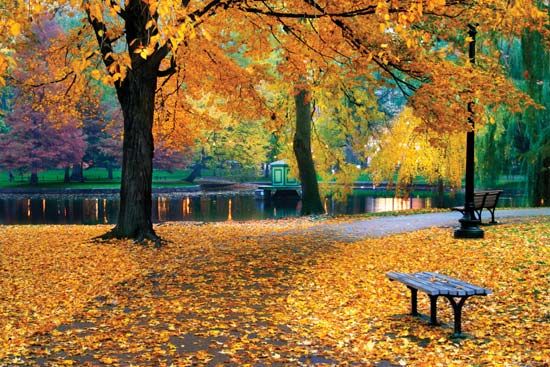
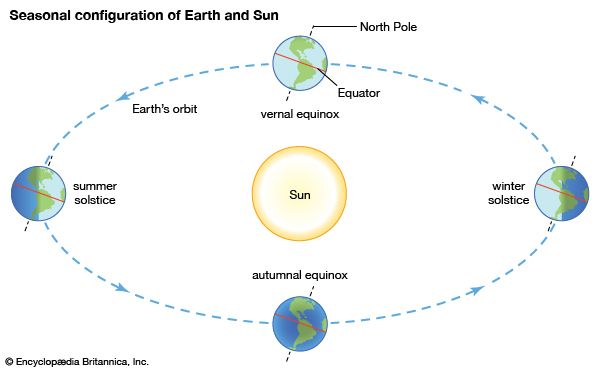
The four traditional seasons—spring, summer, autumn, and winter—are defined by the Earth's orbit around the Sun and the tilt of its axis.
What are the four meteorological seasons, and how are they defined?
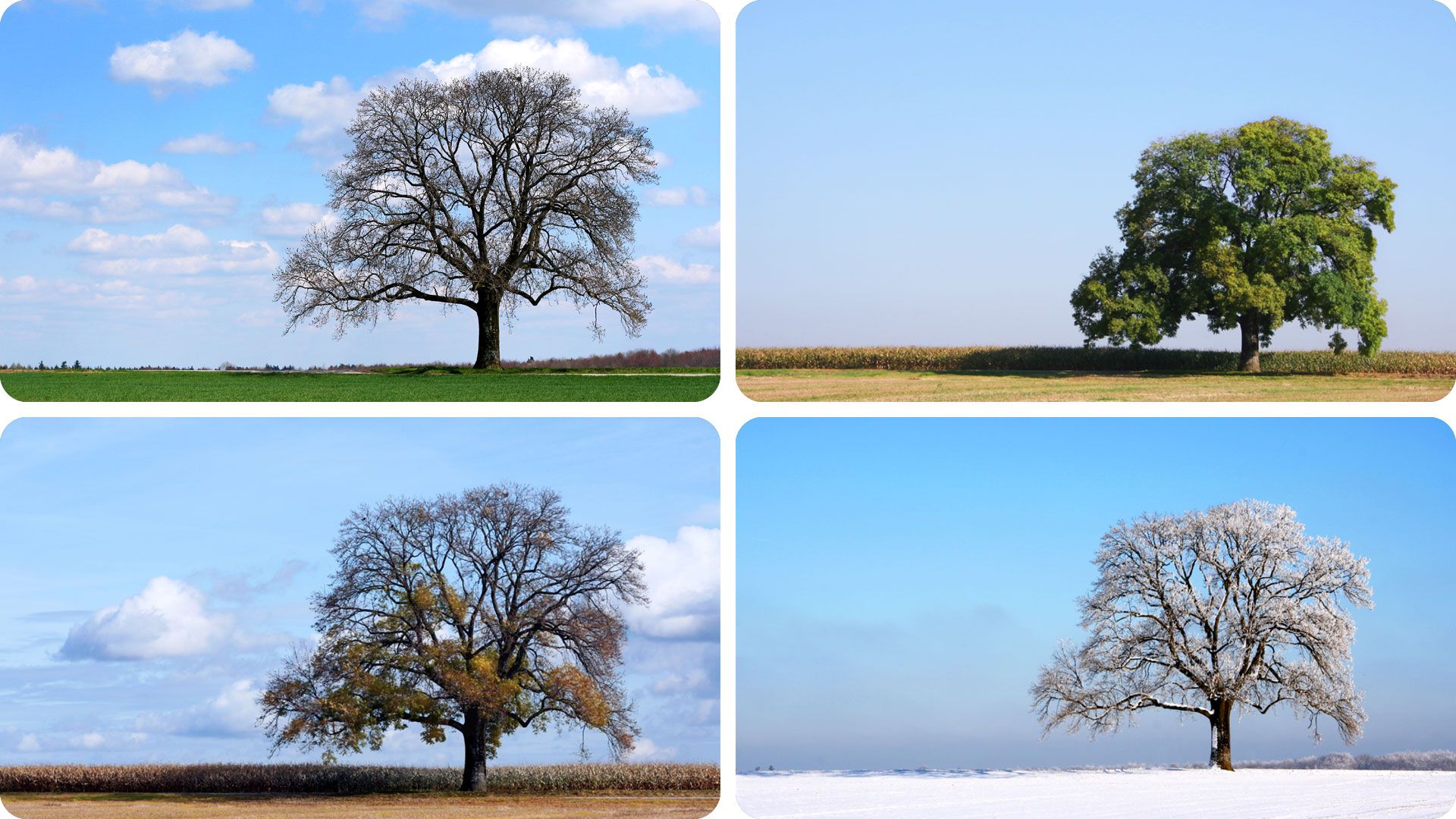
The four traditional seasons—spring, summer, autumn, and winter—are defined by the Earth’s orbit around the Sun and the tilt of its axis.123
In the Northern Hemisphere, these seasons are marked by specific astronomical events:
- Spring: Begins at the vernal equinox, when the Sun is directly over the Equator moving north.2
- Summer: Begins at the summer solstice, when the Sun reaches its farthest northern point.2
- Autumn: Begins at the autumnal equinox, when the Sun is directly over the Equator moving south.2
- Winter: Begins at the winter solstice, when the Sun reaches its farthest southern point.2
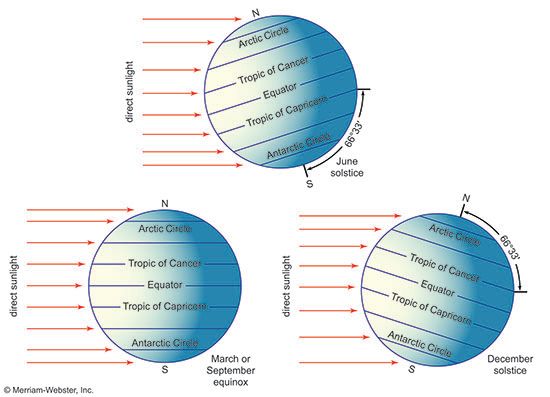
These cycles occur because the Earth’s axis is inclined, causing each hemisphere to tilt toward or away from the Sun throughout the year, which alters the intensity and duration of solar radiation received. In the Southern Hemisphere, these seasonal timings are reversed.13
How do meteorological seasons vary in different parts of the world?
Meteorological seasons vary significantly across the globe based on latitude and regional climate patterns. While the Earth’s axial tilt drives a universal cycle of solar radiation, the manifestation of these seasons differs by location:14
- Temperate Regions: Outside the tropics and polar areas, seasons are defined by distinct temperature oscillations between a single annual maximum and minimum. These regions experience clear transitions between warm summers and cold winters due to the changing angle of the Sun and duration of daylight.156
- Polar Regions: Seasons here are primarily defined by light rather than temperature. They consist of a short summer characterized by continuous daylight or twilight and a long winter defined by continuous darkness.1
- Tropical Regions: In low latitudes, temperature fluctuations are minimal due to the consistent angle of sunlight. Instead, seasonal variations are defined by moisture, specifically alternating wet and dry periods. These are driven by the seasonal movement of the intertropical convergence zone, which brings precipitation as it shifts north and south.17
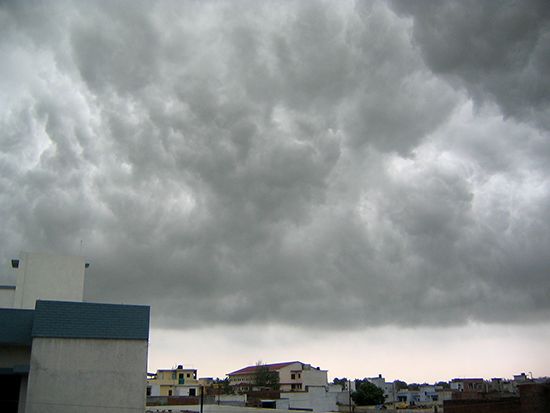
- Monsoon Regions: Some areas, such as India, experience unique seasonal cycles—like cool-dry, hot-dry, and rainy seasons—governed by the monsoon rather than just temperature.—governed by the monsoon rather than just temperature.1
What role do ocean currents play in shaping meteorological seasons?
Ocean currents play a fundamental role in shaping meteorological seasons by acting as massive heat reservoirs that regulate global climate patterns through the transfer of heat and moisture between the oceans and the atmosphere.810
Heat Transport and Climate Moderation
Ocean currents, such as the Gulf Stream, transport warm water from the tropics toward the poles, effectively exchanging heat between low and high latitudes. This process significantly moderates the climate of coastal regions; for instance, the combination of warm currents and prevailing westerly winds keeps northwestern Europe much warmer than its latitude would otherwise suggest. Conversely, cold currents like the Peru (Humboldt) Current can cool coastal climates, influencing regional temperature ranges.871011
Seasonal Heat Storage
The ocean’s surface mixed layer acts as a huge reservoir of heat, possessing a much higher heat capacity than the overlying atmosphere. During the summer, the ocean absorbs and stores vast quantities of heat, which it then releases into the atmosphere during autumn and early winter. This release of stored energy helps define the seasonal temperature transitions in midlatitudes.81213
Climate Anomalies and Predictability
Because ocean temperatures change much more slowly than atmospheric conditions, they provide a “memory” to the climate system. Anomalies in sea-surface temperatures—such as those associated with El Niño—can persist for seasons or years, influencing precipitation and circulation patterns globally. By affecting the position of the jet stream and the development of storm tracks, these thermal gradients guide weather systems and can lead to persistent seasonal climate anomalies in regions far from the ocean.8137
How do urban areas experience meteorological seasons differently from rural areas?
Urban areas experience meteorological conditions that differ significantly from rural surroundings, creating distinct local climates often referred to as urban climates. These differences are primarily driven by the replacement of natural landscapes with artificial structures and surfaces.
Temperature and the Heat Island Effect
Cities are consistently warmer than rural areas, a phenomenon known as the “urban heat island.” During the summer, urban materials like asphalt and masonry absorb and store more solar energy, reradiating it at night. In winter, the urban atmosphere is further warmed by heat generated from fuel combustion for transportation, industry, and building heating, as well as by a blanket of pollutants and water vapor that traps thermal radiation.14
Humidity, Wind, and Precipitation
- Humidity: Urban areas typically exhibit lower relative humidity than rural areas due to increased precipitation runoff and a lack of vegetation-driven evapotranspiration.14
- Wind: Mean wind speeds in cities are 20 to 30 percent lower than in the countryside because buildings and structures create increased frictional drag. Additionally, cities often experience a convergence of low-level winds flowing toward the city center due to thermal gradients.14
- Precipitation: Urban environments can modify local weather, with some data suggesting that precipitation amounts over large cities are 5 to 10 percent higher than in nearby rural areas, often peaking downwind of the city center due to factors like thermal convection and increased condensation nuclei.14
Sources
- Season — Encyclopædia Britannica
- 22 Questions About Time and Timekeeping Answered - When do the seasons officially start? — Encyclopædia Britannica
- Climate change - Seasonal variation — Encyclopædia Britannica
- Why is summer warmer than winter? — Encyclopædia Britannica
- Why do we have seasons? — Encyclopædia Britannica
- tropical cyclone - Ocean basins and peak seasons — Encyclopædia Britannica
- Climate - Circulation, currents, and ocean-atmosphere interaction — Encyclopædia Britannica
- Climate - Climate and the oceans — Encyclopædia Britannica
- Tropical wet-dry climate — Encyclopædia Britannica
- How Do Ocean Currents Affect the Biosphere? — Encyclopædia Britannica
- Continentality — Encyclopædia Britannica
- Atlantic Ocean - Temperature — Encyclopædia Britannica
- Climate - The ocean surface and climate anomalies — Encyclopædia Britannica
- urban climate — Encyclopædia Britannica
- air pollution - Local air quality and air movement — Encyclopædia Britannica
- Climate - Evaporation and humidity — Encyclopædia Britannica
- Did you know? — Merriam-Webster
Published on · 4 min read