Billbergia
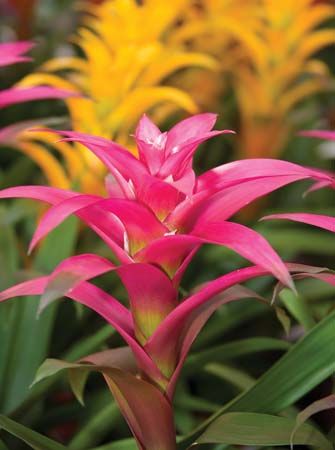
Billbergia is a genus of evergreen epiphytes belonging to the pineapple family (Bromeliaceae), comprising more than 50 species native to South America.
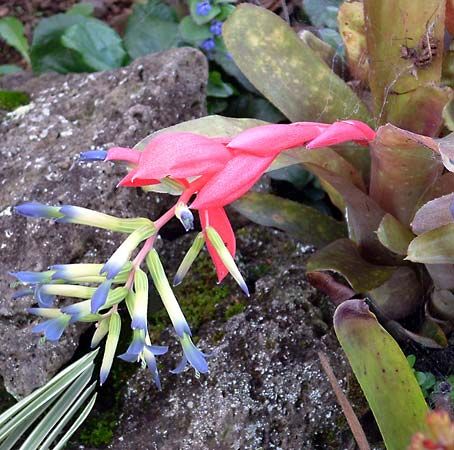
What is billbergia?
Billbergia is a genus of evergreen epiphytes belonging to the pineapple family (Bromeliaceae), comprising more than 50 species native to South America.12
These plants are characterized by their stiff, spiny-edged, strap-shaped leaves that grow in a rosette, which can reach up to 90 cm (35 inches) in diameter. From the center of this rosette, the plant produces flowers on a spike or a loose cluster known as a panicle. Due to their striking foliage, colorful flowers, and decorative bracts, several species are commonly cultivated as indoor ornamental plants. The genus is named in honor of the 19th-century Swedish botanist J.G. Billberg.12
What are epiphytes and how do they grow?
An epiphyte is any plant that grows upon another plant or object solely for physical support. Unlike parasitic plants, which derive water or nutrients from a host, epiphytes are non-parasitic and use their host only as a structure to reach better environmental conditions.34
How Epiphytes Grow
Most epiphytes are found in moist tropical regions, where growing above the forest floor allows them to access sunlight in dense, shaded environments. They thrive by exploiting nutrients and moisture available in the canopy.3
- Water Acquisition: Epiphytes obtain water from rain and vapor in the air. While most absorb moisture through their roots, many species possess specialized leaves that can also take in water.3
- Nutrient Absorption: Minerals are obtained directly from rain, while other essential nutrients are absorbed from organic debris—such as decaying leaves—that collects on the supporting plant.3
- Dispersal: Because their habitats are often narrow and specific, many epiphytes rely on the wind to spread their dustlike or feathery seeds. Others produce edible fruits that are dispersed by birds and tree-dwelling animals.3
What are the main characteristics of the Bromeliaceae family?
The Bromeliaceae family, commonly known as the pineapple family, consists of approximately 3,000 species of herbaceous evergreen perennials within the order Poales. Primarily native to the tropical New World and the West Indies, these plants exhibit several distinct characteristics:
- Growth Habit: While many are terrestrial, a significant number are epiphytes that grow on trees or cacti. Some species, known as tank bromeliads, feature leaf rosettes that form a hollow tube to collect water, creating unique micro-habitats for various organisms.678
- Foliage and Flowers: They possess simple, spirally arranged leaves. Their flowers typically have three parts with contrasting sepals and petals, often appearing in long spikes accompanied by brightly coloured bracts.7
- Fruit: Most members produce fleshy fruit, though some species develop dry capsules.7
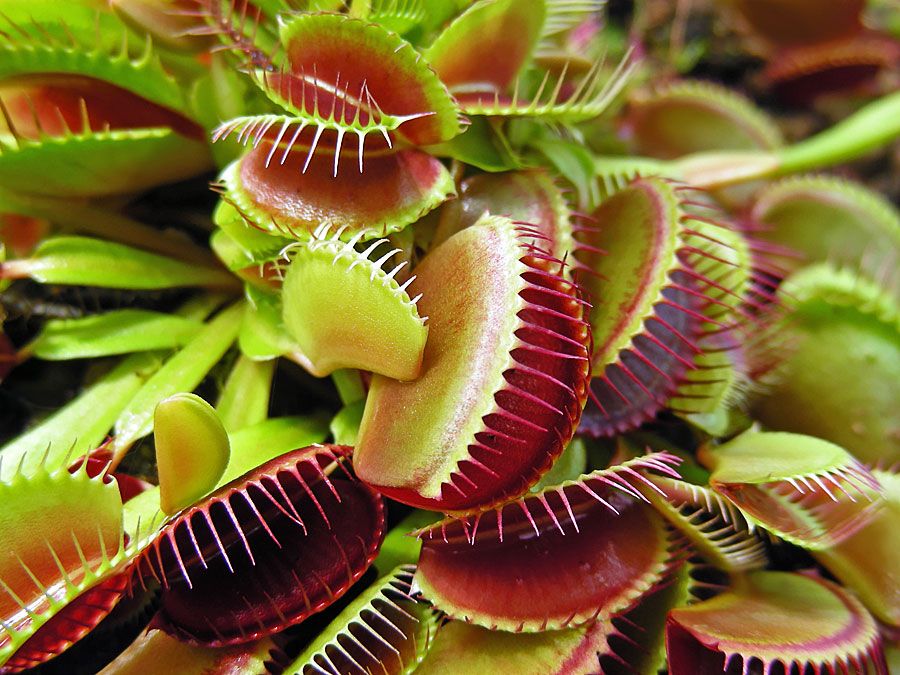
- Specialization: A few species, such as Brocchinia reducta, have evolved to be carnivorous.7
Economically, the family is best known for the pineapple and Spanish moss, as well as its popularity as indoor ornamental plants.67
How do bromeliads survive in their natural habitats?
Bromeliads have evolved several specialized strategies to survive and thrive in their natural habitats, particularly in the tropical environments where most species reside. Their survival mechanisms focus on efficient water and nutrient acquisition:
- Water Reservoirs: Many rainforest species, known as tank bromeliads, feature leaf rosettes that form a hollow, tube-like structure. This “tank” collects and stores rainwater, sometimes holding up to 20 litres (5 gallons), which provides a consistent water supply and creates a unique micro-habitat for various organisms.78
- Specialized Absorption: Epiphytic bromeliads often utilize specialized hairs on their leaves, known as foliar trichomes, to absorb moisture and minerals directly from the air and rain.910
- Nutrient Acquisition: Because they often grow high above the forest floor, these plants derive nutrients primarily from falling organic debris, such as decaying leaves, and windblown dust that collects in their tanks or around their roots.84
- Carnivory: In nutrient-poor environments, a few species have evolved to be carnivorous. These plants use their leaves to attract and trap insects, digesting them to absorb essential nitrogenous compounds.79
Sources
- billbergia — Encyclopædia Britannica
- billbergia — Merriam-Webster
- Did you know? — Merriam-Webster
- Epiphyte — Encyclopædia Britannica
- Parasitic plant — Encyclopædia Britannica
- list of plants in the family Bromeliaceae — Encyclopædia Britannica
- Bromeliaceae — Encyclopædia Britannica
- Life in a bromeliad pool — Encyclopædia Britannica
- Angiosperm - Leaf modifications — Encyclopædia Britannica
- Angiosperm - Dermal tissue — Encyclopædia Britannica
Published on · 3 min read