Biomass
In ecology, biomass is defined as the total weight or quantity of living organisms of a specific species or an entire community within a given unit area or…
What is biomass in ecology, and why is it important?
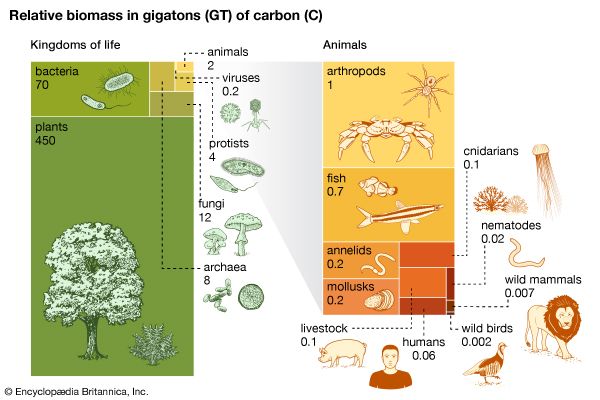
In ecology, biomass is defined as the total weight or quantity of living organisms of a specific species or an entire community within a given unit area or volume of habitat. When measured at a specific moment, this quantity is referred to as the standing crop.1
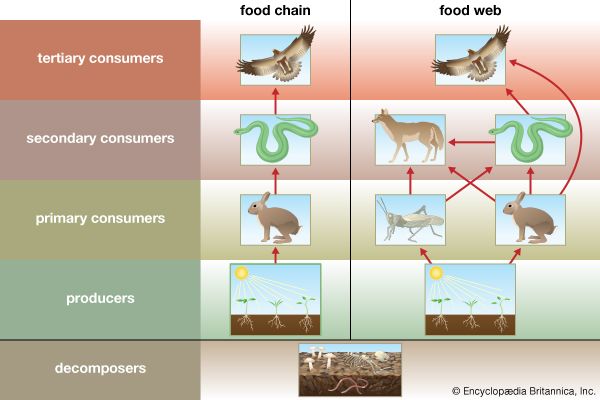
Biomass is fundamental to the structure of biological communities because it dictates the availability of energy within a trophic pyramid. As energy moves through a food chain, a significant portion—often 80 to 90 percent—is lost as heat due to metabolic processes. Consequently, the biomass of primary producers (such as plants or phytoplankton) limits the amount of energy available to herbivores, which in turn limits the biomass of carnivores at higher trophic levels. Understanding biomass is therefore essential for analyzing how energy flows through ecosystems and sustains diverse life forms.21
How is biomass measured in different ecosystems?
Measuring biomass and its production varies depending on whether one is assessing the standing crop or the rate of organic material generation.
Measuring Standing Crop
The standing crop represents the total weight or quantity of living organisms present in a specific area or volume at a single moment in time. This is typically expressed as the mass of organisms per unit area or volume.1
Measuring Productivity
In contrast, primary and secondary productivity measure the rate at which biomass is produced over a set period. These are generally quantified using the following units:
- Energy-based units: Measured as energy per unit area per time, such as gram calories or kilojoules per square meter per year.1
- Mass-based units: Measured as the mass of carbon per unit area per time, such as tons of carbon per square kilometer per year or gigatons of carbon per year.1
While standing crop provides a snapshot of current biological material, these productivity metrics are essential for understanding the dynamic flow of energy through an ecosystem over time.1
What is the difference between standing crop biomass and net primary production?
The primary difference between standing crop and net primary production lies in whether the measurement represents a static quantity or a dynamic rate of change.
Standing Crop
The standing crop is a measure of the total biomass (the weight or quantity of living organisms) present in a specific area or volume at a single, given moment in time. It serves as a snapshot of the biological material currently existing within a habitat.31
Net Primary Production
In contrast, net primary production is a rate. It represents the amount of organic material produced by photosynthetic organisms after accounting for the energy they consume to sustain their own life processes. While gross primary productivity measures the total energy converted by autotrophs, net primary production is the portion of that energy that remains available to support consumers in the food chain. Unlike the standing crop, which is measured as a mass, productivity is typically expressed as a rate of energy or mass accumulation per unit area over a set period of time (e.g., grams of carbon per square meter per year).31
How does energy loss between trophic levels affect the total biomass in an ecosystem?
Energy loss between trophic levels is a fundamental constraint that dictates the total biomass an ecosystem can support. Because energy transfer is inefficient, biomass typically decreases as one moves up the food chain, resulting in a pyramid-like structure.
The Mechanism of Energy Loss
Within any biological community, energy is lost as it moves from one trophic level to the next. Organisms expend a significant portion of the energy they ingest on metabolic processes, such as digestion, movement, and maintaining body temperature. Much of this energy is released into the environment as heat, a process consistent with the second law of thermodynamics, which dictates that energy transfers are never 100 percent efficient.456
Impact on Biomass
Because only a small fraction of energy—estimated on average at about 10 percent—is converted into new biomass at each successive level, there is progressively less energy available to support higher-level consumers.76
- Primary Producers: These organisms form the base of the trophic pyramid and contain the highest concentration of energy.74
- Consumers: Herbivores and carnivores are limited by the amount of energy successfully transferred from the level below them. Consequently, the total biomass of predators is significantly lower than that of the producers they rely upon.46
This energy limitation explains why most food chains are restricted to only three or four trophic levels; beyond that, there is simply insufficient energy remaining to sustain a viable population of top-level predators.6
Sources
- biomass — Encyclopædia Britannica
- trophic pyramid — Encyclopædia Britannica
- Marine ecosystem - Biological productivity — Encyclopædia Britannica
- Biosphere - Energy transfers and pyramids — Encyclopædia Britannica
- community ecology - Autotrophs and heterotrophs — Encyclopædia Britannica
- Biosphere - Efficiency of solar energy utilization — Encyclopædia Britannica
- second law of thermodynamics: Top Questions — Encyclopædia Britannica
- second law of thermodynamics — Encyclopædia Britannica
Published on · 4 min read