Bitter Springs Microfossils
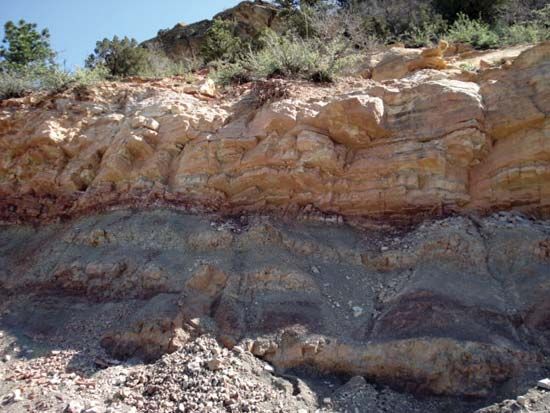
Bitter Springs microfossils are an assemblage of microscopic fossil structures discovered within the Bitter Springs Formation in central Australia, a rock…
What is Bitter Springs microfossils?
Bitter Springs microfossils are an assemblage of microscopic fossil structures discovered within the Bitter Springs Formation in central Australia, a rock layer dating back approximately 800 million to 900 million years.12
These fossils provide significant insight into life during the late Precambrian era. The collection includes at least four general groups of organisms that likely inhabited shallow seas, resembling modern bacteria, filamentous blue-green algae, green algae, and fungi.1
A key discovery among these fossils is the presence of cell division in a green alga known as Glenobotrydion. The arrangement of these cells into tetrahedral, sporelike forms suggests an evolutionary stage linked to sexual reproduction and the development of genetic variation. This evidence indicates that by the end of the Precambrian, biological conditions were being established for the subsequent explosion of life during the Phanerozoic Eon Eon](https://www.britannica.com/science/Phanerozoic-Eon).12
What is the difference between prokaryotes and eukaryotes?
All living organisms are composed of cells categorized as either prokaryotic or eukaryotic. The fundamental distinction lies in their cellular architecture and the organization of their genetic material.34
Key Differences
- Nucleus and Organelles: Eukaryotic cells possess a clearly defined nucleus enclosed by a nuclear membrane, which houses the cell’s chromosomes. They also contain membrane-bound organelles, such as mitochondria, the endoplasmic reticulum, and the Golgi apparatus, which compartmentalize biochemical processes. Prokaryotes lack a nucleus and internal membrane-bound organelles.3546
- Genetic Material: Eukaryotes contain multiple linear chromosomes. In contrast, prokaryotes typically possess a single circular DNA molecule located in a nucleoid region.36
- Cell Division: Eukaryotes undergo mitosis, a complex process ensuring the equal distribution of chromosomes to offspring cells. Prokaryotes reproduce primarily through binary fission, a nonmitotic process.46
- Complexity and Size: Prokaryotic cells are generally much smaller and simpler in design than eukaryotic cells, which allows them to grow and divide rapidly.36
Eukaryotes include animals, plants, fungi, and protists, while prokaryotes comprise the domains Bacteria and Archaea.356
We could dive deeper into the endosymbiotic theory, which explains how complex eukaryotic cells may have evolved from prokaryotic ancestors.
How do scientists determine the age of ancient microfossils?
Scientists determine the age of ancient microfossils primarily through radiometric dating, a method that provides numerical ages by measuring the radioactive decay of isotopes within rocks and minerals.71
Because microfossils from the Precambrian era—which constitutes the vast majority of Earth’s history—lack the complex, rapidly evolving hard body parts found in younger fossils, they cannot be reliably dated using index fossils or faunal succession. Instead, geochronologists rely on precise isotopic techniques, such as zircon dating, to establish the age of the surrounding rock strata.89
Key methods include:
- Isotopic Dating: By measuring the ratio of parent radioactive atoms to daughter atoms in a sample using a mass spectrometer, scientists can calculate the time elapsed since the mineral or rock formed.71
- Volcanic Ash Layers: These layers act as key beds that were deposited in an instant of geologic time. Because they often contain unaltered crystals, they allow for precise radiometric measurements that can date adjacent fossil-bearing units.9
What are stromatolites and how do they form?
Stromatolites are layered, sedimentary structures—typically composed of limestone—that serve as some of the oldest evidence of life on Earth, dating back as far as 3.5 billion years.152
Formation Process
These structures are created by the growth and activity of microorganisms, particularly communities of filamentous blue-green algae (cyanobacteria). Their formation involves two primary processes:152
- Sediment Trapping: As mats of microorganisms grow in shallow, warm waters, they trap fine sediment particles washed up by water movement.1516
- Mineral Precipitation: The metabolic activities of these microbial communities facilitate the precipitation of calcium carbonate, which binds the layers together.152
Over time, these processes result in thin, alternating light and dark layers that can form flat, domal, or columnar shapes. While they were most abundant during the Precambrian time, they continue to form today in specific environments, such as Shark Bay in Western Australia, where high salt concentrations protect the microbial mats from being consumed by grazing organisms.152
Sources
- Bitter Springs microfossils — Encyclopædia Britannica
- Precambrian - Microfossils and stromatolites — Encyclopædia Britannica
- Bacteria - Bacteria as prokaryotes — Encyclopædia Britannica
- life - Prokaryotes and eukaryotes — Encyclopædia Britannica
- eukaryote — Encyclopædia Britannica
- prokaryote — Encyclopædia Britannica
- index fossil — Encyclopædia Britannica
- dating - Principles of isotopic dating — Encyclopædia Britannica
- Precambrian - Correlation of Precambrian strata — Encyclopædia Britannica
- stratigraphy — Encyclopædia Britannica
- Earth sciences - Micropaleontology — Encyclopædia Britannica
- geology - Historical geology and stratigraphy — Encyclopædia Britannica
- geochronology - Accumulational processes — Encyclopædia Britannica
- dating - Principles and techniques — Encyclopædia Britannica
- stromatolite — Encyclopædia Britannica
- stromatolite — Merriam-Webster
Published on · 3 min read