Law of Faunal Succession
The law of faunal succession is a fundamental principle in stratigraphy that allows geologists to determine the relative ages of rock layers by observing the…
How does the law of faunal succession help in relative dating of rock layers?
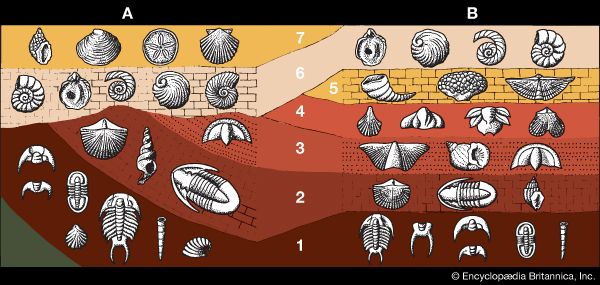
The law of faunal succession is a fundamental principle in stratigraphy that allows geologists to determine the relative ages of rock layers by observing the predictable, non-repetitive order in which fossilized plants and animals appear in the rock record.12
Because specific groups of organisms existed during distinct intervals of geologic time, the presence of these fossils acts as a temporal marker. By identifying these unique fossil assemblages, geologists can correlate rock strata found in different geographic locations, even when the physical characteristics of the rocks differ.12
This process often relies on index fossils—species that were geographically widespread, abundant, and existed for only a short span of time. While the law of faunal succession is a secondary principle that depends on primary methods like the principle of superposition to establish the initial sequence, it remains an essential tool for mapping Earth’s history.324
What impact has the law of faunal succession had on the field of biostratigraphy?
The law of faunal succession has served as the fundamental pillar of biostratigraphy, transforming the study of Earth’s history from a localized observation of rock types into a global, time-ordered science. Its impact on the field is profound and multifaceted:16
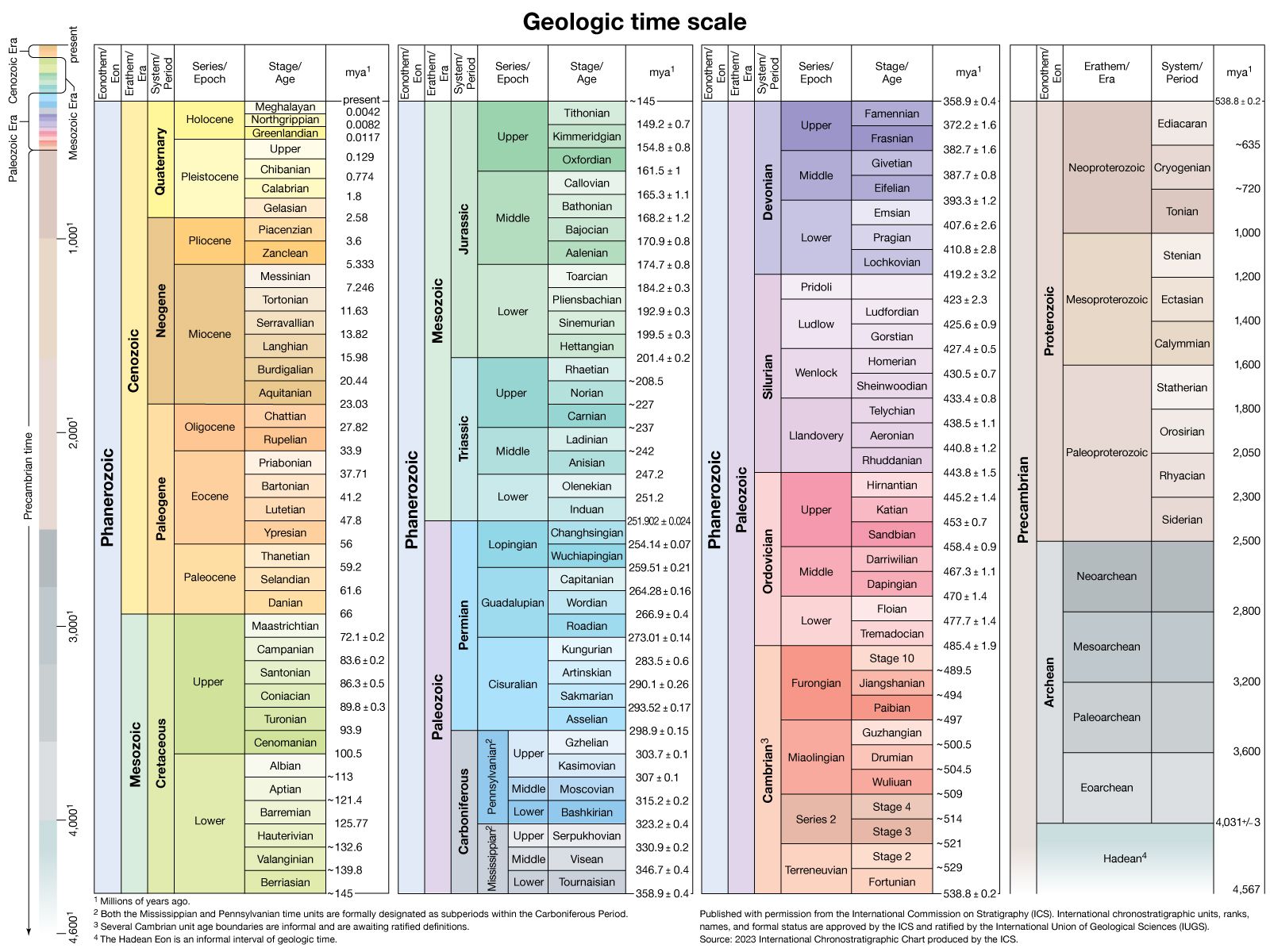
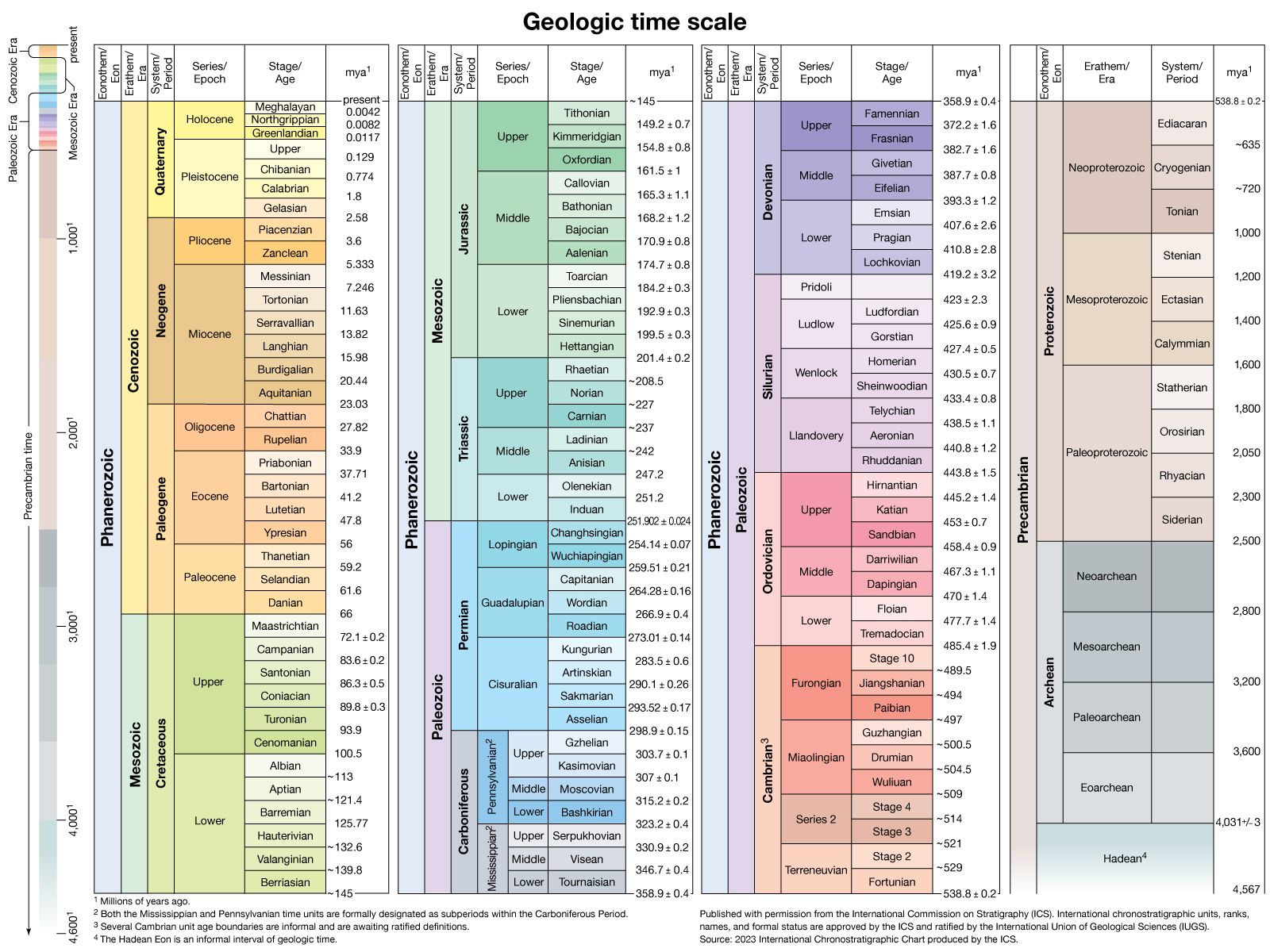
- Foundation of the Geologic Time Scale: By establishing that fossil assemblages succeed one another in a predictable, non-repetitive order, this principle provided the essential framework for the geologic time scale. It allowed geologists to organize the Earth’s history into distinct, identifiable intervals.16
- Global Correlation: The law enabled scientists to correlate rock strata across vast geographic distances, even when the physical composition of the rocks differed significantly. This capability turned fossils into temporal markers, allowing for the synchronization of geological events worldwide.16
- Refinement of Biostratigraphic Units: The principle spurred the development of more precise tools, such as index fossils, and led to the creation of biozones. These refinements, pioneered by figures like Carl Albert Oppel, moved the field beyond broad, lithologically defined intervals toward a sophisticated biochronology based on the first and last appearances of species.5
- Evolutionary Context: While early proponents like Georges Cuvier interpreted these successions through the lens of catastrophism, the observed order in the fossil record eventually provided critical evidence for evolution, demonstrating that life progresses in a non-repetitive manner.17
What role does the law of faunal succession play in understanding extinct species?
The law of faunal succession is essential for understanding extinct species because it provides a predictable, non-repetitive framework for their appearance and disappearance in the fossil record.1
By observing that specific faunas occupy distinct intervals within rock strata, scientists can determine the temporal range of extinct organisms. Early researchers like Georges Cuvier used this principle to identify that many fossils—particularly terrestrial vertebrates—lacked living counterparts, proving they were extinct. Cuvier’s work in the Paris Basin demonstrated that these species had definite ranges within the stratigraphic column, appearing and vanishing at specific points in geologic time.17
While early interpretations, such as catastrophism, viewed these disappearances as evidence of sudden, violent destruction, the law of faunal succession ultimately provided the empirical basis for recognizing that life changes over time. It allows paleontologists to correlate these extinction events globally, creating a coherent history of life’s progression and decline.17
How does the law of faunal succession differ from other principles in stratigraphy?
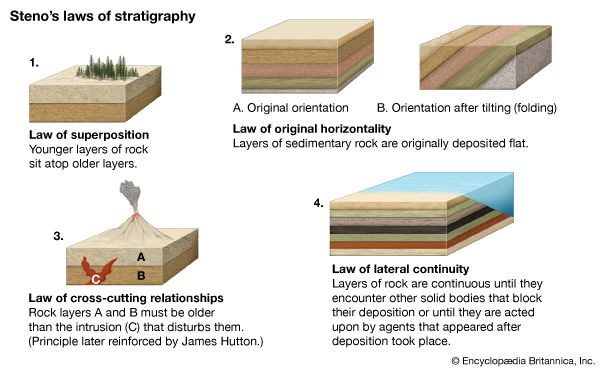
The law of faunal succession is distinct from other stratigraphic principles because it relies on biological content rather than physical properties to establish time relationships. While principles like the law of superposition focus on the physical position of rock layers—stating that the oldest strata are at the bottom of an undisturbed sequence—the law of faunal succession focuses on the predictable, non-repetitive order of fossilized plants and animals within those layers.14
Key differences include:
- Basis of Correlation: Other stratigraphic methods often rely on the physical characteristics of rocks (lithostratigraphy) or their position in a sequence. In contrast, faunal succession uses the unique, irreversible nature of biological evolution to correlate rock strata across different geographic regions, even when the rock types themselves differ.1
- Temporal Precision: Because species appear and disappear at specific points in geologic time, they act as temporal markers. This allows scientists to create a global geologic time scale that transcends local physical conditions.1
- Interpretive Scope: While superposition provides a relative order for a single site, faunal succession provides the framework for understanding the history of life, linking biological change to the passage of time.1
We could dive deeper into how radiometric dating complements these stratigraphic principles to provide absolute ages for these sequences.
Sources
- law of faunal succession — Encyclopædia Britannica
- index fossil — Encyclopædia Britannica
- dating - Determination of sequence — Encyclopædia Britannica
- stratigraphy — Encyclopædia Britannica
- dating - Principles and techniques — Encyclopædia Britannica
- geochronology - Stages and zones — Encyclopædia Britannica
- Earth sciences - William Smith and faunal succession — Encyclopædia Britannica
Published on · 4 min read