Bittersweet
The term "bittersweet" refers to two distinct types of plants, which often leads to confusion:
What is bittersweet (plant) and to which family does it belong?
The term “bittersweet” refers to two distinct types of plants, which often leads to confusion:
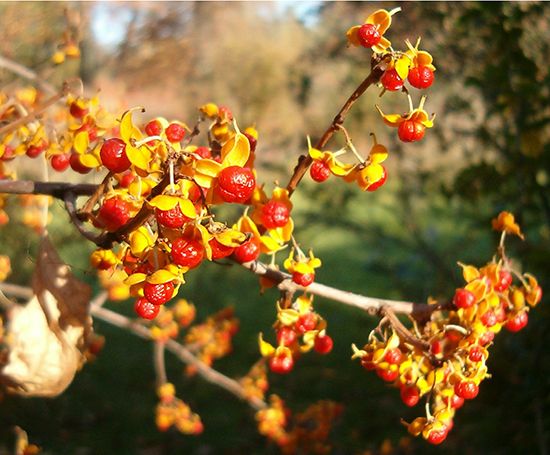
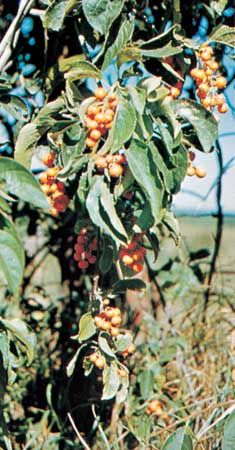
- Bittersweet (genus Celastrus): This group includes woody vines such as the American bittersweet and Oriental bittersweet. These plants belong to the staff tree family (Celastraceae) and are commonly grown as ornamentals for their colorful fruit, which consists of capsules that split to reveal bright arils.1
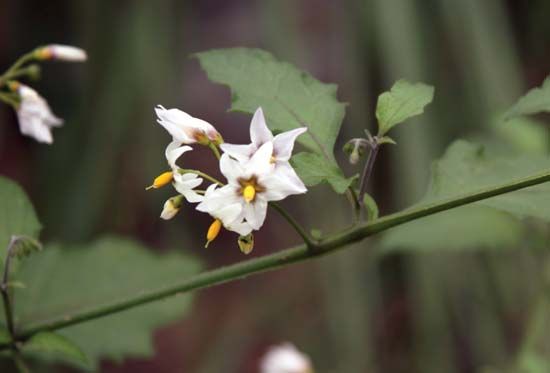
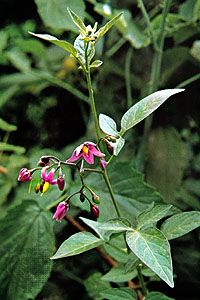
- Bittersweet (or woody nightshade, Solanum dulcamara): This is an herbaceous vine belonging to the nightshade family (Solanaceae). It is known for its star-shaped violet and yellow flowers and shiny red berries. It is important to note that this plant is poisonous, as its foliage and berries contain the active principle solanine, which can be dangerous if ingested.12
Because the name is shared by plants from entirely different families, it is helpful to distinguish them by their scientific names or their distinct physical characteristics.
Are there different species of bittersweet, and how do they differ?
The term “bittersweet” is applied to two distinct groups of plants that differ significantly in their botanical classification and physical characteristics:
The Genus Celastrus (Staff Tree Family)
These are woody, twining vines belonging to the Celastraceae family. They are primarily cultivated as ornamentals for their decorative fruit.
- American bittersweet (C. scandens): A native woody vine that can reach heights of up to 7.5 meters. Its populations often contain many sterile individuals.
- Oriental bittersweet (C. orbiculatus): A more vigorous climber than its American counterpart, capable of reaching 12 meters. Both species produce whitish flower clusters followed by yellow-to-orange capsules that split open to reveal bright yellow-to-crimson arils.1
Woody Nightshade (Solanum dulcamara)
Often called “bittersweet” or woody nightshade, this plant belongs to the Solanaceae (nightshade) family.
- Characteristics: Unlike the woody Celastrus vines, this is an herbaceous vine that grows up to 4.5 meters long. It features star-shaped violet and yellow flowers and produces shiny red berries.14
- Safety Warning: It is essential to recognize that this plant is poisonous. Its foliage and berries contain solanine, a toxic compound that can be dangerous if ingested.14
In which regions or habitats are bittersweet plants commonly found?
Bittersweet plants are found in a variety of environments depending on the species:
- American Bittersweet (Celastrus scandens): This native woody vine is typically found climbing by twining around supports in its natural habitats, often in thickets or along the edges of woodlands.1
- Oriental Bittersweet (Celastrus orbiculatus): Originally from Asia, this vigorous climber has become naturalized in many regions, particularly in eastern North America, where it thrives in diverse habitats as an invasive species.16
- Woody Nightshade (Solanum dulcamara): This herbaceous vine is commonly found in moist or damp habitats, such as hedgerows, thickets, and the banks of streams or ponds, where it uses its length to climb over surrounding vegetation.1
Because these plants have different ecological requirements and some are considered invasive, it is important to identify them correctly when managing local landscapes.
Are there any concerns about bittersweet being an invasive species in certain areas?
Yes, there are significant concerns regarding the invasive nature of certain bittersweet species. Specifically, Oriental bittersweet (Celastrus orbiculatus) is recognized as a highly vigorous climber that has become naturalized in many regions, particularly across eastern North America.61
Because of its aggressive growth habit—reaching heights of up to 12 meters—it can easily outcompete native vegetation for sunlight and physical space, often smothering trees and shrubs in the process. In contrast, the American bittersweet (C. scandens) is a native species that generally does not exhibit the same invasive, destructive behavior in its natural range.1
It is ethically important to prioritize the protection of native biodiversity by avoiding the cultivation of invasive species that threaten local ecosystems. Land managers and gardeners are encouraged to distinguish between these species to prevent the further spread of invasive varieties.
Sources
- bittersweet — Encyclopædia Britannica
- Nightshade — Encyclopædia Britannica
- Solanaceae — Encyclopædia Britannica
- Celastrales — Encyclopædia Britannica
- woody nightshade — Merriam-Webster
- oriental bittersweet — Merriam-Webster
Published on · 3 min read