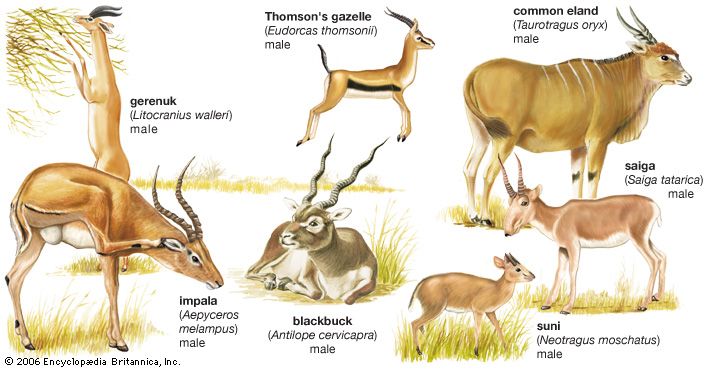
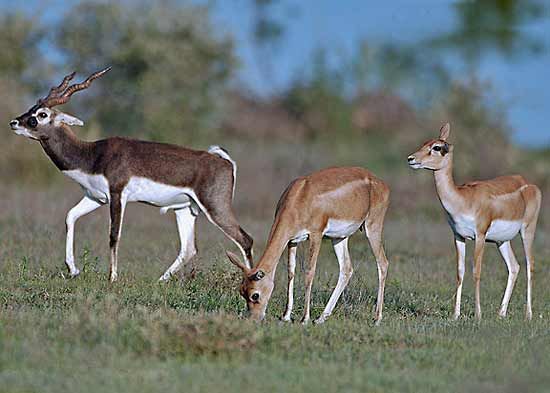
Blackbuck
The blackbuck (Antilope cervicapra) is recognized as being as fast as any antelope, a physical trait that serves as its primary defense mechanism against…
How fast can blackbucks run, and how does this ability help them survive?
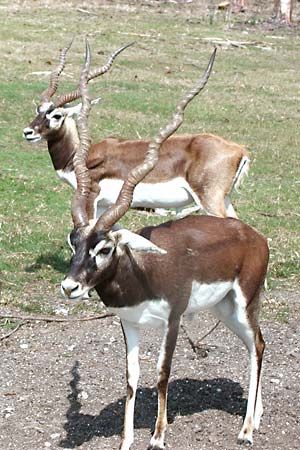
The blackbuck (Antilope cervicapra) is recognized as being as fast as any antelope, a physical trait that serves as its primary defense mechanism against predators. While specific top-speed figures are not detailed in the provided records, their exceptional speed allows them to outrun almost all threats in their native Indian plains, with the notable exception of the cheetah.1
Beyond their speed, blackbucks rely heavily on their keen eyesight to detect danger early and avoid capture. Because they inhabit open short grasslands and nearly barren salt pans, they lack the cover of dense vegetation, making their ability to spot and outpace predators essential for survival. While adult blackbucks are largely protected by their speed, their fawns remain vulnerable to predators such as jackals and pariah dogs.1
What role do blackbucks play in their ecosystem?
The blackbuck (Antilope cervicapra) plays a significant role in its ecosystem primarily as a specialized herbivore that helps maintain the balance of open grassland environments.12
Ecological Contributions
- Grazing Dynamics: As primary grazers, blackbucks are adapted to thrive in open, short grasslands and semidesert areas where they consume green grass. By grazing in these open regions, they occupy a specific ecological niche that minimizes competition with other ruminants, such as chital deer or sambar, which may prefer forest edges or denser vegetation.12
- Resource Partitioning: Blackbucks contribute to the efficient use of environmental resources by focusing on grass shoots in open areas, particularly during the hot season when other species might seek different food sources or habitats. This behavior is part of a broader ecological strategy where various artiodactyls parcel out food resources, ensuring that different plant species and growth stages are utilized across the landscape.2
- Trophic Interactions: Within their food web, blackbucks serve as a prey base for various predators. While their speed allows them to evade most threats, they are a source of food for predators such as jackals and pariah dogs, which primarily target fawns.1
What is the scientific name of the blackbuck, and what family does it belong to?
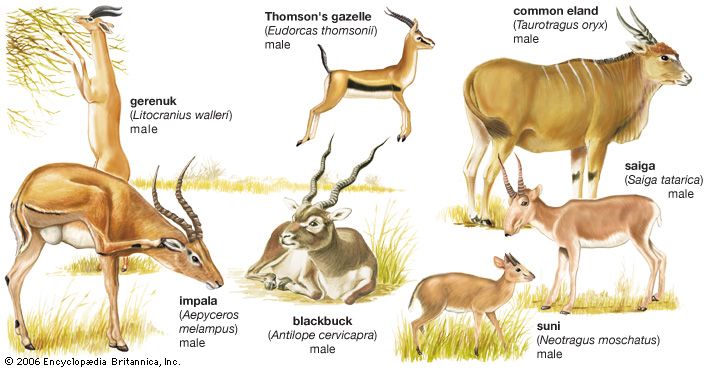
The scientific name of the blackbuck is Antilope cervicapra. It belongs to the family Bovidae, which includes other hoofed mammals such as antelopes, cattle, sheep, and goats.134
Within this family, the blackbuck is classified under the tribe Antilopini, a group that also includes gazelles, the springbok, and the gerenuk.13
How does the blackbuck’s diet and feeding behavior adapt to its environment?
The blackbuck (Antilope cervicapra) is a specialized herbivore whose feeding behavior is finely tuned to its environment, primarily open grasslands and semidesert regions.1
Dietary Adaptations
- Grazing Specialization: Blackbucks are primarily grazers that prefer green grass. However, they exhibit dietary flexibility by browsing on other vegetation when grass becomes sparse.1
- Resource Partitioning: In ecosystems where they coexist with other ruminants, blackbucks occupy a distinct ecological niche. By focusing on grass shoots in open areas, they minimize direct competition with species like chital (which prefer forest edges) or barasingha (which consume coarser grasses along ravines).2
- Water Efficiency: Unlike many other ruminants, blackbucks are well-adapted to drier regions and require less water. While they have been observed drinking twice daily in arid environments like Rajasthan, their ability to thrive in drier habitats allows them to remain in areas where other species might struggle.12
Feeding Behavior
- Activity Patterns: Blackbucks are diurnal, remaining active throughout the day even under intense sun. They typically seek shade for only two to three hours during the hottest part of the day, allowing them to maximize their foraging time in open, sun-exposed plains.1
- Ruminant Digestion: As ruminants, blackbucks utilize bacterial fermentation in the rumen to break down cellulose, which is indigestible to most other animals. This allows them to extract energy from grasses that would otherwise be nutritionally unavailable.5
Sources
- blackbuck — Encyclopædia Britannica
- artiodactyl - Food habits — Encyclopædia Britannica
- bovid — Encyclopædia Britannica
- antelope — Encyclopædia Britannica
- nutrition - Herbivores — Encyclopædia Britannica
Published on · 3 min read