Blue-eyed Grass
Despite its name, blue-eyed grass is not a true grass. It refers to any of the more than 75 species within the genus Sisyrinchium, which are perennial…
What is Blue-eyed grass?
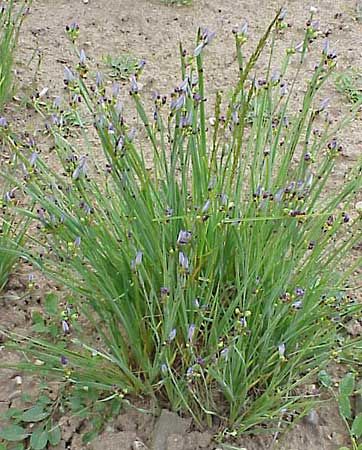
Despite its name, blue-eyed grass is not a true grass. It refers to any of the more than 75 species within the genus Sisyrinchium, which are perennial, grasslike herbs belonging to the iris family (Iridaceae), grasslike herbs belonging to the iris family (Iridaceae).1
Native to the Americas and the Caribbean, these plants are characterized by their wiry, fibrous rootstalks and starry flowers that feature six petallike segments1. While the name suggests a blue hue, the blooms can actually range in color from white and yellow to blue and violet. Notable species include:21
- Common blue-eyed grass (S. angustifolium): Native to North America and the West Indies, this species features yellow-eyed blooms and has been naturalized in parts of Europe.2
- Western blue-eyed grass (S. bellum): Found from western Mexico to Oregon, this plant produces flowers ranging from blue to purple.2
- Argentine blue-eyed grass (S. striatum): A South American species that grows up to 90 cm tall and bears clusters of creamy white flowers.2
What other plants belong to the iris family?
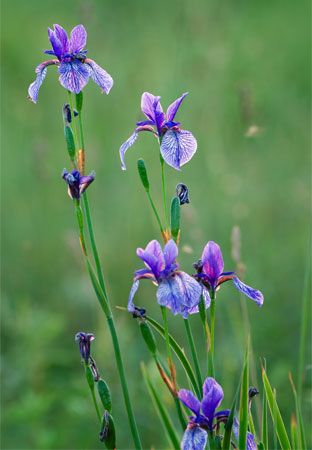
The Iridaceae family, commonly known as the iris family, comprises approximately 66 genera and 2,200 species of flowering plants. While many are grown as popular ornamentals, the family includes a diverse range of plants adapted to various environments worldwide.3
Beyond the blue-eyed grasses (Sisyrinchium), other notable members of the family include:
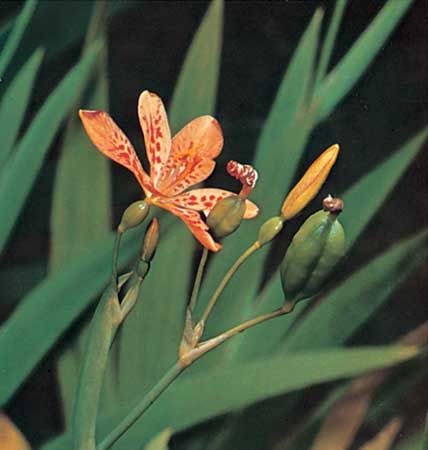
- Iris: This genus contains about 300 species, including the common bearded iris, the water-loving Japanese iris, and the blue flag. Some species, such as the blackberry lily, are cultivated for their unique flowers, while others yield orrisroot for use in perfumes and soaps.3
- Crocus: Known for their spring and autumn blooms, this genus includes the spring crocus and Crocus sativa, the source of the valuable spice saffron.3
- Gladiolus: This genus features about 300 species and is widely recognized for its importance in the horticultural and cut-flower industries.3
- Freesia: These plants are frequently grown commercially for their fragrant cut flowers.3
How do perennial plants survive through the winter?
Perennial plants survive the winter by synchronizing their growth cycles with seasonal changes or by entering a state of dormancy to withstand unfavorable conditions. This survival strategy is often triggered by environmental cues, such as shortening day lengths and decreasing temperatures, which signal the plant to cease growth and prepare for winter.5
Strategies for Winter Survival
- Dormancy and Resting Buds: In woody plants, growth stops as the plant forms resting buds. These buds contain a short stem axis protected by modified, unexpanded leaves that shield the plant from drying out. The cells within these buds exhibit marked frost resistance.5
- Dieback of Aerial Parts: Many herbaceous perennials survive by allowing their aboveground portions to die back in autumn. These plants rely on protected organs—such as rhizomes, bulbs, corms, or tubers—that remain at or below the soil surface, where they store food and water to sustain the plant through the winter.67
- Hormonal Regulation: The transition into dormancy is managed by plant hormones. Abscisic acid is often associated with the induction of dormancy and the cessation of growth, while the balance between growth-inhibiting substances and growth-promoting hormones like gibberellins regulates the eventual resumption of growth in the spring.5
- Vernalization: Many species require a period of cold exposure, known as vernalization, to transition from vegetative growth to flowering. This process ensures that plants bloom during the favorable conditions of spring rather than prematurely.8
What are the main differences between monocots and dicots?
Flowering plants, or angiosperms, are traditionally categorized into two major groups: monocots and eudicots (formerly known as dicots). These groups are distinguished by several fundamental structural differences in their seeds, roots, stems, leaves, and flowers.131415
Key Differences
Feature
Monocots
Eudicots
Seed Leaves
One
cotyledon
Two cotyledons
Leaf Venation
Parallel veins
Netlike (meshlike) veins
Root System
Fibrous, adventitious roots
Taproot system
Vascular Bundles
Scattered in the stem
Arranged in a ring
Flower Parts
Multiples of three
Multiples of four or five
Pollen
Single aperture (furrow)
Three apertures (tricolpate)
Structural and Evolutionary Context
The primary distinction lies in the embryo; monocots possess a single seed leaf, while eudicots typically have two. Beyond the seed, these plants exhibit distinct developmental patterns. Monocots lack a typical vascular cambium, meaning they generally cannot undergo secondary thickening to increase stem diameter, whereas many eudicots are woody and produce new tissue through cambial activity throughout their lives.13161418
Furthermore, while monocots form a monophyletic group, the term “dicot” has been revised; “typical” dicots are now classified as eudicots to reflect their specific evolutionary lineage, which is distinct from more basal flowering plant groups.1415
Sources
- blue-eyed grass — Encyclopædia Britannica
- blue-eyed grass — Merriam-Webster
- Iridaceae — Encyclopædia Britannica
- Iridaceae — Merriam-Webster
- Plant development - Seasonal adaptations — Encyclopædia Britannica
- Perennial — Encyclopædia Britannica
- Angiosperm - Shoot system modifications — Encyclopædia Britannica
- Leaf — Encyclopædia Britannica
- vernalization: Top Questions — Encyclopædia Britannica
- vernalization — Encyclopædia Britannica
- Tundra - Plant life — Encyclopædia Britannica
- horticulture - Frost control — Encyclopædia Britannica
- Monocotyledon — Encyclopædia Britannica
- Angiosperm - Leaves — Encyclopædia Britannica
- Cotyledon — Encyclopædia Britannica
- Eudicotyledon — Encyclopædia Britannica
- Root — Encyclopædia Britannica
- Plant - Classification of angiosperms — Encyclopædia Britannica
Published on · 4 min read