Blue Jay
The blue jay (Cyanocitta cristata) is a large, intelligent bird in the family Corvidae, native to North America east of the Rocky Mountains. Known for its…
What is a blue jay?
The blue jay (Cyanocitta cristata) is a large, intelligent bird in the family Corvidae, native to North America east of the Rocky Mountains1. Known for its striking blue plumage, prominent head crest, and raucous calls, the species is highly adaptable and commonly found in forests, cities, and suburban areas.1
While they appear blue, their feathers actually contain brown melanin; the blue color is an optical effect caused by specialized cells that reflect blue light. Blue jays are omnivores that feed on nuts, seeds, fruits, and small invertebrates. They are well-known for their intelligence, including the ability to mimic the calls of hawks to deter competitors3.1
The International Union for Conservation of Nature classifies the blue jay as a species of least concern due to its large population and adaptability.1
What does a blue jay look like?
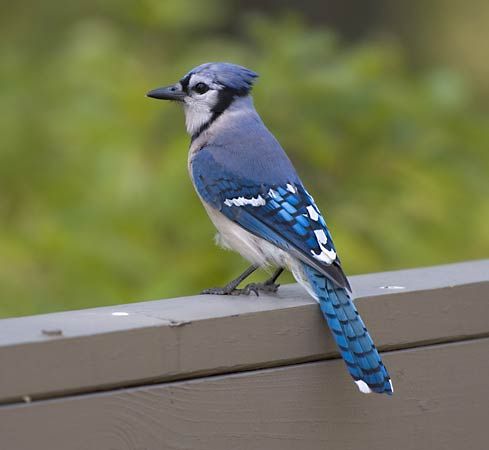
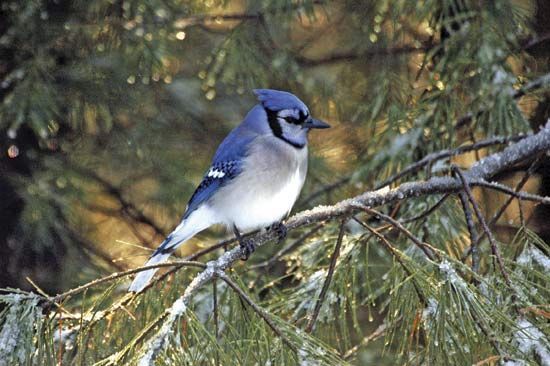
The blue jay (Cyanocitta cristata) is a distinctive North American bird characterized by its vibrant appearance and prominent features. Measuring between 22 and 30 cm (8.7 to 11.8 inches) in length, the bird is easily recognized by its large feather head crest and primarily blue plumage.1
Physical Characteristics
While the bird appears blue, its feathers actually contain brown melanin; the blue coloration is an optical effect produced by specialized cells that reflect blue light. Key visual identifiers include:1
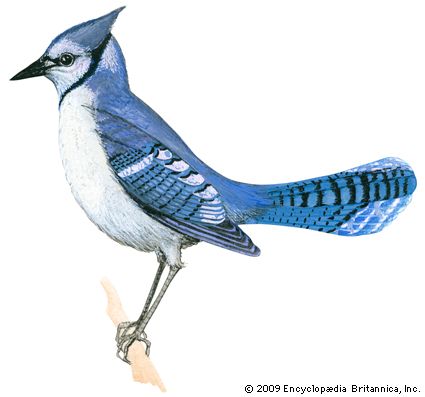
- Coloration: A blue back and head, complemented by a white breast and white markings on the wings.1
- Throat and Crest: A gray-blue crest and a white and gray throat patch.1
- Markings: A distinct black collar that extends toward the throat from the rear base of the crest, along with black bars on the tail.1
Where do blue jays live?
Blue jays (Cyanocitta cristata) are native to North America, where they inhabit coniferous and deciduous forests east of the Rocky Mountains. Their range extends across much of the United States and southern Canada.31
Because they are a highly adaptable species, blue jays also frequently live in human-altered environments, including cities and suburban residential areas. Within their broad geographic range, different subspecies occupy specific regions:3
- Northern blue jay: Southern Canada and the central and southeastern United States.3
- Interior blue jay: The southern Great Plains.3
- Coastal blue jay: The eastern United States.3
- Florida blue jay: Southern Florida.3
While they are often confused with other birds locally called “blue jays”—such as the scrub jays—the true blue jay is distinct due to its prominent head crest and specific range east of the Rockies.31
What do blue jays eat?
Blue jays are omnivores that forage for food in trees, in shrubs, and on the ground. Their diet is varied and changes with the seasons, consisting of both plant matter and animal prey.3
Plant-Based Foods
A favorite food of the blue jay is the acorn, which the bird breaks open with its beak to reach the seed inside. Other common plant-based food sources include:
Animal-Based Foods
Blue jays also consume live prey and other animal sources, such as:
- Insects, arachnids, and snails3
- Small rodents and amphibians3
- Carrion and pet food3
- Occasionally, the eggs and young of other birds3
Blue jays are known for caching or storing food for later consumption. This behavior is ecologically significant, as forgotten caches can sprout into new plants, particularly oak trees.3
Sources
- Jay — Encyclopædia Britannica
- blue jay — Merriam-Webster
- Blue jay — Encyclopædia Britannica
- seed - Dispersal by birds — Encyclopædia Britannica
Published on · 3 min read