Corvidae
The Corvidae family, belonging to the order Passeriformes, comprises over 120 species, including crows, jays, magpies, ravens, and choughs. These birds are…
What are the main characteristics that define the Corvidae family?
The Corvidae family, belonging to the order Passeriformes, comprises over 120 species, including crows, jays, magpies, ravens, and choughs. These birds are defined by several key characteristics:12
- Physical Build: Corvids are generally stout-billed, strongly built birds ranging from 23 to 71 cm in length, with some species representing the largest of the passerines. They possess a moderately long, cultrate (knife-shaped) bill.12
- Plumage: Their feathers are often plain and glossy, appearing either monochromatic or in contrasting patterns. Notably, the sexes typically look alike.1
- Behavior and Intelligence: Corvids are recognized for their exceptional intelligence, with some species demonstrating advanced problem-solving, tool use, and mimicry. They are often gregarious, exhibiting highly developed social organizations characterized by mutual aid.13
- Social and Reproductive Habits: Many species maintain strong, sometimes lifelong, pair bonds. They typically build nests out of twigs in trees or on ledges, and males actively assist in feeding the female during incubation.1
- Diet: They are generally omnivorous, acting as scavengers and predators that consume insects, grain, carrion, and eggs.13
Which common bird species belong to the Corvidae family?
The Corvidae family is a diverse group of songbirds that includes several well-known species. While people often use terms like “crow” and “raven” interchangeably, they represent distinct, closely related birds within this family.15
Common species belonging to the Corvidae family include:
- Crows: Highly intelligent and social birds, such as the American crow.15
- Ravens: Larger, often more solitary birds, such as the common raven.15
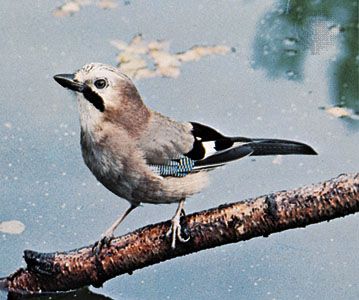
- Jays: Often characterized by their vibrant colors and crests.15
- Magpies: Known for their distinctive appearance and long tails.15
- Rooks: Social birds often found in colonies.1
- Jackdaws: Smaller members of the family.1
- Nutcrackers: Known for their habit of storing seeds.1
- Choughs: Distinctive birds often found in mountainous or coastal regions.1
These birds are part of the order Passeriformes and are recognized globally for their complex social behaviors and high levels of intelligence.15
How intelligent are corvids compared to other bird families?
Corvids, a family that includes crows, jays, and magpies, are widely recognized for possessing exceptional intelligence compared to many other bird families. Their cognitive abilities are often compared to those of social mammals, as they exhibit complex social organizations and advanced problem-solving skills.14
Key indicators of their high intelligence include:
- Tool Use: Certain species, such as the New Caledonian crow and the Hawaiian crow, use stick-type foraging tools to extract food from crevices. In experimental settings, crows have demonstrated the ability to solve complex puzzles, such as raising water levels in a cylinder by dropping in pebbles to reach a floating reward—a task that has proven challenging even for young human children.46
- Cognitive Sophistication: Corvids show remarkable curiosity and learning capabilities. They can be trained to count, learn extensive vocabularies, and mimic human speech or other sounds. Furthermore, the carrion crow has demonstrated the unique ability to distinguish between different geometric shapes.4
- Social Intelligence: Like many intelligent mammals, corvids engage in cooperative behaviors, such as hunting, foraging, and defending territories together. They also exhibit strong social bonds and mutual aid within their groups.41
What is the typical lifespan of corvids in the wild?
The typical lifespan of corvids in the wild varies by species. For example, the common raven generally lives 10 to 15 years in the wild, while an American crow may live approximately 13 years in its natural habitat.84
In captivity, these birds often live significantly longer due to the absence of natural predators and consistent access to resources; for instance, common ravens can reach 40 to 50 years of age, and some crows have been known to live more than 20 years.84
Sources
- Corvidae — Encyclopædia Britannica
- Corvidae — Merriam-Webster
- Bird - Skeleton — Encyclopædia Britannica
- Crow — Encyclopædia Britannica
- What's the difference between ravens and crows? — Merriam-Webster
- Extreme birds: 7 wonders of the avian world — Encyclopædia Britannica
- Which Animal Is the Smartest? — Encyclopædia Britannica
- Common raven — Encyclopædia Britannica
Published on · 3 min read