Bontebok National Park
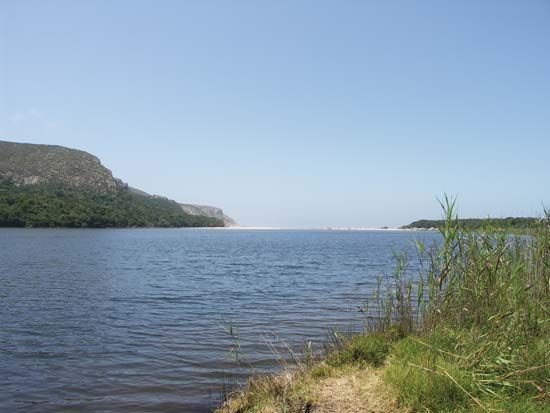
Bontebok National Park is a national park located in the Western Cape province of South Africa. Established in 1931 and relocated to its current site in the…
What is Bontebok National Park?
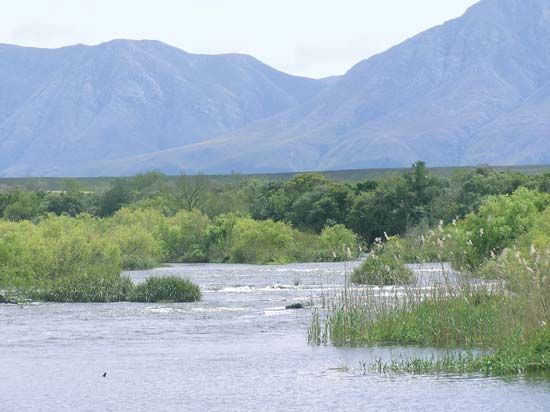
Bontebok National Park is a national park located in the Western Cape province of South Africa. Established in 1931 and relocated to its current site in the Breede River valley in 1960, the park spans 12 square miles (32 square km) south of the Langeberg mountains.12
The primary purpose of the park is to serve as a protected reserve for the rare and endangered bontebok, a species of antelope. In addition to the bontebok, the park provides a habitat for several other antelope species, including the rhebok, springbok, grysbok, and duiker. It remains a significant site within South Africa’s broader conservation efforts to protect the country’s unique biodiversity.12
What makes the bontebok antelope unique?
The bontebok (Damaliscus pygargus dorcas) is a unique and visually striking antelope native to the coastal plains of South Africa’s Western Cape province. It is distinguished from its close relative, the blesbok, by its particularly vibrant and glossy coat.
Key features that make the bontebok unique include:
- Distinctive Coloration: The bontebok is exceptionally colorful, featuring purple-black blotches on its flanks and upper limbs. It also possesses a white rump patch, a white upper tail, and a white facial blaze that is uniquely bisected by a brown band.3
- Conservation Status: Unlike the more abundant blesbok, the bontebok is considered rare and uncommon. It came very close to extinction, and today its largest population is protected within Bontebok National Park.31
- Taxonomy: It is classified as an isolated subspecies of the Damaliscus pygargus species, confined specifically to the coastal regions of the Western Cape.3
How do national parks help protect endangered species?
National parks play a vital role in protecting endangered species primarily through in situ conservation, which preserves species and their genetic resources within their natural habitats. By setting aside large, protected areas, governments ensure that entire ecosystems—including the flora and fauna they support—are safeguarded from human encroachment and habitat destruction.45
These parks help protect vulnerable species through several key management strategies:
- Habitat Protection and Restoration: Conservationists work to maintain or restore natural ecological processes, such as fire and flooding regimes, to ensure the environment remains suitable for native species. This often involves large-scale projects, such as the Comprehensive Everglades Restoration Plan, which aims to restore natural water flow to degraded ecosystems.67
- Active Population Management: Park officials monitor wildlife populations and may intervene to support recovery. This includes reintroducing species that have become locally extinct, such as the blackbuck in Kanha National Park, or raising and training orphaned animals to survive in the wild.4
- Threat Mitigation: Management often involves the removal of invasive species that threaten native wildlife, as well as efforts to prevent the introduction of new threats.687
- Transfrontier Cooperation: By linking parks across international borders, countries create large, interconnected conservation areas that allow for the natural movement of migratory populations, providing a wider range of habitat for savanna and other species.9
What is the Fynbos biome found in the Western Cape?
Fynbos is a unique scrubland plant community found along a narrow strip of the extreme southern coast of South Africa, particularly within the Western Cape. It is a core component of the greater Cape floristic region and is classified as part of the Mediterranean vegetation biome, sharing characteristics with ecosystems like the North American chaparral.1011
Key characteristics of the fynbos include:
- Extraordinary Biodiversity: The biome contains more than 8,500 plant species, the majority of which are endemic, meaning they are native nowhere else in the world.1011
- Vegetation Composition: It is dominated by broad-leaved evergreen shrubs, notably from the Proteaceae family, alongside heathers (Erica), irises, grasses, and orchids.1011
- Environmental Conditions: The region experiences a Mediterranean climate with cold, wet winters and hot, dry summers, occurring on soil that is typically acidic and nutrient-poor.1011
- Conservation Threats: The ecosystem faces significant pressure from invasive species—specifically Australian acacia—and the conversion of land for agriculture, which have led to numerous species becoming threatened.12
Sources
- Bontebok National Park — Encyclopædia Britannica
- South Africa - Conservation of South Africa — Encyclopædia Britannica
- blesbok — Encyclopædia Britannica
- conservation - Habitat management — Encyclopædia Britannica
- national park — Encyclopædia Britannica
- conservation - Preventing the loss of biodiversity — Encyclopædia Britannica
- Everglades National Park — Encyclopædia Britannica
- Africa - Conservation of Africa — Encyclopædia Britannica
- Kanha National Park — Encyclopædia Britannica
- Fynbos — Encyclopædia Britannica
- fynbos — Merriam-Webster
- conservation - Flowering plants — Encyclopædia Britannica
Published on · 3 min read