Bothnian Sea
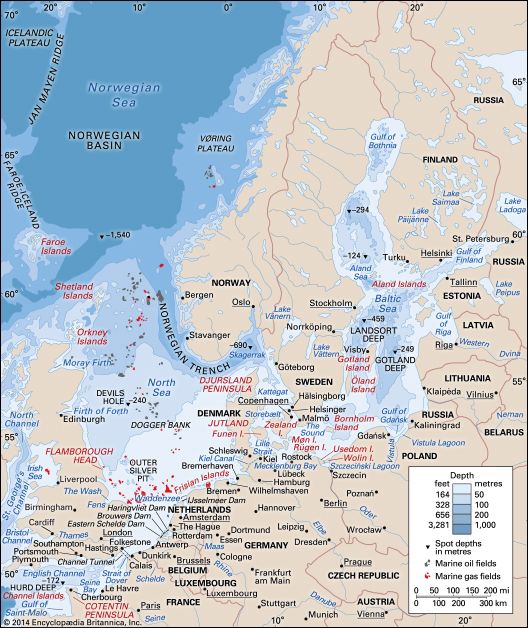
The Bothnian Sea is the southern portion of the Gulf of Bothnia, which serves as the northern arm of the Baltic Sea. It is situated between the countries of…
What is Bothnian Sea?
The Bothnian Sea is the southern portion of the Gulf of Bothnia, which serves as the northern arm of the Baltic Sea. It is situated between the countries of Finland and Sweden.12
The Gulf of Bothnia as a whole is characterized by its extremely low salinity due to the influx of numerous rivers, which leads to significant ice cover during the winter months. The northern section of this gulf is known as the Bay of Bothnia3. The region experiences marked seasonality, with long, cold winters and short, relatively warm summers.23
How does the salinity of the Baltic Sea compare to the ocean?
The Baltic Sea has significantly lower salinity than the open ocean, which typically maintains a salinity range of 33 to 37 parts per thousand (psu). Because the Baltic is nearly landlocked and receives a large influx of freshwater from rivers and surface runoff, its waters are remarkably fresh.56
Salinity levels within the Baltic vary by location:
- Western Baltic: This area records the highest salinity, reaching approximately 10 psu at the surface and 15 psu near the bottom.6
- General Baltic: Much of the sea has salinity levels depressed to 10 psu or less.5
- Gulf of Bothnia: The salinity decreases significantly toward the north, with the head of the gulf containing water that is nearly fresh.76
This low salinity is primarily due to the sea’s isolation from the open ocean and the substantial drainage from major rivers, such as the Vistula and the Oder, which dilute the seawater.65
What are the major ports located along the Gulf of Bothnia?
The Gulf of Bothnia serves as a vital maritime corridor between Sweden and Finland. Several major ports facilitate trade and the processing of forest resources along its coastlines:
Finnish Ports
- Pori
- Vaasa
- Oulu
Swedish Ports
- Luleå
- Härnösand
- Sundsvall
- Gävle
These ports are essential to the regional economy, particularly for the coastal sawmills that process timber from the surrounding hinterlands. Navigation in the area can be challenging due to the presence of numerous small islands and the significant ice cover that persists for up to five months during the winter season.2
Why does the Gulf of Bothnia freeze for so long during winter?
The Gulf of Bothnia experiences prolonged ice cover during the winter primarily due to its extremely low salinity and the region’s harsh climate.24
Because the gulf is nearly landlocked and receives a massive influx of freshwater from numerous rivers—such as the Ångerman, Ume, Lule, Torne, Kemi, and Oulu—the water is significantly fresher than that of the open ocean. Freshwater has a higher freezing point than saltwater, which facilitates the formation and maintenance of ice. This effect is compounded by the gulf’s shallow coastal waters and the long, cold winters characteristic of the area, where mean temperatures can drop to approximately 14 °F (−10 °C) in midwinter. Consequently, ice cover persists for up to five months, often accumulating as pack ice that can form pressure ridges nearly 50 feet high.2465
Sources
- Bothnian Sea — Encyclopædia Britannica
- Gulf of Bothnia — Encyclopædia Britannica
- Bay of Bothnia — Encyclopædia Britannica
- Baltic Sea - Climate — Encyclopædia Britannica
- Atlantic Ocean - Salinity — Encyclopædia Britannica
- Baltic Sea - Hydrology — Encyclopædia Britannica
- seawater - Salinity distribution — Encyclopædia Britannica
- Did you know? — Merriam-Webster
- brackish — Merriam-Webster
Published on · 2 min read