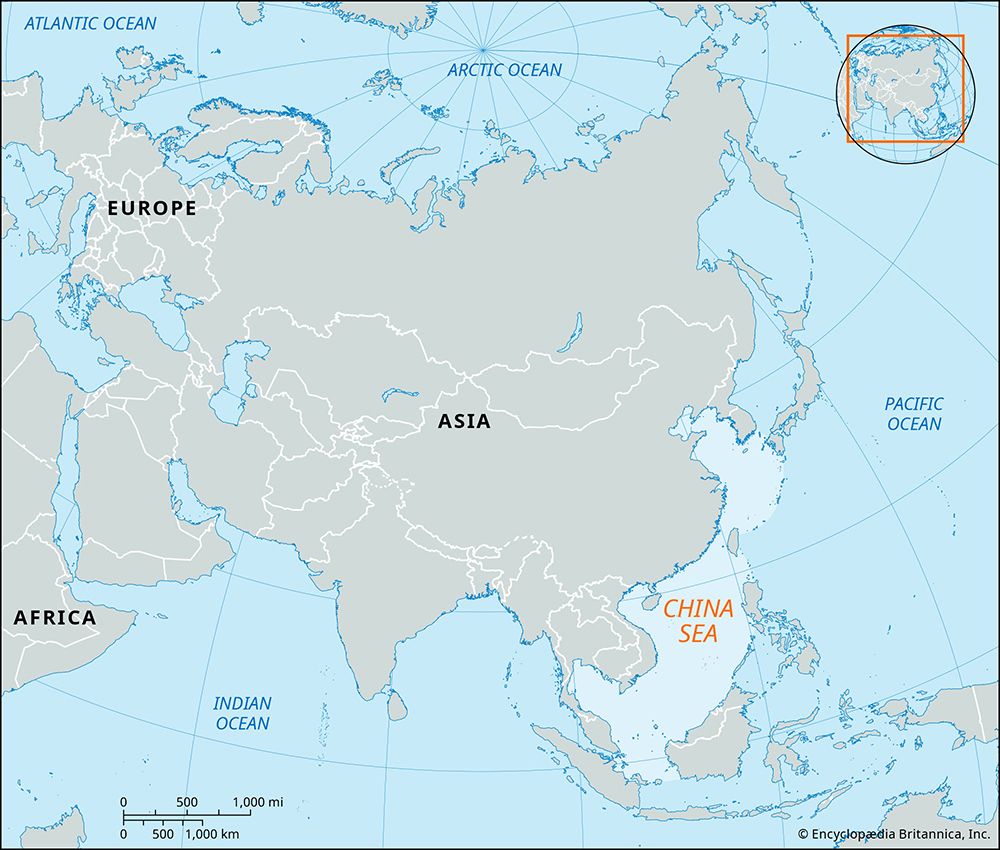
China Sea
The provided search results do not identify any marine life that is unique or endemic to the China Sea. Instead, they describe the region as a highly…
What types of marine life are unique to the China Sea?
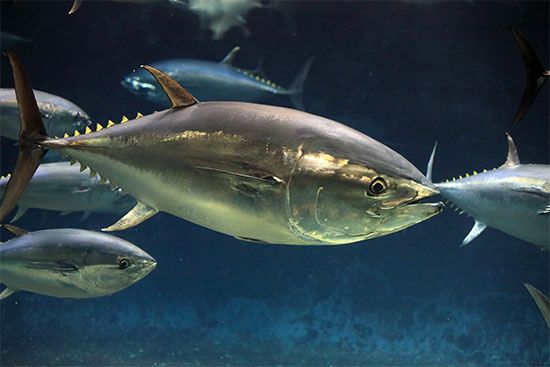
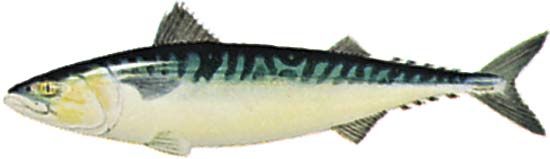
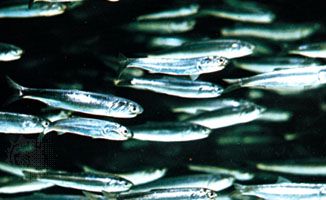
The provided search results do not identify any marine life that is unique or endemic to the China Sea. Instead, they describe the region as a highly productive area for various commercially significant species that are widely distributed in the western Pacific.
The marine life found in the South China Sea and the East China Sea includes:
- Fish: Tuna, mackerel, croaker, anchovy, sardines, milkfish, and sea breams.
- Crustaceans and Mollusks: Shrimp and various shellfish.
- Flora: Seaweeds.
The abundance of these species is attributed to nutrient-laden runoff from major river deltas and seasonal upwellings, rather than the presence of unique, localized species.123
How deep is the China Sea, and how does its depth vary across different regions?
The China Sea, comprising the South China Sea and the East China Sea, exhibits significant variations in depth across its regions.
South China Sea
The South China Sea is the larger of the two, with a mean depth of 3,976 feet (1,212 meters). Its topography is characterized by:3
- China Sea Basin: This deep, rhombus-shaped basin in the eastern portion contains the sea’s maximum depth of 16,457 feet (5,016 meters).23
- Continental Shelves: A broad, shallow shelf extends up to 150 miles (240 km) wide along the northwestern side toward the mainland. To the south, it connects to the Sunda Shelf, which is relatively shallow, ranging from 130 feet (40 meters) at its periphery to 330 feet (100 meters) in its central part.23
East China Sea
The East China Sea is generally shallower, with an average depth of 1,145 feet (349 meters). Key depth features include:2
- General Shelf: Almost three-fourths of the sea is less than 650 feet (200 meters) deep.1
- Okinawa Trough: This is the deepest section, extending alongside the Ryukyu Islands with a maximum depth of 8,912 feet (2,717 meters).21
How does the China Sea’s geography impact trade and navigation in the region?
The geography of the China Sea—comprising the South China Sea and the East China Sea—is central to global commerce and regional navigation. Its strategic importance is defined by several key factors:
- Vital Shipping Lanes: The South China Sea, in conjunction with the Strait of Malacca, serves as a primary transport artery connecting the Pacific and Indian oceans. In 2016 alone, these lanes carried approximately $3.4 trillion in trade, representing about one-fifth of global commerce.34
- Connectivity: The two seas are linked by the Taiwan Strait, a critical passage for maritime traffic. The East China Sea acts as the essential shipping route for vessels traveling from the South China Sea to major ports in Japan and the North Pacific.31
- Geopolitical Tensions: The region’s geography has become a focal point for international disputes. Overlapping claims regarding exclusive economic zones and the control of resource-rich areas—such as those surrounding the Spratly Islands and Paracel Islands—have created significant navigation and security challenges.425
- Environmental Hazards: Navigational safety is further complicated by the region’s physical features. Some areas, particularly in the central South China Sea, are poorly sounded and marked as “dangerous ground” on nautical charts. Additionally, seasonal monsoons and frequent typhoons significantly influence sea-surface currents and maritime conditions.321
What are some of the major ports and coastal cities along the China Sea?
The China Sea, which encompasses both the South China Sea and the East China Sea, is home to several major ports and coastal cities that serve as critical hubs for international trade and domestic shipping.
Major Ports and Coastal Cities
Many of the most significant ports are located along the Chinese mainland, serving as gateways for global commerce:
- Shanghai: Located on the East China Sea, Shanghai has been China’s leading port since the 19th century and serves as the administrative center for the northern marine district.36
- Hong Kong: A major international port that reincorporated into China in 1997, it eventually eclipsed Shanghai in total shipping volume.3
- Guangzhou (Canton): Situated in the south, it is the administrative center for the southern marine district and a vital hub for the Pearl River Delta region.34
- Other Key Ports: Additional significant ports include Dalian, Qingdao, Zhanjiang, Shantou, and Tanggu.34
- Regional Ports: Beyond mainland China, the East China Sea features important ports such as Nagasaki in Japan and Chi-lung in Taiwan.1
These ports are supported by extensive infrastructure, including containerization and mechanization, to facilitate the massive volume of goods moving between the Pacific and Indian oceans.3
Sources
- South China Sea — Encyclopædia Britannica
- East China Sea — Encyclopædia Britannica
- China Sea — Encyclopædia Britannica
- territorial disputes in the South China Sea - Physiography and economic factors — Encyclopædia Britannica
- territorial disputes in the South China Sea — Encyclopædia Britannica
- China - Port facilities and shipping — Encyclopædia Britannica
- Guangdong - Transportation of Guangdong — Encyclopædia Britannica
- Shanghai - Evolution of the city — Encyclopædia Britannica
Published on · 3 min read