Branch and Twig Borer
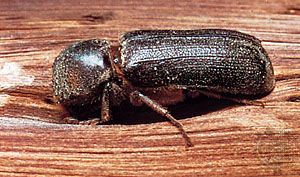
The term "branch and twig borer" refers to various species of beetles within the family Bostrichidae, as well as other insects that bore into woody plants.
Which types of trees or plants are most vulnerable to branch and twig borer attacks?
The term “branch and twig borer” refers to various species of beetles within the family Bostrichidae, as well as other insects that bore into woody plants.12
These insects exhibit different host preferences depending on the species:
- Fruit and Vine Hosts: The apple twig borer (also known as the grape cane borer) specifically targets living branches of fruit trees and grape vines. Similarly, the genus Polycaon is noted for being destructive in orchards.1
- Hardwood Trees: Species such as the lead-cable borer (Scobicia declivis) are commonly found in oak and maple trees.1
- Dead Wood: Many of these beetles, including the spotted-limb borer, primarily breed in dead wood, though they may bore into living tissue as well.1
While these insects are known for their ability to bore into wood, their impact varies from damaging agricultural crops to occasionally interfering with infrastructure, such as lead-covered telephone cables.1
How do branch and twig borers damage trees and plants?
Branch and twig borers (family Bostrichidae) and related wood-boring insects damage plants primarily through their tunneling activities. While some species, such as the apple twig borer (Amphicerus bicaudatus), bore directly into living branches and vines, many others primarily inhabit or breed within dead wood. In contrast, bark beetles (subfamily Scolytinae) often bore into trees to create egg chambers, where larvae subsequently tunnel away from the main chamber to feed, creating characteristic gallery patterns that can disrupt the tree’s vascular system.13
Beyond physical structural damage, these insects can have secondary impacts on plant health:
- Disease Transmission: Certain beetles, such as elm bark beetles, act as vectors for plant diseases, including Dutch elm disease, by carrying fungal spores into the tree.3
- Infrastructure Interference: Some species, like the lead-cable borer, bore into non-plant materials, such as the lead sheathing of telephone cables, where moisture entry can cause significant functional damage.1
What are the main physical characteristics of branch and twig borer insects?
Branch and twig borers, which belong to the family Bostrichidae, exhibit several distinct physical characteristics:
- Size: Most species range from 3 to 20 mm (0.1 to 0.8 inch) in length. However, there are notable exceptions, such as the palm borer (Dinapate wrighti), which can reach approximately 50 mm in length.1
- Coloration: Adults are typically black or brown.1
- Head Structure: While many bostrichids have specific head shapes, the psoid branch and twig beetles (subfamily Psoinae) are distinguished by a large head that is clearly visible when viewed from above.1
- Larval Form: Like many wood-boring Coleoptera, the larvae are generally soft-bodied and white. They are often cylindrical or flattened, adapted for their life within wood, and possess specialized digestive tracts containing yeast to help break down wood fibers.4
These beetles are part of the order Coleoptera, meaning they undergo complete metamorphosis, transitioning from larvae to pupae—which often resemble the adult form but are paler in color—before emerging as mature adults.154
How do branch and twig borers compare to other wood-boring insects in terms of their impact on trees?
Branch and twig borers (family Bostrichidae) differ from other wood-boring insects primarily in their habitat preferences and the nature of their impact on trees. While many wood-boring insects are significant pests of living timber, branch and twig borers are frequently associated with dead or dying wood, though some species can be destructive in orchards or to specific plant structures.1
Comparison of Wood-Boring Impacts
- Branch and Twig Borers (Bostrichidae): Many species, such as the spotted-limb borer, breed exclusively in dead wood. While certain species like the apple twig borer (Amphicerus bicaudatus) may bore into living branches or vines, their primary breeding grounds remain dead material. Their impact is often localized, though some genera, such as Polycaon, are known to be destructive in orchard settings.1
- Bark Beetles (Scolytinae): These are among the most destructive wood-boring insects. Unlike many bostrichids, bark beetles often attack living trees, boring beneath the bark to create egg chambers. Their larvae tunnel away from these chambers, creating gallery patterns that disrupt the tree’s vascular system and nutrient flow, which frequently leads to tree mortality. They also act as primary vectors for serious plant diseases, such as Dutch elm disease.63
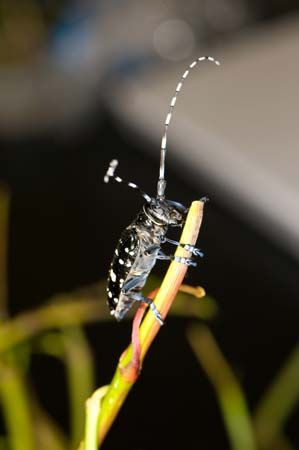
- Long-Horned Beetles (Cerambycidae): This family includes major pests of timber, fruit trees, and woody ornamentals. Their larvae, often called roundheaded borers, are highly destructive because they bore deep into the heartwood of living trees to feed for one to two years. The Asian long-horned beetle, for example, causes significant damage by creating large tunnels that weaken the tree’s structure and leave it susceptible to secondary infections.7
In summary, while branch and twig borers are often secondary pests associated with dead wood, bark beetles and long-horned beetles are frequently primary agents of tree mortality due to their specialized feeding habits within living vascular tissues and heartwood.1736
Sources
- branch and twig borer — Encyclopædia Britannica
- twig borer — Merriam-Webster
- bark beetle — Encyclopædia Britannica
- Coleoptera - Pupae — Encyclopædia Britannica
- Coleoptera - Larval features — Encyclopædia Britannica
- long-horned beetle — Encyclopædia Britannica
- Coleoptera - Size range and diversity of structure — Encyclopædia Britannica
- wood - Degradation — Encyclopædia Britannica
- forestry - Insect and disease control — Encyclopædia Britannica
Published on · 4 min read