Buckeye
Yes, there are approximately six species of North American buckeye trees and shrubs, all belonging to the genus Aesculus. While they share characteristics…
Are there different species of buckeye trees, and how do they differ?
Yes, there are approximately six species of North American buckeye trees and shrubs, all belonging to the genus Aesculus. While they share characteristics like palmately compound leaves and poisonous, nutlike seeds, they differ significantly in size, flower color, and growth habit.1
Key North American species include:
- Ohio buckeye (A. glabra): A Midwestern tree reaching up to 21 meters, known for leaves and twigs that emit an unpleasant odor when crushed.1
- Sweet/Yellow buckeye (A. flava): The largest species, native to the Appalachian Mountains, growing up to 27 meters with yellow flowers.1
- Red buckeye (A. pavia): A small, attractive tree reaching about 7.6 meters with red flowers.1
- Bottlebrush buckeye (A. parviflora): A shrub native to Georgia and Alabama that produces white flowers in long, erect spikes.1
- California buckeye (A. californica): Endemic to California and southwestern Oregon, featuring fragrant white-to-pink flowers.1
- Painted/Georgia buckeye (A. sylvatica): A small tree or shrub with yellow to reddish flowers.1
Are there any potential toxicity concerns associated with buckeye trees or their seeds?
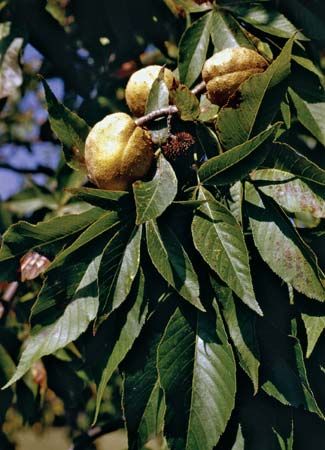
Yes, there are significant toxicity concerns regarding buckeye trees. Both the young foliage and the seeds of these plants are poisonous to humans and animals.1
The seeds, which are considered inedible, contain tannic acid and other toxic compounds that can be harmful if ingested. For example, the seeds of the Ohio buckeye are specifically noted for being poisonous to both cattle and humans. Because of these risks, it is important to exercise caution around these trees, particularly in areas where children or livestock may come into contact with the fallen seeds or young leaves.1
How has the buckeye tree been used in folklore or as a symbol?
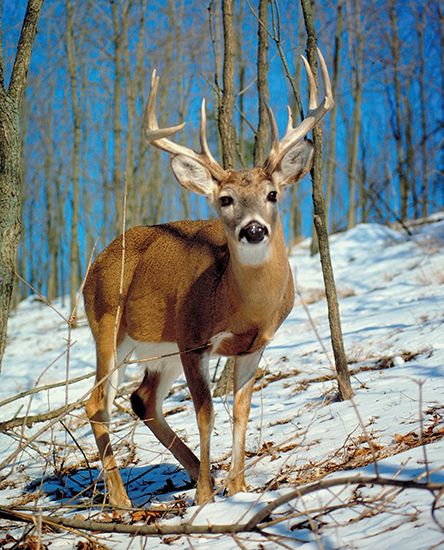
The buckeye tree derives its name from the appearance of its seeds, which feature a pale patch on a shiny red-brown surface, resembling the eye of a deer.1
Beyond its botanical classification, the tree holds significant symbolic status in the United States. The Ohio buckeye is the official state tree of Ohio. Consequently, the term “Buckeyes” has become a widely recognized nickname for residents of Ohio, as well as for the sports teams and student body of The Ohio State University.14
While the tree is celebrated as a cultural symbol, it is important to note that the name is purely descriptive of the seed’s physical appearance rather than rooted in traditional folklore regarding mystical or medicinal properties. Despite its symbolic prominence, the seeds remain inedible and toxic to both humans and cattle.1
What are the distinctive features of buckeye tree leaves and flowers?
Buckeye trees, belonging to the genus Aesculus, are characterized by distinct botanical features in both their foliage and their reproductive structures.
Leaves
Buckeye trees possess opposite, palmately compound leaves, meaning the leaflets radiate outward from a single central point, similar to the fingers of a hand. The number of leaflets can vary by species; for instance, the Ohio buckeye typically features five to seven leaflets. These leaves are deciduous in most species and often turn vibrant shades of orange to yellow during the autumn months.16
Flowers
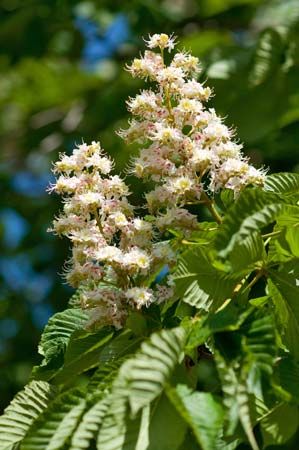
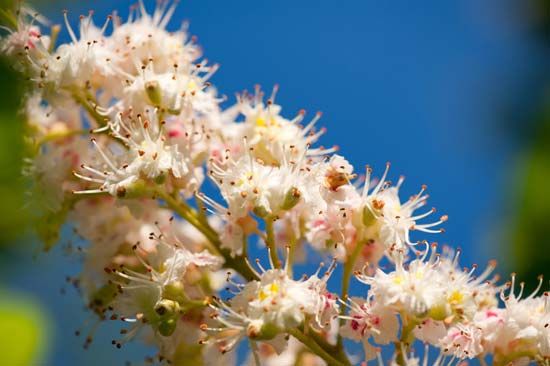
The flowers of the buckeye are a primary reason these trees are valued as ornamentals. They are generally bisexual, showy, and feature four or five fused petals. These flowers are arranged in candelabra-like clusters known as panicles, which are branched, indeterminate inflorescences. Depending on the specific species, the flowers can range in color:13
- White or pink: Seen in the California buckeye and the bottlebrush buckeye.
- Yellow: Characteristic of the sweet, or yellow, buckeye.
- Red: Produced by the red buckeye.
Sources
- buckeye — Encyclopædia Britannica
- horse chestnut — Encyclopædia Britannica
- Aesculus — Merriam-Webster
- woolly buckeye — Merriam-Webster
- buckeye — Merriam-Webster
- sweet buckeye — Merriam-Webster
- Angiosperm - Inflorescences — Encyclopædia Britannica
Published on · 3 min read