Broom Moss
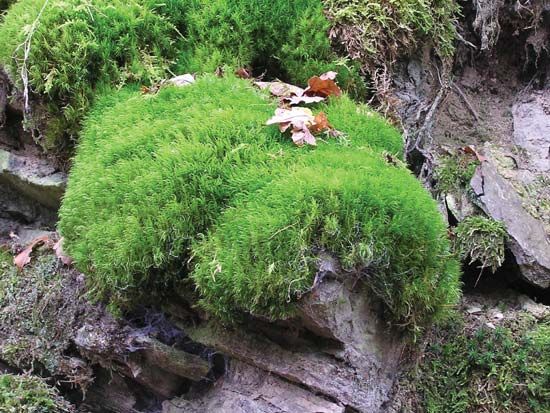
Broom moss, scientifically known as Dicranum scoparium, is a common type of wind-blown moss belonging to the genus Dicranum.
What is Broom moss?
Broom moss, scientifically known as Dicranum scoparium, is a common type of wind-blown moss belonging to the genus Dicranum.12
It is characterized by its dense, broomlike or brushlike tufts, which give the plant its common name. These mosses typically grow in cushions on logs, rocks, or soil and feature glossy, yellow-green leaves and stems that can reach heights of 5 to 12 centimeters. Because of its distinct appearance, broom moss is occasionally utilized by florists for decorative window displays.12
How do mosses reproduce without seeds?
Mosses are nonvascular, seedless plants that reproduce through a combination of sexual and asexual (vegetative) processes, characterized by an alternation of generations.34
Sexual Reproduction
In the sexual cycle, the dominant, leafy gametophyte produces sex organs: antheridia (male) and archegonia (female). When moisture from rain or heavy dew is present, sperm are released and travel to the archegonia to fertilize the egg. This fertilization results in the development of a sporophyte, which remains attached to and dependent on the gametophyte for nutrients. The sporophyte eventually produces spores via meiosis within a sporangium. Upon release, these spores germinate under favorable conditions to form a protonema—a branching, threadlike structure—which eventually develops into a new leafy gametophyte.536
Asexual Reproduction
Mosses also reproduce vegetatively, allowing them to propagate without the sexual cycle:
- Fragmentation: Pieces of the gametophyte can break off and regenerate into complete new plants.34
- Regeneration: Tiny fragments of photosynthetic tissue have the potential to grow into new individuals.3
- Specialized structures: Some species produce gemmae, which are specialized cell masses that bud off to form new gametophytes.4
What role do mosses play in preventing soil erosion?
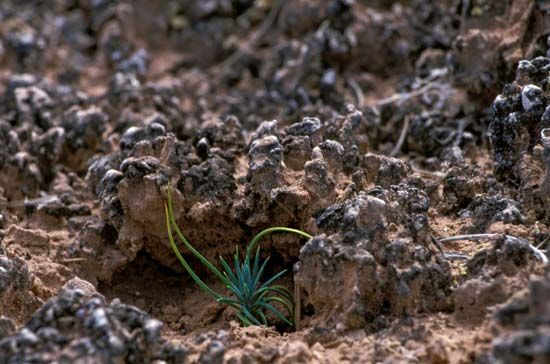
Mosses play a vital role in preventing soil erosion by acting as a protective layer over the ground. Their contribution to soil stability occurs through several key mechanisms:
- Surface Cover: Mosses form dense mats that provide a physical barrier, shielding the soil surface from the erosive forces of wind and rain.8
- Water Management: By absorbing significant amounts of water, mosses help regulate moisture levels and reduce the speed of surface runoff, which otherwise strips away topsoil.85
- Soil Aggregation: As part of biological soil crusts, mosses work alongside other organisms like cyanobacteria and lichens to bind soil particles together, creating a more stable and cohesive substrate.5
- Pioneer Colonization: Mosses are often among the first organisms to colonize bare or rocky surfaces. By breaking down these substrates and accumulating organic matter, they initiate soil formation, which eventually supports more complex vegetation that further anchors the earth.9
Because these crusts are fragile, they are highly susceptible to damage from trampling or vehicles, which can lead to increased erosion risks in sensitive environments.5
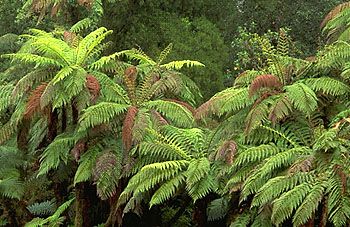
How are mosses different from vascular plants like ferns?
Mosses and vascular plants like ferns differ primarily in their internal structure and the dominant phase of their life cycle.
Structural Differences
The most significant distinction is that vascular plants (tracheophytes) possess specialized vascular tissue—consisting of xylem for water conduction and phloem for food transport—which is reinforced by lignin. This allows vascular plants to develop true roots, stems, and leaves, enabling them to grow larger and inhabit diverse terrestrial environments. In contrast, mosses are nonvascular bryophytes that lack these specialized tissues, limiting their size and requiring them to rely on direct absorption for water and nutrients.1011
Life Cycle and Dominant Phase
Both groups exhibit an alternation of generations, but the dominant, most conspicuous phase differs:12
- Mosses: The leafy, photosynthetic gametophyte is the dominant phase. The sporophyte is physically attached to and nutritionally dependent on the gametophyte.1211
- Ferns: The sporophyte is the dominant, independent phase. The gametophyte (or prothallus) is a small, often heart-shaped structure that is independent but short-lived.1013
While both groups produce spores and require water for fertilization due to their flagellated sperm, vascular plants have evolved complex adaptations like a waxy cuticle and stomata to thrive on land, whereas mosses remain more restricted to moist habitats.1011
Sources
- wind-blown moss — Encyclopædia Britannica
- broom moss — Merriam-Webster
- bryophyte - Form and function — Encyclopædia Britannica
- Plant reproductive system - Mosses — Encyclopædia Britannica
- moss — Encyclopædia Britannica
- Reproduction - Reproduction of organisms — Encyclopædia Britannica
- bryophyte — Encyclopædia Britannica
- bryophyte - Ecology and habitats — Encyclopædia Britannica
- Biological soil crust — Encyclopædia Britannica
- Plant - Definition of the category — Encyclopædia Britannica
- Plant reproductive system - The plant basis — Encyclopædia Britannica
- Fern - Comparisons with leaves of other plant groups — Encyclopædia Britannica
- Plant reproductive system - Ferns — Encyclopædia Britannica
Published on · 3 min read