Buffalo Bur
The buffalo bur (Solanum rostratum) is a member of the nightshade family and is known to be toxic to both humans and livestock. While the plant serves as a…
Does buffalo bur have any medicinal or toxic properties?
The buffalo bur (Solanum rostratum) is a member of the nightshade family and is known to be toxic to both humans and livestock. While the plant serves as a food source for certain birds, such as doves and quail, it does not possess recognized medicinal properties for human use and is primarily categorized as an aggressive weed and invasive species.1
Due to its toxicity, it is important to exercise caution and avoid contact with or ingestion of this plant.
What is the scientific name of buffalo bur and which plant family does it belong to?
The scientific name of the buffalo bur is Solanum rostratum. It belongs to the nightshade family, which is scientifically known as Solanaceae.32
What is buffalo bur and where is it commonly found?
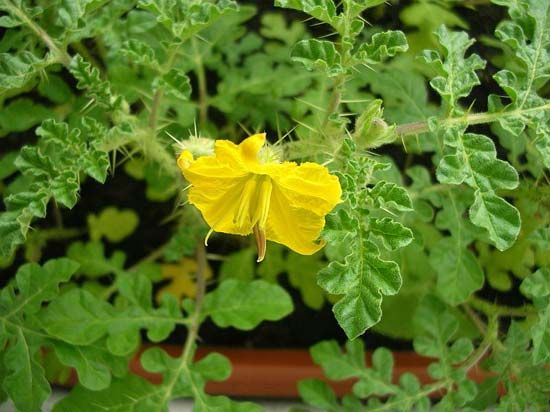
Buffalo bur (Solanum rostratum) is a plant belonging to the nightshade family (Solanaceae). It is characterized by its golden prickles, deeply lobed leaves, and yellow flowers. The plant earned its name because its prickly berries frequently became entangled in the fur of American bison.12
Native to the high plains east of the Rocky Mountains—stretching from North Dakota down to Mexico—the species is now widespread. It is considered an aggressive weed across many parts of the United States and has become an invasive species in several other countries, including Australia and Russia. These plants typically thrive in disturbed areas, such as along roadsides.1
While the seeds provide food for doves and quail, the plant is toxic to humans and livestock. Historically, it served as the original host for the Colorado potato beetle.1
How did buffalo bur get its common name?
The buffalo bur (Solanum rostratum) received its common name because its prickly berries frequently became entangled in the fur of American bison, which were historically referred to as buffalo.21
This method of seed dispersal is known as epizoochory, where plants produce structures like spines, hooks, or prickles that allow them to cling tenaciously to the coats of passing animals, effectively hitching a ride to new locations.5
Sources
- Buffalo bur — Encyclopædia Britannica
- buffalo bur — Merriam-Webster
- Solanales - Family characteristics — Encyclopædia Britannica
- list of plants in the family Solanaceae — Encyclopædia Britannica
- Seed - Dispersal by animals — Encyclopædia Britannica
Published on · 2 min read