Butaritari Atoll
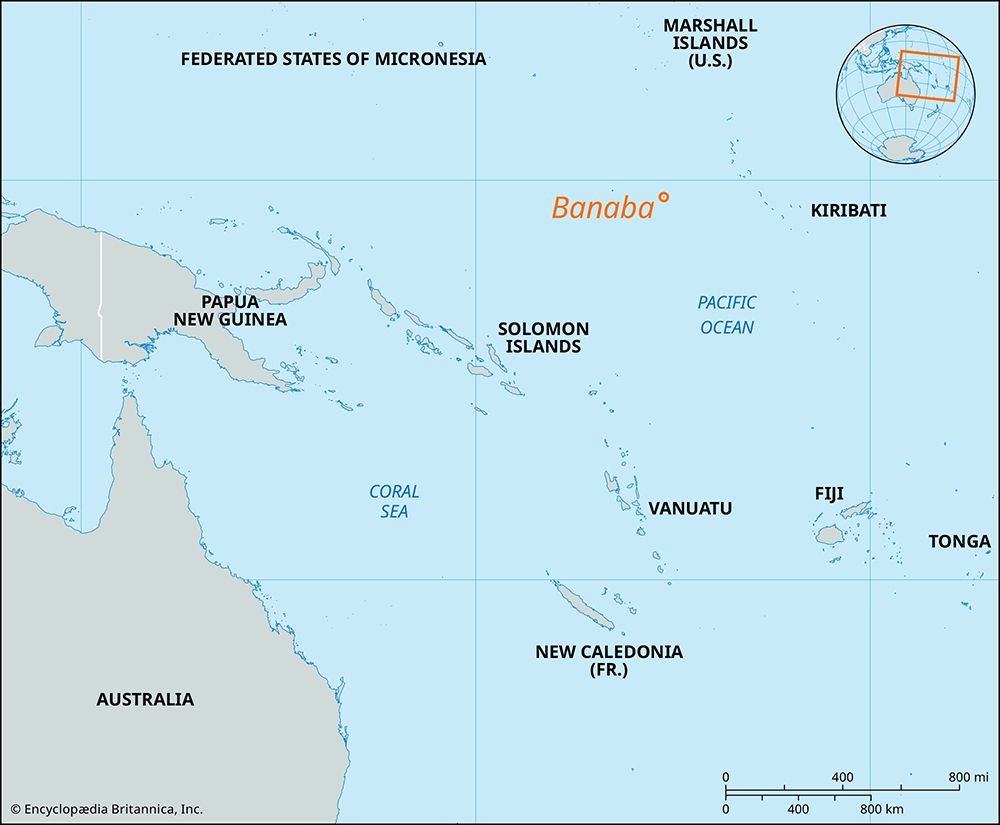
Butaritari Atoll is a coral atoll located in the northern Gilbert Islands, which are part of the nation of Kiribati in the west-central Pacific Ocean.
What is Butaritari Atoll?
Butaritari Atoll is a coral atoll located in the northern Gilbert Islands, which are part of the nation of Kiribati in the west-central Pacific Ocean.1
The atoll features a central lagoon approximately 11 miles (18 km) wide, surrounded by a ring of islets, with the majority of the population residing on the islets of Butaritari and Kuma. The main village and port are situated on Butaritari islet, and the local economy includes the export of copra.1
Historically, the atoll was first recorded by Europeans in 1606 by Spanish explorer Pedro Fernández de Quirós, who named it Buen Viaje. During World War II, it was occupied by Japanese forces from 1941 to 1943 before serving as an Allied air and naval base for the remainder of the conflict. The atoll covers a total land area of approximately 5.2 square miles (13.5 square km).1
How are coral atolls formed?
The formation of coral atolls is primarily explained by the subsidence theory, first proposed by Charles Darwin in 1842. This process involves several stages:
- Fringing Reef: Coral reefs initially develop as a fringe around a volcanic island.
- Subsidence and Growth: As the volcanic island gradually sinks—often due to the ocean floor subsiding as it moves away from oceanic ridges—the reef continues to grow upward and outward to remain in shallow, sunlit waters.
- Barrier Reef Stage: Over time, the reef becomes separated from the sinking volcanic shoreline by an increasing expanse of water, forming a barrier reef.
- Atoll Formation: Once the volcanic peak is completely submerged, only the ring-shaped reef remains, enclosing a central lagoon.
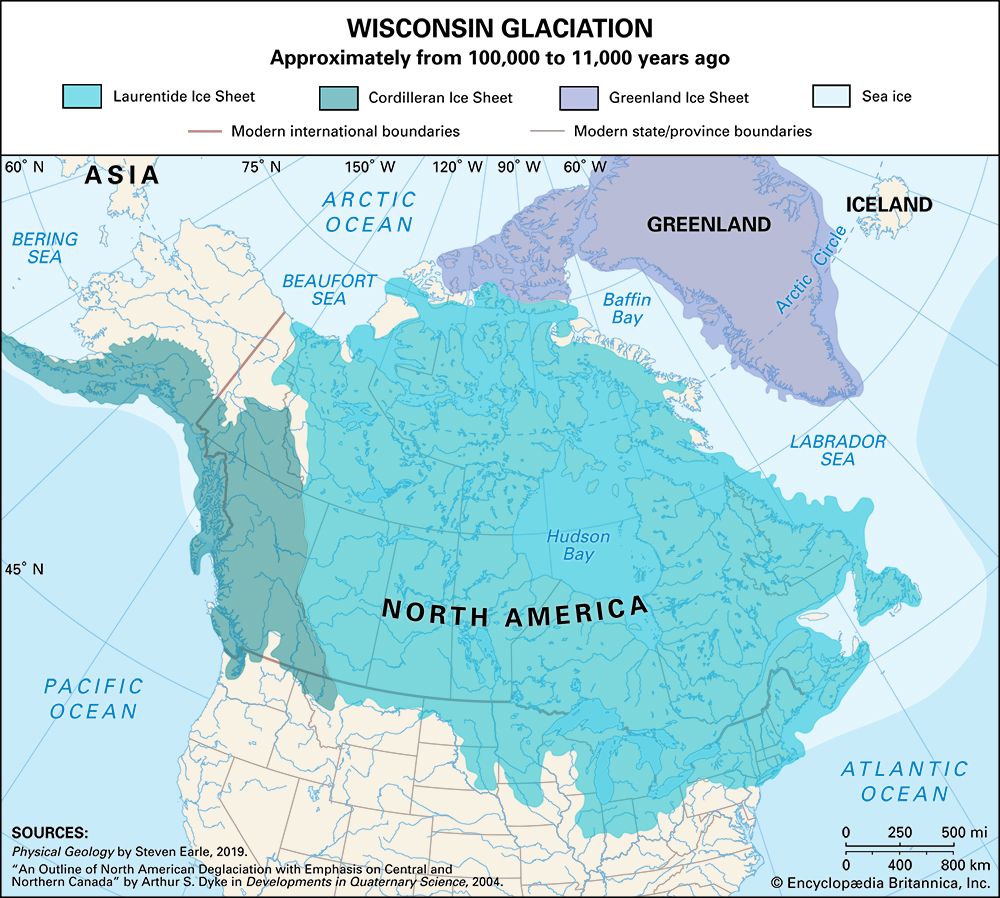
While Darwin’s model remains fundamental, modern science also accounts for sea level fluctuations caused by Pleistocene Epoch ice sheet cycles, which have significantly influenced the upward growth of many reefs. Additionally, some annular reefs may form through the erosion of uplifted limestone platforms rather than volcanic subsidence.34
What is the significance of the Gilbert Islands in Pacific history?
The Gilbert Islands hold significant historical importance in the Pacific, serving as a focal point for both colonial administration and pivotal military operations during the 20th century.
Colonial History
The islands were sighted by various European explorers beginning in the 16th century, but they were not formally organized until the late 19th century. In 1892, they became a British protectorate, and by 1916, they were incorporated into the Gilbert and Ellice Islands Colony. This administrative period was marked by economic exploitation, notably the mining of phosphate on Banaba, and social challenges, including resettlement programs in the 1930s due to drought and overpopulation. The islands eventually achieved independence as the Republic of Kiribati in 1979.
Strategic Role in World War II
During World War II, the Gilbert Islands became a critical theater of the Pacific War. Occupied by Japanese forces in 1941, the islands were targeted by the Allies as part of a central Pacific offensive. In November 1943, U.S. forces invaded the islands, capturing Makin and Tarawa. The intense fighting at Tarawa provided essential lessons in amphibious warfare that informed subsequent Allied operations against the Marshall Islands and beyond.
What is copra and how is it produced?
Copra consists of the dried meat of the coconut, which is the kernel of the fruit from the coconut palm. It is primarily valued for the coconut oil extracted from it, while the remaining residue, known as coconut-oil cake, is commonly used as livestock feed.9
Production Process
The production of copra generally follows these steps:
- Preparation: The nuts are husked either by hand or mechanically by striking them against a sharp point. The shell is then cracked into two halves to expose the meat.9
- Drying: Several methods are used to reduce the moisture content of the meat, which is initially about 50 percent water:
- Sun Drying: The traditional method involves exposing the kernels to air and sun, which produces high-quality white copra.9
- Kiln Drying: Used in areas with high humidity, this involves placing the meat on a grid over a fire pit, sheltered by a roof.9
- Hot-Air Drying: This modern process draws the copra through a heated tunnel against a countercurrent of hot air, resulting in a uniform, high-value product.9
Well-dried copra typically contains 4 to 5 percent moisture and 63 to 70 percent oil.9
Sources
- Butaritari Atoll — Encyclopædia Britannica
- Butaritari — Merriam-Webster
- coral reef - Origin and development of reefs — Encyclopædia Britannica
- atoll — Encyclopædia Britannica
- Gilbert Islands — Encyclopædia Britannica
- Kiribati - History of Kiribati — Encyclopædia Britannica
- Pacific War - The Aleutians, Rabaul, and the Gilberts — Encyclopædia Britannica
- Pacific War - The Central Pacific Islands — Encyclopædia Britannica
- Copra — Encyclopædia Britannica
- Pacific Islands - Growth of trading communities — Encyclopædia Britannica
- Palm - Economic importance — Encyclopædia Britannica
Published on · 3 min read