Butte
A butte is a flat-topped hill characterized by steep, cliff-like sides and a surrounding slope that descends to a plain. These landforms are often found in…
What is butte?
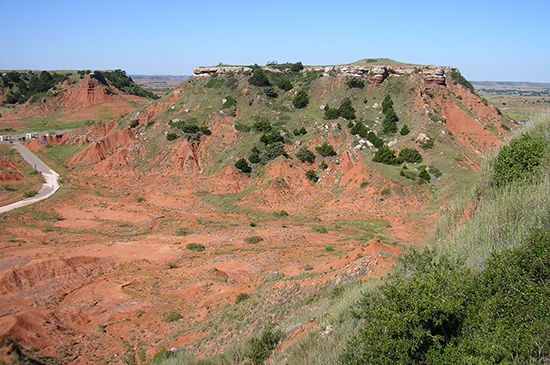
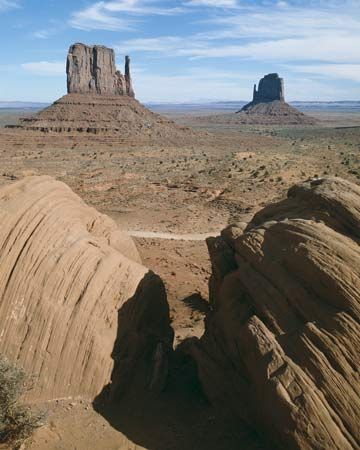
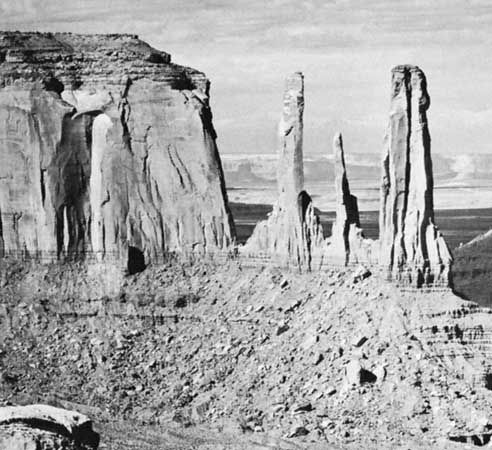
A butte is a flat-topped hill characterized by steep, cliff-like sides and a surrounding slope that descends to a plain. These landforms are often found in arid plateau regions, such as the western United States, where they are capped by horizontal layers of hard rock that protect the underlying land from erosion.12
While a butte is similar in appearance to a mesa, it is generally smaller in size. Both features are formed through the process of denudation, where surrounding areas are worn away by water and wind, leaving behind isolated, fortress-like remnants of the original plateau. The term is sometimes applied to elevations that are taller than a typical hill but do not reach the scale of a mountain.21
How does erosion create a butte?
A butte is created through the process of denudation, which involves the downcutting and stripping of a landscape by erosion.5
The formation begins with a plateau composed of varying rock layers. As erosional forces—such as water and wind—act upon the landscape, they wear away the softer, more vulnerable material. Areas of harder, more resistant rock act as protective “caps” for the underlying land.53
Over time, as the surrounding terrain is eroded away, particularly in areas like stream valleys, these resistant sections remain as isolated, flat-topped remnants. The result is a steep-sided, fortress-like hill. While a mesa is formed through this same process, a butte is distinguished by its smaller size and often more precipitous profile. Essentially, while tectonic processes build the initial elevation, erosion acts as the sculptor that carves these distinct landforms out of the larger plateau structure.5167
What is the main difference between a mesa and a butte?
The primary difference between a mesa and a butte is their relative size and surface area. While both are isolated, flat-topped landforms created through the process of erosion on a plateau, they are distinguished by their scale:31
- Mesa: Derived from the Spanish word for “table,” a mesa is a broad, flat-topped tableland with steep sides. It is generally more extensive than a butte but less extensive than a full plateau.39
- Butte: A butte is similar in structure but is smaller in size. It is often described as a fortress-like hill, characterized by a flat top and a steep escarpment that descends to a plain.31
Both landforms are formed when layers of hard rock act as protective caps, preventing the underlying softer material from being worn away by wind and water.31
What role does hard rock play in forming these landforms?
Hard rock plays a critical role in the formation of landforms like buttes and mesas by acting as a protective barrier against the forces of erosion.3
In the context of structural landforms, the development of these features depends on the interaction between exogenetic forces—such as wind, water, and ice—and the resistance of the earth materials they encounter. When a plateau is subjected to denudation or downcutting, the landscape is stripped away unevenly.13
Areas composed of harder, more resistant rock, such as limestone or sandstone, act as “protective caps” for the underlying, softer material. While the surrounding, less resistant terrain is worn away by erosional processes, these capped sections remain as isolated, elevated remnants. Consequently, the hard rock layer preserves the flat-topped horizontal platform that defines the characteristic shape of both mesas and buttes, effectively dictating the survival of these landforms against the ongoing process of landscape evolution.3811
Sources
- butte — Encyclopædia Britannica
- butte — Merriam-Webster
- mesa — Encyclopædia Britannica
- buttes — Merriam-Webster
- soil - Erosive processes — Encyclopædia Britannica
- butte — Merriam-Webster
- tectonic landform — Encyclopædia Britannica
- structural landform — Encyclopædia Britannica
- mesa — Merriam-Webster
- mesa — Merriam-Webster
- glacial landform - Small-scale features of glacial erosion — Encyclopædia Britannica
- plateau - Formative processes — Encyclopædia Britannica
Published on · 3 min read