Butterfly Bush
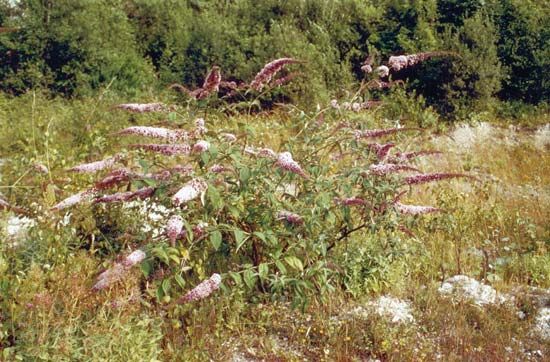
The butterfly bush refers to any of the more than 100 species of plants belonging to the genus Buddleja (family Scrophulariaceae). Also known as buddleia…
What is Butterfly bush?
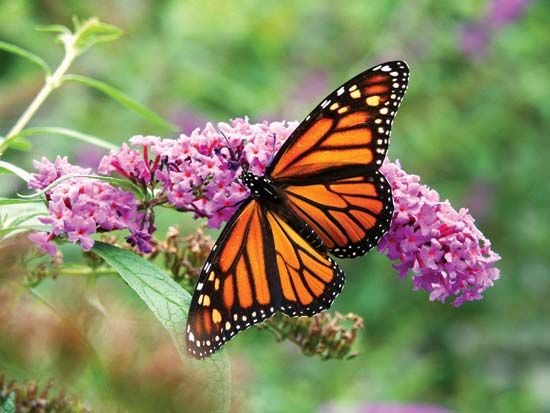
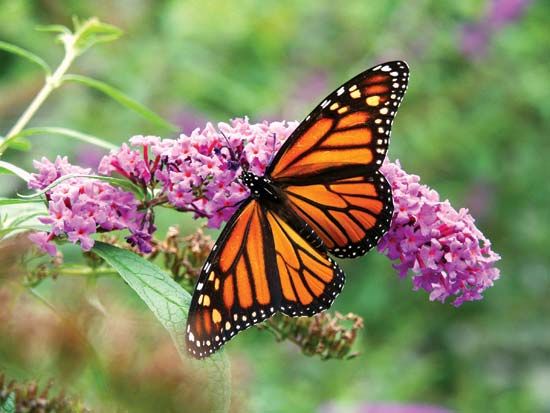
The butterfly bush refers to any of the more than 100 species of plants belonging to the genus Buddleja (family Scrophulariaceae). Also known as buddleia, these plants are native to tropical and subtropical regions across the globe.12
Typically growing as trees or shrubs, these plants are characterized by their hairy leaves and vibrant clusters of flowers, which range in color from purple and pink to white, yellow, and orange. As their name suggests, these blooms are highly attractive to butterflies. Because of their aesthetic appeal, several species—most notably B. davidii—are widely cultivated as garden ornamentals.1
Why are butterfly bushes considered invasive in some regions?
Sorry, the Britannica knowledge base does not contain information regarding why butterfly bushes are considered invasive in some regions.
What other plants attract butterflies to a garden?
To attract butterflies to your garden, it is essential to provide both nectar sources for adults and host plants for their larvae. Butterflies are drawn to flowers that offer a landing platform, are brightly colored (often red, pink, or purple), and provide nectar as a food reward3.
Recommended Plants
- Milkweed (genus Asclepias): These are vital host plants for monarch butterflies, whose larvae feed exclusively on them.45
- Butterfly weed (Asclepias tuberosa): A North American perennial that produces clusters of bright orange flowers highly attractive to butterflies.1
- Verbena (genera Verbena and Glandularia): Known for being excellent nectar sources.6
- Aster and Orchid families: Many species within these families provide the nectar and structure necessary to support butterfly visitors.6
Supporting Butterfly Populations
Beyond planting nectar sources, you can support these insects by:
- Promoting Native Plants: Growing local native species provides the specific host plants required for larval development.5
- Limiting Pesticides: Avoid chemicals that target caterpillars or the plants they rely on.5
- Reducing Light Pollution: Minimizing nighttime light helps nocturnal moths, which are also important pollinators.5
How do butterflies use their senses to find nectar?
Butterflies utilize a sophisticated combination of visual and chemical senses to locate nectar sources. This process typically involves a synergy between color perception and the detection of volatile plant compounds.9
Visual Cues
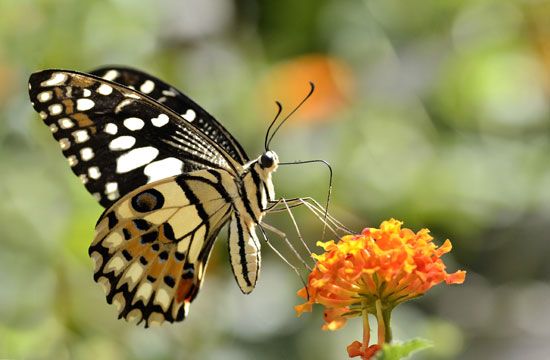
Butterflies possess a well-developed color sense, which allows them to identify potential food sources from a distance. While their vision is generally similar to that of bees, many butterflies—including swallowtails—are specifically responsive to red wavelengths, which helps them distinguish certain flowers. Their compound eyes contain multiple visual pigments, enabling them to perceive a broad spectrum of colors. This visual ability is often the first step in guiding them toward the conspicuous, brightly colored inflorescences that provide suitable landing platforms.910
Chemical Cues
Once in the vicinity of a potential food source, butterflies rely on chemoreception to confirm the presence of nectar:
- Olfaction: Butterflies use olfactory receptors located on their antennae to detect complex blends of volatile compounds, such as terpenes and aromatic phenolic compounds, emitted by flowers. While some responses to plant odors are innate, butterflies often learn to associate specific floral scents with the presence of nectar, which improves their foraging efficiency.11
- Taste: Butterflies also possess taste receptors on their feet (tarsi). These receptors allow them to “taste” sugar solutions upon landing, providing a final confirmation of the flower’s nutritional value before they extend their proboscis to feed.129
Sources
- Butterfly bush — Encyclopædia Britannica
- butterfly bush — Merriam-Webster
- Major types of pollinators - Butterflies and moths — Encyclopædia Britannica
- milkweed butterfly — Encyclopædia Britannica
- caterpillar — Encyclopædia Britannica
- Nectar — Encyclopædia Britannica
- Nectary — Encyclopædia Britannica
- Butterfly weed — Encyclopædia Britannica
- Chemoreception - Arthropods — Encyclopædia Britannica
- Pollination - Butterflies and moths — Encyclopædia Britannica
- Photoreception - Wavelength and plane of polarization — Encyclopædia Britannica
- Chemoreception - Attraction — Encyclopædia Britannica
Published on · 3 min read