Butterfly Weed
Butterfly weed (Asclepias tuberosa) is a North American perennial plant belonging to the dogbane family (Apocynaceae). It is characterized by stout…
What is Butterfly weed?
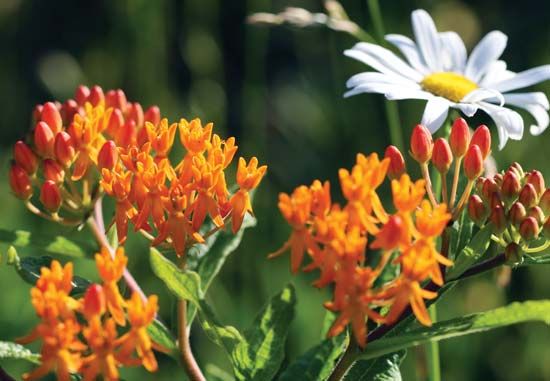
Butterfly weed (Asclepias tuberosa) is a North American perennial plant belonging to the dogbane family (Apocynaceae)1. It is characterized by stout, rough-haired, erect stems that can reach up to 1 meter (3 feet) in height, featuring alternately arranged linear leaves.12
Unlike many other members of the milkweed genus, butterfly weed contains little to no milky sap. In midsummer, the plant produces clusters of bright orange flowers that are highly attractive to butterflies, making it a popular choice for wild gardens and borders. As a native species, it serves as an important host plant for butterflies, though its population—along with other wild milkweeds—has faced declines due to agricultural and urban development. Conservationists encourage the planting of such native species to support local butterfly populations.21
Why do monarch butterflies rely on milkweed plants?
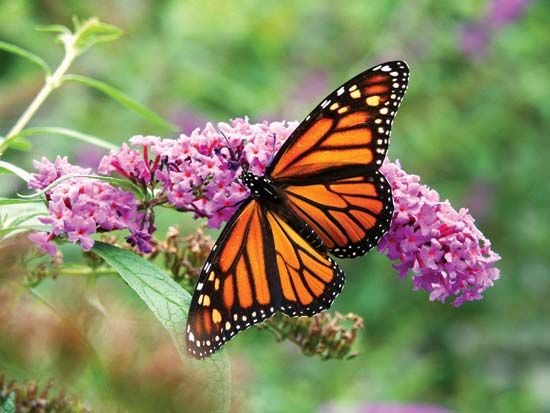
Monarch butterflies rely on milkweed because it is the exclusive food source for their caterpillars. Female monarchs lay their eggs singly on these plants, ensuring that the larvae have immediate access to their only source of nutrition upon hatching.56
The relationship is vital for the butterfly’s survival due to the chemical composition of the milkweed. These plants produce acrid, milky juices containing toxic compounds known as cardenolides. While these substances are poisonous to many vertebrates—causing heart distress and vomiting—monarch larvae consume them without ill effects.57
By sequestering these toxins in their bodies, the caterpillars retain them through the pupal stage and into adulthood. This chemical defense makes the monarch distasteful and potentially harmful to predators, providing the butterfly with a significant survival advantage throughout its life cycle.67
How does the pollination process work in milkweed flowers?
The pollination process in milkweed (Asclepias) is a complex mechanism distinct from many other flowering plants. Unlike species that release individual pollen grains, milkweed pollen is massed into bundles known as pollinia. These pairs of pollinia are linked by a yokelike bar of tissue derived from the stigma of the pistil.8
When an insect visits a milkweed flower to feed, parts of these pollinia bundles become attached to the insect’s body. As the insect moves to other flowers, it carries these bundles, facilitating cross-pollination when the pollinia are deposited into the appropriate structures of a subsequent flower. While this method is intricate, it is highly effective; when successful, the large number of pollen grains transferred leads to the production of numerous seeds.8
What are the main differences between butterflies and moths?
While butterflies and moths are both members of the order Lepidoptera, they exhibit several distinct physical and behavioral differences:
- Antennae: Most butterflies possess simple, club-tipped antennae, whereas the majority of moths have thick or feathery antennae.9
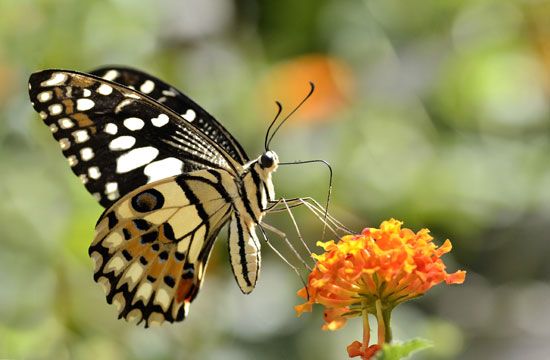
- Body and Wings: Butterflies typically have slim, dainty bodies and hold their wings vertically over their backs when at rest. Moths are generally stout and often fuzzy, and they typically fold their wings tentlike over the body, wrap them around the body, or hold them extended at the sides.9
- Activity: Butterflies are generally diurnal (active during the day), while most moths are nocturnal.9
- Metamorphosis: During their transformation, butterflies form a chrysalis from their own bodies. Most moths build fibrous cocoons, often made of silk, to protect themselves during the pupal stage.910
- Appearance: Butterflies are often colorful with dramatic wing patterns, while moths are frequently more drab, though there are notable exceptions in both groups.9
Sources
- Butterfly weed — Encyclopædia Britannica
- Milkweed — Encyclopædia Britannica
- Major types of pollinators - Butterflies and moths — Encyclopædia Britannica
- butterfly weed — Merriam-Webster
- Monarch butterfly: Top Questions — Encyclopædia Britannica
- Monarch butterfly - Life cycle — Encyclopædia Britannica
- mimicry - The chemical basis for repulsion — Encyclopædia Britannica
- Angiosperm - Pollination — Encyclopædia Britannica
- What’s the difference between moths and butterflies? — Encyclopædia Britannica
- Lepidoptera - Pupa , or chrysalis — Encyclopædia Britannica
Published on · 3 min read