Monarch Butterfly
Monarch butterflies navigate their long-distance migrations using a sophisticated combination of biological and environmental cues. Because parents do not…

How do monarch butterflies navigate during their long-distance migrations?
Monarch butterflies navigate their long-distance migrations using a sophisticated combination of biological and environmental cues. Because parents do not guide their offspring, these behaviors are driven by instinct.1
To maintain their course, monarchs utilize a time-compensated solar compass, which allows them to orient themselves based on the Sun’s position in the sky while adjusting for its movement throughout the day using their internal biological clocks. Additionally, they are capable of taking directional cues from the Earth’s magnetic field.1
Beyond these internal mechanisms, monarchs actively interact with their environment to optimize their travel. Research indicates that they can identify and select fast-blowing wind currents at high altitudes to increase their speed and efficiency. They also possess the ability to detect and correct for crosswinds, allowing them to maintain a consistent heading toward their destination. These combined strategies enable them to successfully complete journeys spanning thousands of kilometers.231
What are the differences between eastern and western populations of monarch butterflies?
The eastern and western populations of monarch butterflies in North America exhibit distinct morphological and behavioral differences shaped by their unique migratory needs and evolutionary history.1
Morphological Differences
Research indicates that these physical traits are inherited and have evolved as adaptations to specific environmental and migratory demands:1
- Eastern Monarchs: These butterflies, which undertake extensive long-distance migrations, possess large bodies and large, angular forewings.1
- Western Monarchs: This population is characterized by smaller bodies and large wings. Scientists believe this specific wing structure is an adaptation that facilitates a reliance on gliding flight.1
Migratory Patterns
The two populations are primarily distinguished by their geographic ranges and overwintering destinations:5
- Eastern Population: Found throughout the eastern United States and Canada during the summer, these monarchs migrate up to 3,000 km to overwinter in the oyamel fir forests of Mexico, with some also overwintering in Texas or Florida.65
- Western Population: These monarchs migrate between California and other western states.5

How has climate change affected monarch butterfly populations?
Climate change poses a significant and ongoing existential threat to the migratory monarch butterfly. Its impacts are multifaceted, affecting the species’ survival through several environmental stressors:57
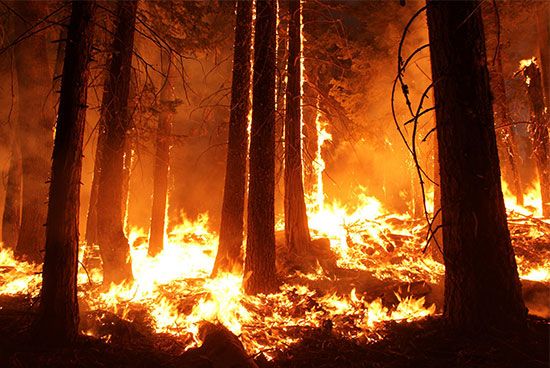
- Habitat Degradation: Global warming has exacerbated drought conditions, which hinder the growth of native milkweed—the essential host plant for monarch larvae. Additionally, these conditions increase the frequency and severity of wildfires across critical habitats.7
- Disrupted Migration: Extreme weather events can kill butterflies during their journey. Furthermore, shifting temperature regimes may trigger early migrations, causing butterflies to arrive at breeding grounds before necessary nectar sources or milkweed plants are available.7
Due to these combined pressures, the migratory subspecies was listed as vulnerable by the IUCN in 2023. However, recent conservation efforts to protect overwintering sites and restore milkweed have shown promise, with the overwintering population area increasing significantly between 2023 and 2026.75
We could dive deeper into the specific conservation strategies being used to mitigate these climate-related risks.
How do monarch butterflies use chemical defenses to protect themselves from predators?
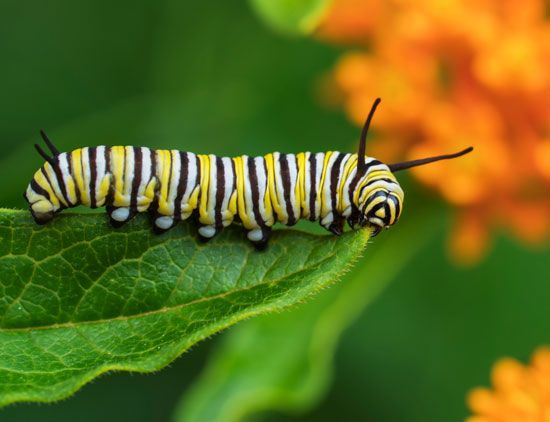
Monarch butterflies protect themselves from predators through a sophisticated chemical defense system derived from their diet. During the larval stage, monarch caterpillars feed exclusively on milkweed plants, which contain toxic compounds known as cardenolides.589
The caterpillars ingest these toxins without suffering ill effects, storing them within their bodies throughout their development into the pupal stage and into adulthood. These cardenolides are highly effective against vertebrate predators because they trigger a nerve center in the brain that induces vomiting. Because the dose required to cause illness is lower than a lethal dose, predators often survive their first encounter, learning to associate the butterfly’s appearance with the unpleasant experience.89
To reinforce this protection, monarchs utilize warning coloration—their vivid orange, black, and white wing patterns—to signal their toxicity to potential threats. This visual signal allows predators to recognize and avoid them by sight alone. Furthermore, monarchs engage in Müllerian mimicry with the viceroy butterfly, as both species share similar warning patterns to collectively educate predators about their unpalatability.103
Sources
- Monarch butterfly - Migration — Encyclopædia Britannica
- How Do Butterflies Migrate? — Encyclopædia Britannica
- Monarch butterfly - Life cycle — Encyclopædia Britannica
- Lepidoptera - Migration — Encyclopædia Britannica
- Monarch butterfly: Top Questions — Encyclopædia Britannica
- Monarch butterfly - Morphological variation — Encyclopædia Britannica
- Monarch butterfly - Threats — Encyclopædia Britannica
- Monarch butterfly - Defensive coloration and mimicry — Encyclopædia Britannica
- warning coloration — Merriam-Webster
- mimicry - The chemical basis for repulsion — Encyclopædia Britannica
Published on · 3 min read