Calyceraceae
Plants in the Calyceraceae family are primarily native to Central and South America. While they are predominantly found in these regions, at least one…
Where are Calyceraceae plants typically found, and what are their preferred habitats?
Plants in the Calyceraceae family are primarily native to Central and South America. While they are predominantly found in these regions, at least one species, Acicarpha tribuloides, has been identified as a roadside weed in Florida.12
Regarding their preferred habitats, these plants are generally characterized as small herbs or subshrubs. While specific ecological niches vary by species, their presence as roadside weeds suggests an ability to thrive in disturbed environments. They are closely related to the daisy family and are typically found in herbaceous forms, occasionally exhibiting a somewhat woody base.132
How do plants in the Calyceraceae family reproduce and disperse their seeds?
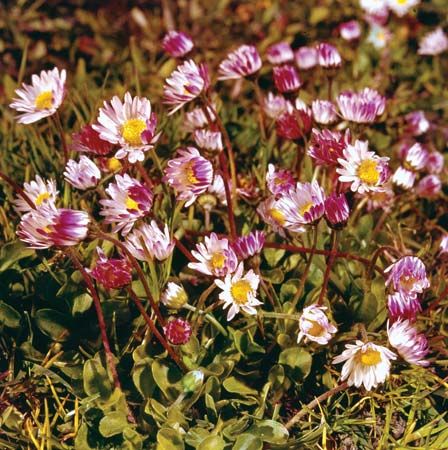
Plants in the Calyceraceae family are flowering plants that produce bisexual or separately male and female flowers arranged in dense heads, which are surrounded by small, green, leaflike bracts known as an involucre. These flowers feature an inferior, one-chambered ovary, a calyx of four to six fused sepals, and a tubular or open corolla with four to six lobes. The male pollen-producing structures, or anthers, are positioned near the mouth of the corolla, alternating with its lobes.1
While specific details regarding the reproductive strategies and seed dispersal mechanisms unique to the Calyceraceae are not explicitly detailed in the provided search results, the family is closely related to the Asteraceae (the daisy family). Members of the order Asterales, which includes both families, often utilize a specialized system known as secondary pollination, where the style pushes pollen out of the anther tube to be presented to pollinators.14
Are there any known medicinal or traditional uses for Calyceraceae plants?
The Calyceraceae family is considered to be of no economic importance, and there are no known medicinal or traditional uses documented for these plants in the provided information. While other plant families, such as the Monimiaceae or Atherospermataceae, are noted for their historical use in medicine, dyes, or as spices, the Calyceraceae are primarily recognized as a group of small herbs or subshrubs native to Central and South America without significant human application.13
What are some notable or economically important species within the Calyceraceae family?
The Calyceraceae family consists of approximately 60 species of small herbs and subshrubs native to Central and South America. Notably, this family is considered to be of no economic importance, and there are no species within the group that are widely recognized for commercial or significant human utility.13
The family includes six genera: Boöpis, Calycera, Acicarpha, Acarpha, Gamocarpha, and Moschopsis. Among these, Acicarpha tribuloides is occasionally noted for its presence as a roadside weed in Florida, though it does not hold economic value.1
While the family is closely related to the Asteraceae (the daisy family) and shares similar floral characteristics—such as flowers arranged in dense heads—it remains a group primarily of botanical interest rather than practical application.12
Sources
- Calyceraceae — Encyclopædia Britannica
- Asterales - Other families — Encyclopædia Britannica
- Calyceraceae — Merriam-Webster
- Asteraceae - Pollination — Encyclopædia Britannica
- seed - Self-dispersal — Encyclopædia Britannica
- seed dispersal - Self-dispersal — Encyclopædia Britannica
- Caryophyllales - Cactaceae — Encyclopædia Britannica
- Laurales - Other families — Encyclopædia Britannica
Published on · 2 min read