Camelops
Camelops is an extinct genus of large camels that inhabited western North America, ranging from Mexico to Alaska, between 3.6 million and 11,700 years ago.…
What is Camelops?
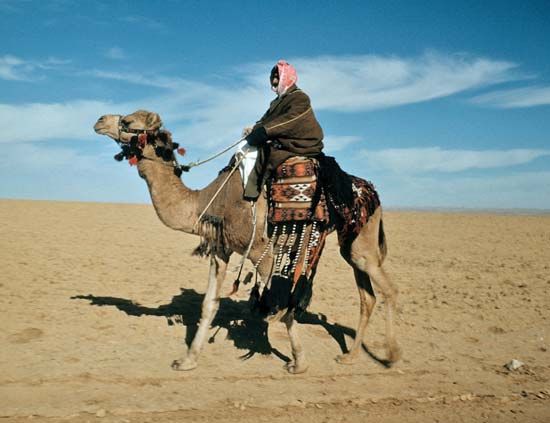
Camelops is an extinct genus of large camels that inhabited western North America, ranging from Mexico to Alaska, between 3.6 million and 11,700 years ago. It was a true camel that resembled the modern Arabian camel in structure, possessing long, robust legs and a long neck. Evidence suggests it likely had a single hump, as indicated by elongated vertebrae spines along its anterior back.1
While six species are currently recognized, the taxonomy of the genus remains in need of revision. Camelops became extinct near the end of the Pleistocene Epoch, alongside many other large mammals, though the specific cause of this extinction remains unknown. The genus is notably absent from the fossil record east of the Mississippi River1.1
What other large mammals went extinct in North America at the end of the Pleistocene?
The end of the Pleistocene Epoch witnessed a significant wave of extinction that disproportionately affected large mammals in North America, with approximately 32 genera vanishing within a relatively short interval centered around 11,000 years ago.3
These extinctions included a wide variety of both predators and herbivores. Notable examples include:4
- Predators: The dire wolf, sabre-toothed cats, American lion, American cheetah, and the giant short-faced bear.4
- Herbivores: Mammoths, mastodons, giant sloths, giant beavers, stag-moose, shrub oxen, woodland musk oxen, camels, llamas, two genera of deer, two genera of pronghorn antelope, and five species of Pleistocene horses.43
While the exact cause remains a subject of intense scientific debate, the two primary hypotheses involve the impact of human hunting—often referred to as the “overkill hypothesis”—and the stress caused by abrupt climatic change and the resulting reorganization of vegetation. It is widely considered likely that a combination of these factors, varying in intensity by region, contributed to the collapse of these megafaunal populations.43
How did the ancestors of modern camels migrate from North America to Asia?
The family Camelidae originated in North America approximately 40 million years ago and evolved there for millions of years. While the specific mechanics of their migration are not detailed in the fossil record, it is established that by the early Pleistocene Epoch—roughly 2 million years ago—representatives of the genus Camelus had successfully crossed from North America into Asia.2
This migration was part of a broader dispersal pattern where camelids spread from their North American homeland into both the Old World and South America toward the end of the Neogene period. Following this expansion, the North American camelid populations eventually faced extinction approximately 10,000 years ago, leaving the descendants of those that had migrated to other continents to survive as the modern camels and South American camelids we recognize today.12
What are the main differences between Camelops and modern camels?
Camelops and modern camels share a common ancestry, but they represent distinct evolutionary paths. While Camelops was a true camel that inhabited western North America from the late Pliocene until the end of the Pleistocene, it is now extinct.1
The primary differences and similarities include:
- Physical Structure: Camelops resembled the modern Arabian camel (Camelus dromedarius) in its general build, featuring a long neck and robust, long legs. Like modern camels, it was a large mammal, though it was slightly smaller than the Arabian camel.1
- Hump Anatomy: Evidence suggests Camelops likely possessed a single hump. This is inferred from the presence of elongated spines on the vertebrae located over its anterior back, a structural trait associated with hump support.1
- Geographic Range: Camelops was restricted to western North America, ranging from Mexico to Alaska, and was notably absent east of the Mississippi River. In contrast, the ancestors of modern camels migrated to Asia and Africa by the early Pleistocene, where they successfully adapted to diverse environments.12
Sources
- Camelops — Encyclopædia Britannica
- camel - Natural history — Encyclopædia Britannica
- Quaternary - Fauna and flora — Encyclopædia Britannica
- Pleistocene Epoch - Megafaunal extinctions — Encyclopædia Britannica
- camel — Encyclopædia Britannica
- artiodactyl - Evolution and paleontology — Encyclopædia Britannica
Published on · 3 min read