Canadian River
The Canadian River does not flow through Canada; it is a 906-mile-long waterway that rises in the Sangre de Cristo Mountains of New Mexico and flows through…
How did the Canadian River get its name, given that it doesn’t flow through Canada?
The Canadian River does not flow through Canada; it is a 906-mile-long waterway that rises in the Sangre de Cristo Mountains of New Mexico and flows through the Texas Panhandle and Oklahoma before joining the Arkansas River.12
The river’s name is not derived from the country of Canada. Instead, historians believe it was named by early French traders and hunters who had traveled from Canada and followed the river westward into Spanish territory.1
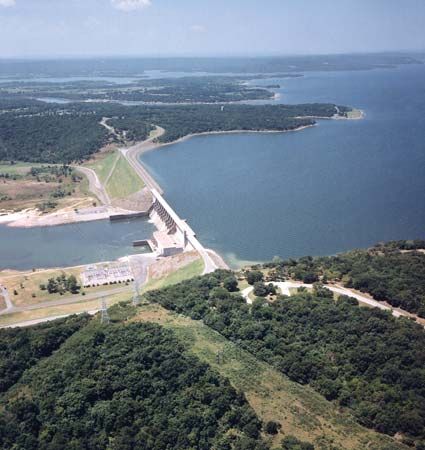
Are there any notable geological features or formations along the course of the Canadian River?
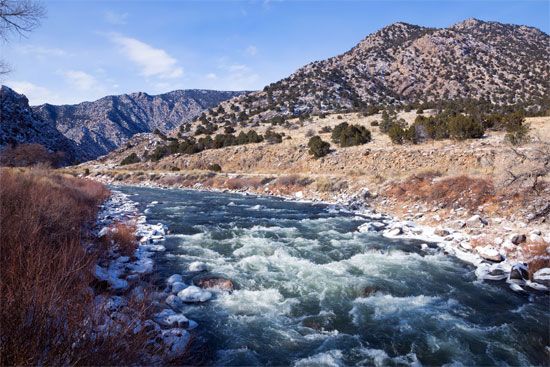
The Canadian River has carved several notable geological features along its 906-mile course as it flows from the Sangre de Cristo Mountains in New Mexico to its confluence with the Arkansas River.1
Key geological formations include:
- The Canadian Escarpment: In northeastern New Mexico, the river cuts a dramatic gorge nearly 1,500 feet deep through this escarpment.1
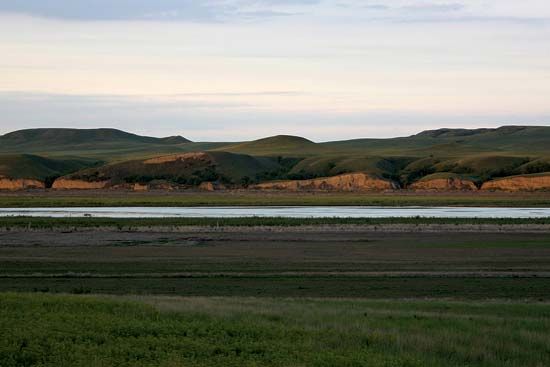
- The “Breaks”: As the river passes through the Texas Panhandle, it flows through a deep, narrow valley cut into reddish sandstones. The walls of this valley are known locally as the “breaks.”1
- Dolomite Outcrops: Within these breaks, there are significant dolomite outcrops that have been historically important; for thousands of years, native peoples quarried the richly colored and veined Alibates flint from these formations to create tools and projectile points.4
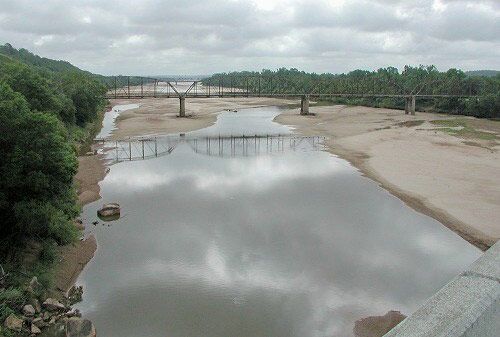
- Braided Stream Channels: Throughout much of its length, the Canadian River is characterized as a braided stream, featuring an interlacing system of channels that shift across the landscape.1
What are some of the major cities or towns located along the Canadian River?
Several cities and towns are situated along or near the course of the Canadian River as it traverses the southwestern United States:
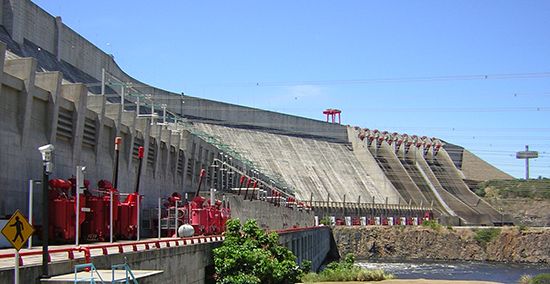
- Tucumcari, New Mexico: Located near the Conchas Dam and reservoir, which provides flood control and irrigation for the region.1
- Logan, New Mexico: The site of the Ute Reservoir, a significant water management project on the river.1
- Borger, Texas: Situated near Lake Meredith, which is impounded by the Sanford Dam.1
- Oklahoma City, Oklahoma: A major metropolitan area located along the river’s path through Oklahoma.18
- Eufaula, Oklahoma: Located near the confluence of the North Canadian River and the Canadian River, where the Eufaula Reservoir is formed.18
- Muskogee, Oklahoma: The Canadian River joins the Arkansas River approximately 27 miles southeast of this city.1
Where does the Canadian River originate, and through which states does it flow?
The Canadian River originates in the Sangre de Cristo Mountains located in northeastern New Mexico, United States.1
From its headwaters, the river flows through the following states:
- New Mexico: It travels southward across the Las Vegas Plains and cuts through the Canadian escarpment before turning eastward.1
- Texas: The river continues eastward through the Texas Panhandle, carving a deep, narrow valley through reddish sandstones known as the “breaks.”1
- Oklahoma: It flows through the Antelope Hills and past Oklahoma City before eventually joining the Arkansas River near the Boston Mountains.1
Throughout its 906-mile journey, the river functions primarily as a braided stream with an interlacing system of channels.1
Sources
- Canadian River — Encyclopædia Britannica
- Canadian — Merriam-Webster
- North Canadian — Merriam-Webster
- Alibates Flint Quarries National Monument — Encyclopædia Britannica
- Canyonlands National Park — Encyclopædia Britannica
- Rocky Mountains - Physiography — Encyclopædia Britannica
- North America - 1.6 to 1.3 billion years ago — Encyclopædia Britannica
- North Canadian River — Encyclopædia Britannica
- river - Rivers as agents of landscape evolution — Encyclopædia Britannica
- river - Terraces and geomorphic history — Encyclopædia Britannica
Published on · 2 min read