Carbon Footprint
An individual's carbon footprint represents the total greenhouse gas emissions associated with their activities, measured in weight of carbon dioxide…

How do daily activities contribute to an individual’s carbon footprint?
An individual’s carbon footprint represents the total greenhouse gas emissions associated with their activities, measured in weight of carbon dioxide equivalent. These emissions are categorized into two types:
- Primary Footprint: Includes direct emissions from activities under an individual’s control, such as transportation (e.g., driving) and household energy use for heating and electricity.1
- Secondary Footprint: Represents emissions linked to the consumption of goods and services. This includes the energy required for food production—notably diets high in meat—and the manufacturing and long-distance transport of consumer products.1
Reducing these impacts involves lifestyle changes such as utilizing public transportation, improving home energy efficiency, and opting for products with lower production-related emissions. It is ethically significant to recognize that individual choices contribute to global climate mitigation efforts.1
What is a carbon footprint and how is it measured?
A carbon footprint is the total amount of greenhouse gases—specifically carbon dioxide—emitted by an individual, entity, or product over a specific period. It accounts for both direct emissions, such as those from fossil-fuel combustion in transportation and heating, and indirect emissions associated with the electricity used to produce consumed goods and services.21
Measurement
Unlike an ecological footprint, which measures land area, a carbon footprint is typically expressed as a weight, such as tons of CO2CO_2 or CO2CO_2 equivalent per year.1
Calculations generally distinguish between two components:
- Primary Footprint: Emissions from activities under direct control, such as driving or household energy use.1
- Secondary Footprint: Emissions linked to the life cycle of consumed goods and services, including food production and manufacturing.1
Various methodologies, such as the Greenhouse Gas Protocol or ISO 14064, are used to quantify these impacts, and many organizations provide online calculators to help individuals estimate their personal footprint.1
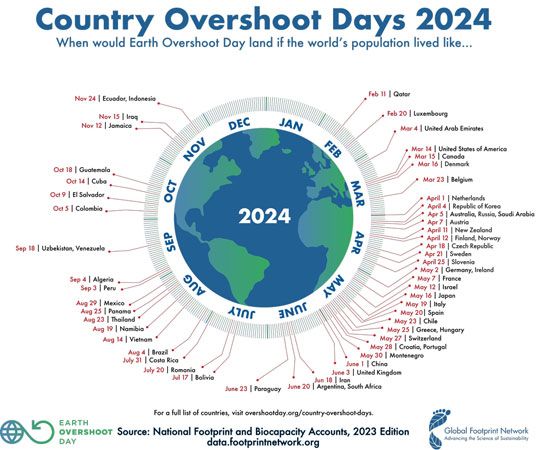
How do different countries compare in terms of their national carbon footprints?
National carbon footprints are complex to compare because they can be measured based on either production or consumption. While national inventories typically track emissions produced within a country’s borders, a “carbon footprint” specifically accounts for emissions associated with the consumption of goods and services, including those imported from abroad.5
Absolute vs. Per Capita Emissions
When looking at absolute greenhouse gas emissions, highly industrialized and populous nations are the largest contributors. For instance, China became the world’s largest emitter in absolute terms in 2006. In 2019, China and India accounted for 26.4 percent and 7.1 percent of global emissions, respectively, while the United States accounted for 12.5 percent.6
However, per capita comparisons reveal a different trend:
- Industrialized Nations: Citizens in developed countries generally maintain higher per capita footprints due to higher levels of consumption, transportation, and energy use. For example, in 2019, per capita emissions in the United States were approximately 14.7 tons, compared to 7.6 tons in China.65
- Developing Nations: Historically, residents of developing countries have had significantly lower per capita footprints, though these figures are rising as industrialization progresses.65
How do forests and oceans act as carbon sinks, and why are they important?
Forests and oceans serve as critical carbon sinks, which are natural reservoirs that store carbon and prevent it from entering the atmosphere as carbon dioxide, a potent greenhouse gas.78
How They Function
- Forests: Terrestrial ecosystems sequester carbon primarily through photosynthesis. Plants absorb atmospheric carbon dioxide to build their tissues, storing it in their biomass and soils. Forests are the largest terrestrial carbon reservoirs, holding up to 80 percent of aboveground carbon in terrestrial communities.9810
- Oceans: The ocean is the world’s largest carbon sink, containing significantly more carbon than the atmosphere. Phytoplankton are essential to this process; despite their small biomass, they perform roughly 40 percent of the planet’s total carbon fixation. When these organisms die, they sink to the deep ocean, effectively sequestering carbon for hundreds of years.78911
Why They Are Important
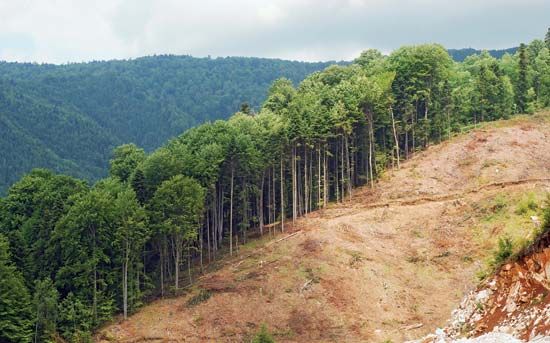
These sinks are vital for mitigating climate change by absorbing a large portion of human-produced emissions. However, their capacity is threatened by deforestation, wildfires, and rising sea levels, which can turn these sinks into carbon sources by releasing stored carbon back into the atmosphere.81012
Sources
- Carbon footprint — Encyclopædia Britannica
- carbon footprint — Merriam-Webster
- Greenhouse gas — Encyclopædia Britannica
- Greenhouse gas - Nitrous oxides and fluorinated gases — Encyclopædia Britannica
- Global warming policy — Encyclopædia Britannica
- Climate change - The human impact: Fossil fuels and greenhouse gas emissions — Encyclopædia Britannica
- decarbonization - Natural carbon removal — Encyclopædia Britannica
- carbon sink — Merriam-Webster
- Carbon sequestration — Encyclopædia Britannica
- Biosphere - The carbon cycle — Encyclopædia Britannica
- Geoengineering - Ocean fertilization — Encyclopædia Britannica
- Ghost Forests Are Becoming the New Haunts of Climate Change — Encyclopædia Britannica
Published on · 3 min read