Cattleya
Cattleya is a genus of approximately 45 species of orchids native to tropical America. These plants are widely cultivated as ornamentals, particularly in…
What is Cattleya?
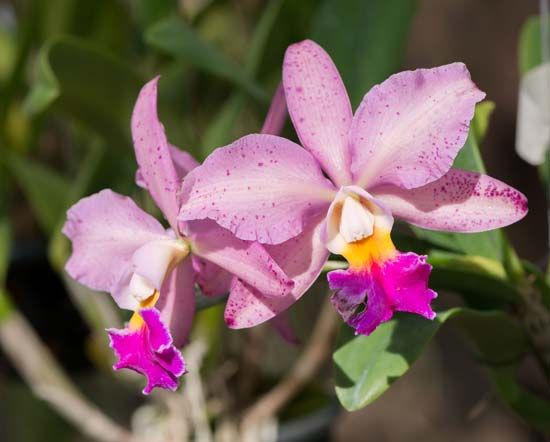
Cattleya is a genus of approximately 45 species of orchids native to tropical America. These plants are widely cultivated as ornamentals, particularly in greenhouses, and are well-known for their large, showy, and brightly colored flowers, which are frequently used in corsages.12
Botanically, many Cattleya species are epiphytic or grow on rocks, characterized by succulent leaves and pseudobulbs. The flowers feature a distinct structure with three sepals and three petals, one of which is modified into a prominent labellum. The genus was named by botanist John Lindley in honor of William Cattley, an English merchant and horticulturist who was a dedicated patron of botany.123
Beyond the plant itself, the term “cattleya” also refers to a specific shade of moderate purple, inspired by the vibrant hues of these flowers.3
What does it mean for a plant to be epiphytic?
An epiphyte is a plant that grows upon another plant or object solely for physical support. Often referred to as “air plants,” these organisms do not rely on their host for nourishment and are not parasitic, as they do not penetrate the host to extract water or nutrients.456
Most epiphytes are found in moist tropical regions, where growing high in the tree canopy allows them to access sunlight that is otherwise blocked in dense, shaded forests. They typically obtain moisture from rain and water vapor in the air, while gathering nutrients from organic debris that collects on their supporting structures.5
Common examples include many species of orchids, ferns, mosses, and members of the pineapple family. While they are most prevalent in the tropics, some species, such as certain lichens and mosses, can be found in temperate zones growing on rocks or trees.45
How do orchids reproduce in the wild?
Orchids reproduce in the wild through a complex process of pollination and seed dispersal, often relying on highly specialized relationships with insects and fungi.
Pollination Strategies
Orchids have evolved diverse methods to attract pollinators, ranging from offering nectar to sophisticated forms of deception:
- Nectar Rewards: Some orchids attract insects with bright colors and agreeable odors, providing nectar as a reward. As the insect visits the flower, it inadvertently picks up or deposits pollinia (pollen sacs) on its body.78
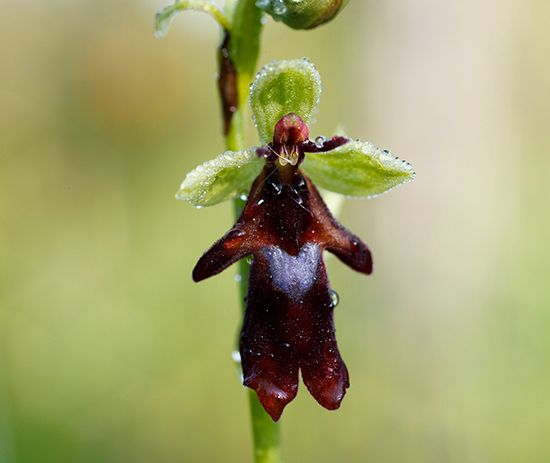
- Sexual Deception: Many species, such as those in the genus Ophrys, use visual, tactile, and olfactory stimuli to mimic female insects. Male bees or wasps are lured to the flower and attempt to copulate with it, a process known as pseudocopulation, during which they collect or transfer pollinia.910
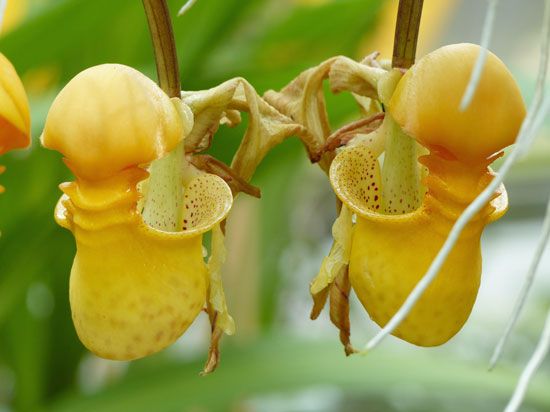
- Traps and Manipulation: Some orchids, like the bucket orchid (Coryanthes), use physical traps to force pollinators through a specific path where they must pick up or deposit pollen to escape.8
Fertilization and Seed Development
Once pollination occurs, pollen tubes grow to the ovary to fertilize the ovules. The resulting seeds are extremely small, dustlike, and lack endosperm, which typically provides nutrients for developing embryos in other plants. Because they lack these internal food reserves, orchid seeds rely on a symbiotic relationship with mycorrhizal fungi to germinate and obtain the nutrients necessary for early growth.711
Who was William Cattley and why is he important to botany?
William Cattley (died 1835) was an English merchant and horticulturist who played a significant role in the history of botany through his dedication to the collection and cultivation of rare plants.1
He is best remembered for his contributions to the study of orchids. In 1821, the English botanist John Lindley named the genus Cattleya in his honor. Lindley chose this name to recognize Cattley’s “ardour in the collection” and his “unrivaled success in the cultivation” of these challenging plants. The genus was established after a specimen of Cattleya labiata flowered in Cattley’s greenhouse, which Lindley described as the “handsomest species of the order” he had ever seen.21
Today, the genus Cattleya comprises about 45 species of epiphytic orchids native to tropical America, many of which are highly valued as ornamental plants and are frequently used in the creation of showy hybrids.21
Sources
- cattleya — Encyclopædia Britannica
- cattleya — Merriam-Webster
- 10 Words for Uncommon Colors | Cattleya — Merriam-Webster
- Did you know? — Merriam-Webster
- Epiphyte — Encyclopædia Britannica
- Parasitic plant — Encyclopædia Britannica
- orchid - Natural history — Encyclopædia Britannica
- mimicry - Orchids — Encyclopædia Britannica
- orchid - Seeds — Encyclopædia Britannica
- orchid - Bee pollination — Encyclopædia Britannica
- orchid - Sexual deception — Encyclopædia Britannica
Published on · 3 min read