Ophrys
Ophrys is a genus comprising approximately 30 species of terrestrial orchids native to Eurasia and North Africa. These plants are notable for their…
What is Ophrys?
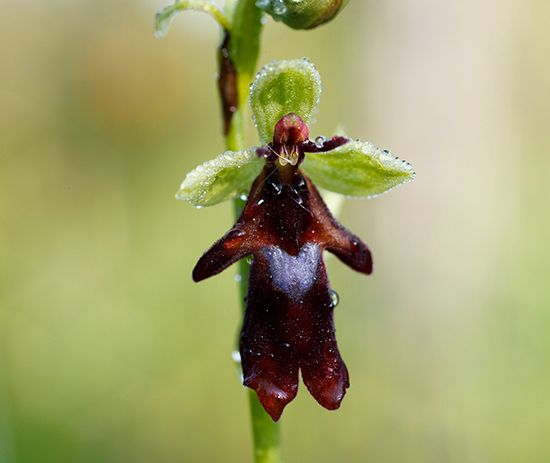
Ophrys is a genus comprising approximately 30 species of terrestrial orchids native to Eurasia and North Africa. These plants are notable for their metallic-colored, hairy flowers that mimic the appearance of female insects to attract pollinators.12
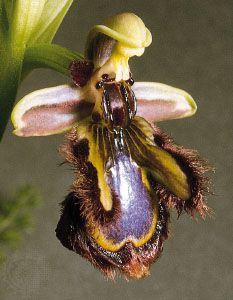
The genus employs a unique reproductive strategy known as pseudocopulation. The central petal, or labellum, is highly modified in color, texture, and scent to lure specific bees or wasps. Male insects, deceived by this mimicry, attempt to mate with the flower, during which time pollen sacs (pollinia) attach to their bodies and are subsequently transferred to other flowers. Unlike typical mutualistic relationships, the insects receive no reward for their efforts and expend significant energy in these futile attempts. Common examples include the fly orchid and the bee orchid.1
What is the difference between pseudocopulation and typical plant pollination?
The primary difference between pseudocopulation and typical pollination lies in the nature of the interaction between the plant and the pollinator.
Typical Pollination
In most plant-pollinator relationships, the interaction is based on a mutualistic exchange. The plant provides a reward—typically nectar or pollen—to attract insects, birds, or other animals. As the pollinator visits the flower to feed, it inadvertently picks up and transfers pollen, facilitating the plant’s reproduction while receiving a nutritional benefit in return.45
Pseudocopulation
Pseudocopulation is a specialized form of sexual deception. Instead of offering a food reward, the plant mimics the appearance, scent, and texture of a female insect. Male insects are lured to the flower, believing they have found a mate, and attempt to copulate with it. During this futile effort, the plant attaches pollinia (sticky pollen packets) to the insect. The deceived insect receives no reward and expends significant energy, yet it remains the primary agent for transferring pollen to the next flower it visits.65
How do Ophrys orchids use scent to attract specific insects?
Ophrys orchids utilize scent as a primary mechanism to attract specific male bees and wasps for pollination. These orchids produce chemical compounds that mimic the pheromones secreted by female insects of the target species.71
These odoriferous substances serve several critical functions in the orchid’s reproductive strategy:
- Initiating Search Behavior: The scent acts as a long-distance signal that triggers search behavior in males, guiding them toward the stationary flowers.7
- Ensuring Specificity: Because these chemical signals are typically limited to a specific insect species or a few close relatives, the orchid ensures that it attracts only the appropriate pollinator.7
- Sustaining Interaction: Once the male arrives, the scent provides the necessary olfactory stimulation to keep the insect on the flower for a prolonged period, which is essential for the successful attachment of pollinia (pollen sacs).1
In some instances, the scent produced by the Ophrys flower is an even more potent attractant for the male than the scent produced by the actual female insect.7
Are there other plants that use deception to survive?
Yes, many plants employ deceptive strategies beyond sexual mimicry to ensure their survival and reproduction. These adaptations often involve manipulating insect behavior through false promises of food or safe egg-laying sites.
Deceptive Strategies in Plants
- Carrion Mimicry: Some plants, such as carrion flowers (e.g., Stapelia) and the titan arum, produce rancid, malodorous fumes and mottled colors that mimic rotting flesh or dung. This attracts carrion flies and dung beetles looking for a place to lay eggs or feed, inadvertently facilitating pollination as they move between flowers.796
- Trap Flowers: The cuckoopint (Arum maculatum) uses a combination of heat and a fetid odor to lure flies into a floral chamber. Once inside, the insects are temporarily trapped by downward-pointing hairs, ensuring they remain long enough to deposit pollen before being released after the plant’s male flowers mature.796
- Defensive Egg Mimicry: Certain plants, such as some passion-flowers, produce pigmented structures that resemble the eggs of butterflies. Because female butterflies often avoid laying their own eggs on plants that appear already “occupied” to reduce competition for their larvae, these mimics help the plant avoid herbivory.10
- General Nectar Deception: Many orchids mimic the appearance of nectar-producing flowers without actually providing any reward. They rely on the presence of genuine nectar-bearing plants in the vicinity to attract pollinators, which then visit the deceptive orchids by mistake.11
Sources
- Ophrys — Encyclopædia Britannica
- Ophrys — Merriam-Webster
- sexual reproduction — Encyclopædia Britannica
- Pseudocopulation — Encyclopædia Britannica
- angiosperm - Pollination — Encyclopædia Britannica
- Botanical Sex: 9 Alluring Adaptations — Encyclopædia Britannica
- mimicry - Orchids — Encyclopædia Britannica
- orchid - Sexual deception — Encyclopædia Britannica
- mimicry - Carrion flowers , stinkhorn mushrooms, and mosses — Encyclopædia Britannica
- pollination - Beetles and flies — Encyclopædia Britannica
- mimicry - Defensive egg dummies — Encyclopædia Britannica
- mimicry - Cuckoos — Encyclopædia Britannica
Published on · 3 min read