Oncidium
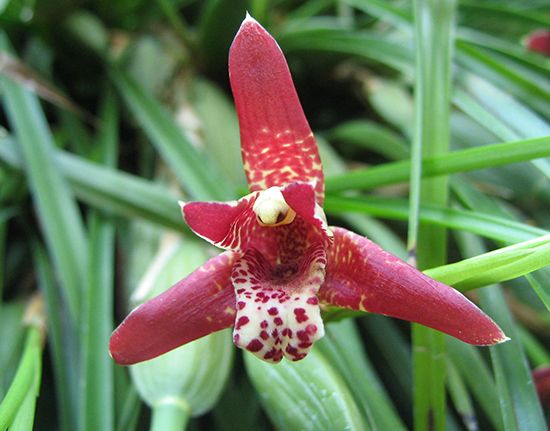
Oncidium is a genus comprising approximately 300 species of tropical and subtropical American orchids. Often referred to as bee orchids, tiger orchids, or…
What is Oncidium?
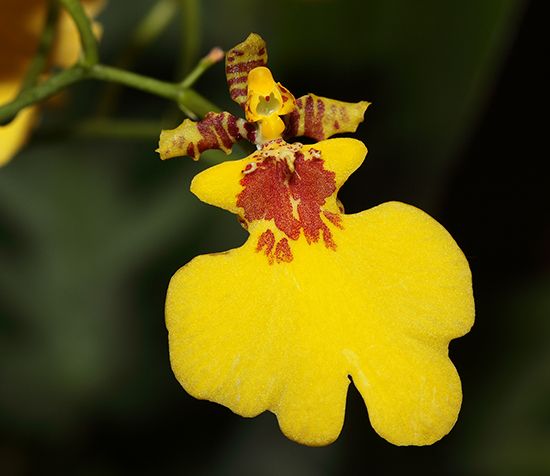
Oncidium is a genus comprising approximately 300 species of tropical and subtropical American orchids. Often referred to as bee orchids, tiger orchids, or dancing ladies, these plants are primarily epiphytic, meaning they grow upon other plants for support.12
The genus is characterized by significant diversity in size and shape. Most species feature pseudobulbs with several bracts and one to three leaves. Their flowers, which range from 6 mm to over 10 cm in width, are typically yellow or brown and are often displayed on long sprays or spikes. The name Oncidium is derived from the Greek word onkos (meaning “bulk” or “mass”) and refers to a small protuberance found on the flower’s labellum. While many are cultivated for their beauty, some species exhibit remarkable ecological adaptability, such as those found growing on cacti in arid regions of Ecuador.123
What does it mean for a plant to be epiphytic?
An epiphyte is any plant that grows upon another plant or object solely for physical support. These plants are not parasitic; they do not derive water or nutrients from their host, nor do they possess the specialized organs called haustoria that parasitic plants use to penetrate and feed on a host.45
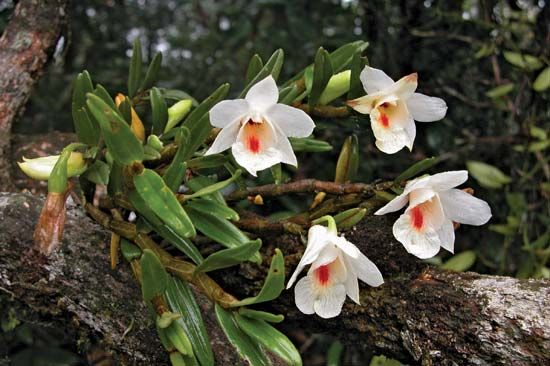
Instead, epiphytes—often called “air plants”—obtain moisture from rain and water vapor in the air, while gathering nutrients from organic debris that collects on the supporting structure. By growing above the ground, particularly in dense tropical forests, they gain essential access to sunlight that would otherwise be blocked by the forest canopy.46
Common examples of epiphytes include many species of orchids, ferns, mosses, and members of the Bromeliaceae (pineapple) family. While most prevalent in moist tropical regions, some species, such as ball moss, have adapted to survive in arid environments by utilizing marine fog.46
How do pseudobulbs help orchids survive in their environment?
Pseudobulbs are specialized, thickened stem structures that play a critical role in the survival of many orchid species, particularly those that grow as epiphytes. By serving as storage organs, these bulblike stems allow the plant to endure periods of drought or nutrient scarcity by retaining essential water and resources.78
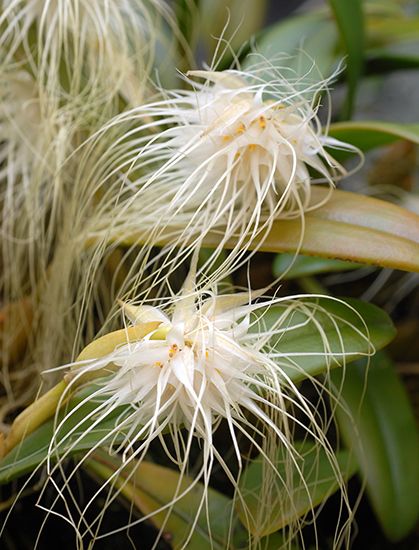
These structures are highly diverse in form, ranging from elongated stems consisting of multiple internodes to compact, single-internode structures. In many epiphytic orchids, such as those in the genus Bulbophyllum, the pseudobulbs work in conjunction with creeping rhizomes to support the plant’s growth habit. Because epiphytes do not have access to the consistent moisture and nutrient supply found in soil, the ability to store reserves within these thickened stems is a vital evolutionary adaptation for surviving in their often-exposed, canopy-dwelling environments.78
What are some other popular types of orchids found in nature?
The Orchidaceae family is incredibly diverse, comprising approximately 26,000 species across 880 genera. While many are grown as ornamentals, they inhabit a wide range of natural environments, from tropical cloud forests to temperate bogs and even desert conditions.97
Some popular and notable genera and species found in nature include:
- Cattleya: Often referred to as the “queen of orchids,” known for their large, showy flowers.
- Cymbidium: Popular for their long-lasting sprays of flowers, often found in cooler climates.
- Dendrobium: A large, diverse genus that includes many epiphytic species with varied growth habits.
- Phalaenopsis: Commonly known as the moth orchid, prized for its elegant, moth-like blooms.
- Vanda: Known for their vibrant colors and monopodial growth habit.
- Vanilla: A genus of economic importance as the source of the popular flavoring.
- Lady’s slipper: A distinct group (subfamily Cypripedioideae) recognized by their unique pouch-shaped labellum.
- Oncidium: Often called “dancing-lady” orchids, these are frequently found in tropical regions and can even grow on cacti in arid areas.97
Sources
- Oncidium — Encyclopædia Britannica
- oncidium — Merriam-Webster
- orchid - Ecology — Encyclopædia Britannica
- epiphyte — Encyclopædia Britannica
- Did you know? — Merriam-Webster
- parasitic plant — Encyclopædia Britannica
- orchid - Growth forms — Encyclopædia Britannica
- Bulbophyllum — Encyclopædia Britannica
- list of plants in the family Orchidaceae — Encyclopædia Britannica
Published on · 3 min read