Chile Rise
The Chile Rise is a submarine ridge located in the Pacific Ocean that trends southeast from Easter Island toward the coast of South America/Easter-Island)…
What is Chile Rise?
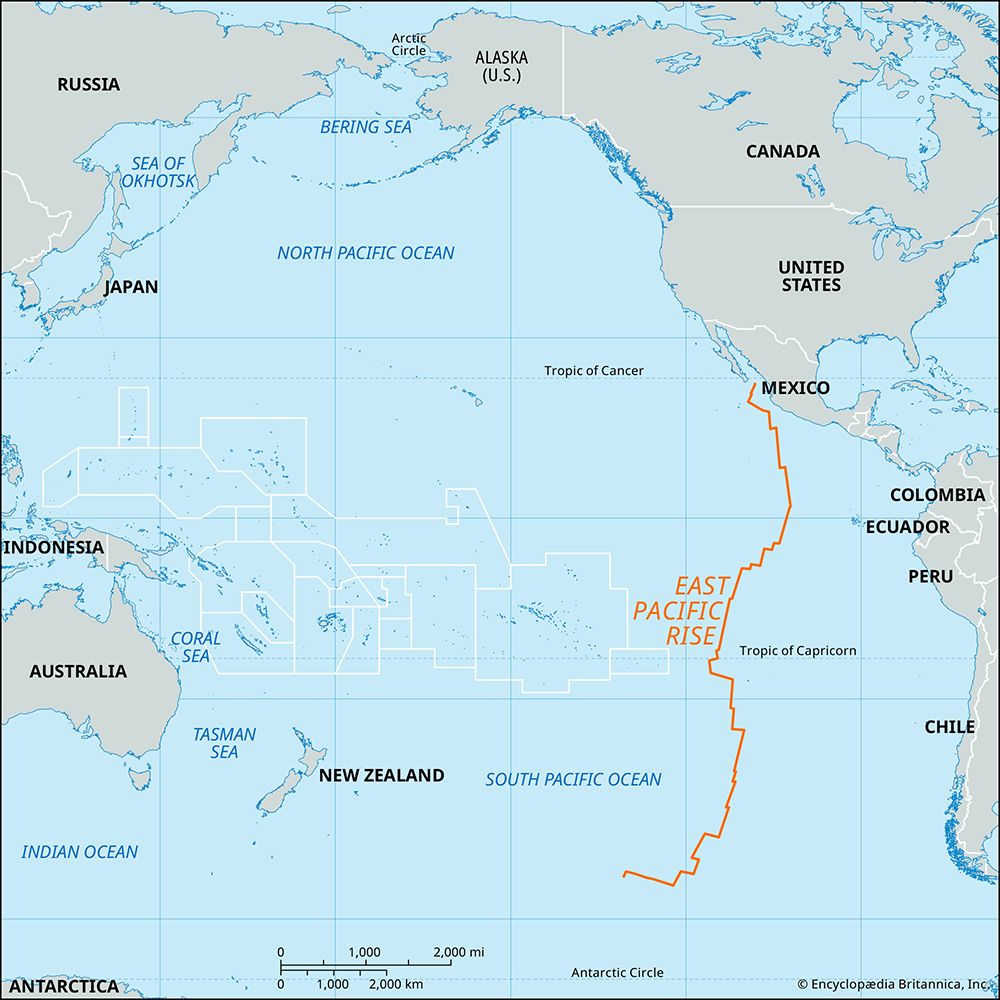
The Chile Rise is a submarine ridge located in the Pacific Ocean that trends southeast from Easter Island toward the coast of South America/Easter-Island) toward the coast of South America. It branches off from the Albatross Cordillera, also known as the East Pacific Rise.1
Characterized by highly irregular relief, the ridge is formed by a series of troughs and asymmetrical ridges. Its existence was originally predicted by scientists based on the epicenters of frequent shallow earthquakes before it was later confirmed through depth soundings. The area between the Chile Rise and the South American mainland is known as the Chile Basin.1
What is the difference between a mid-ocean ridge and a subduction zone?
Mid-ocean ridges and subduction zones represent opposite processes in the cycle of plate tectonics.
Mid-Ocean Ridges
A mid-ocean ridge is a divergent boundary where tectonic plates move apart. As they separate, molten magma rises from the mantle to fill the gap, cooling to create new oceanic crust through a process called seafloor spreading. These ridges form an interconnected global mountain system characterized by high heat flow and shallow earthquakes.456
Subduction Zones
A subduction zone is the antithesis of a mid-ocean ridge. It occurs at convergent boundaries where older, denser oceanic crust is forced downward into the Earth’s upper mantle, where it is eventually consumed. This process, often marked by deep-sea trenches, acts as a sink for the crustal material generated at ridges. While ridge push helps drive plate movement at spreading centers, slab pull—the sinking of dense plates at subduction zones—is a major force driving the motion of tectonic plates across the planet.47
We could dive deeper into how these processes contribute to the recycling of Earth’s crust.
How do tectonic plates create mountain ranges like the Andes?
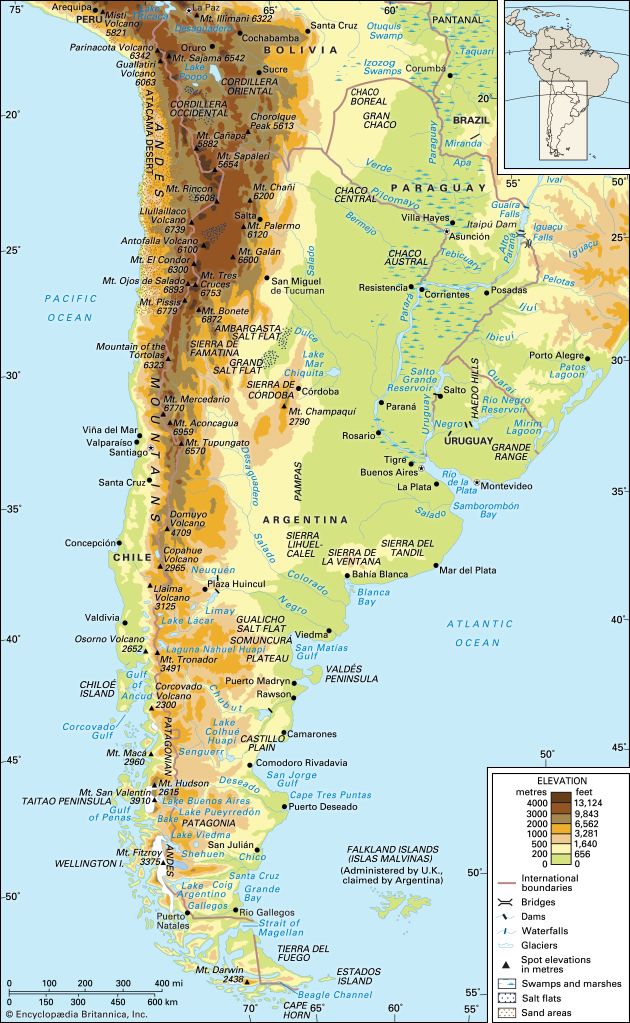
Mountain ranges like the Andes are primarily formed through the process of subduction, a key mechanism of plate tectonics. This occurs at convergent margins where an oceanic plate, such as the Nazca Plate, is forced beneath a lighter continental plate, like the South American Plate.910
As the oceanic plate descends into the mantle, it triggers several mountain-building processes:
- Magmatism: The subduction process generates significant heat, causing magma to rise through the overlying crust. This creates volcanic arcs and injects molten material into the continental crust, contributing to the mountain range’s mass and elevation.91011
- Crustal Uplift: The convergence squeezes the thermally weakened crust, forcing it upward. This uplift often occurs in discrete, intense episodes rather than at a constant rate.11
- Terrane Accretion: Over time, smaller crustal fragments or terranes within the ocean basin may be scraped off the subducting slab and added to the continental margin, further expanding and building the mountain belt.312
These tectonic forces continue to shape the Andes today, keeping the region volcanically active and prone to earthquakes.910
What are hydrothermal vents and why are they important to ocean life?
Hydrothermal vents are fissures on the ocean floor where seawater, heated by underlying volcanic activity, emerges as a mineral-rich solution. These vents are typically found in areas of tectonic activity, such as spreading ridges, where they play a significant role in Earth’s heat loss.151617
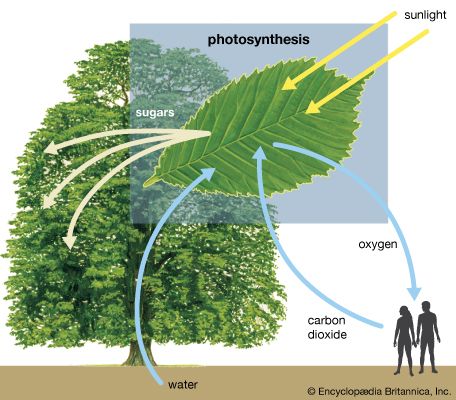
These vents are vital to ocean life because they support unique ecosystems that are entirely independent of sunlight. Unlike most life on Earth, which relies on photosynthesis, vent communities are built on chemosynthesis. Sulfur-oxidizing bacteria thrive in the warm, sulfur-rich water, converting chemical energy into organic carbon.151617
This process sustains a diverse array of organisms, including mussels, clams, and vestimentiferan worms, many of which maintain symbiotic relationships with these bacteria. Since their discovery, these vents have revealed hundreds of previously unknown species, highlighting their importance as a distinct and biologically rich frontier in the deep sea.1716
Sources
- Chile Rise — Encyclopædia Britannica
- East Pacific Rise — Encyclopædia Britannica
- Nazca Plate — Encyclopædia Britannica
- subduction zone — Encyclopædia Britannica
- How do tectonic plates move? — Encyclopædia Britannica
- Mid-Atlantic Ridge — Encyclopædia Britannica
- plate tectonics - Seafloor spreading — Encyclopædia Britannica
- Indian Ocean - Oceanic ridges and fracture zones — Encyclopædia Britannica
- Andes Mountains - Geology — Encyclopædia Britannica
- mountain - Volcanism — Encyclopædia Britannica
- plate tectonics - Mountain building — Encyclopædia Britannica
- plate tectonics - Mountains by subduction — Encyclopædia Britannica
- plate tectonics - Continental rifting — Encyclopædia Britannica
- plate tectonics - Mountains by terrane accretion — Encyclopædia Britannica
- deep-sea vent — Encyclopædia Britannica
- Marine ecosystem - Organisms of the deep-sea vents — Encyclopædia Britannica
- community ecology - The pyramid structure of communities — Encyclopædia Britannica
Published on · 3 min read