Photosynthesis
Photosynthesis is the biological process by which plants, algae, and certain bacteria convert light energy into chemical energy. The overall chemical…
What are the primary reactants and products of photosynthesis?
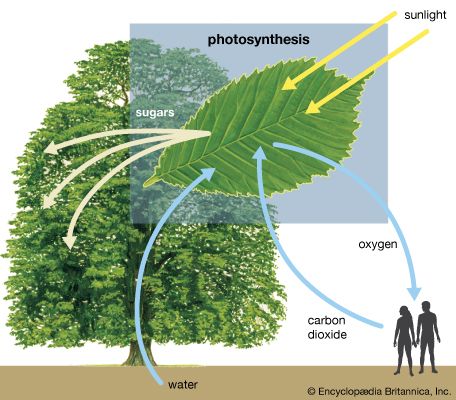
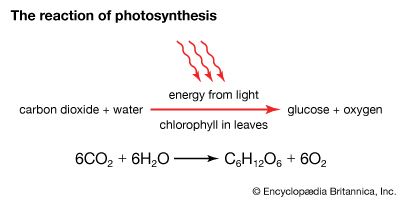
Photosynthesis is the biological process by which plants, algae, and certain bacteria convert light energy into chemical energy. The overall chemical reaction is often represented by the following equation:
6CO2+12H2O→C6H12O6+6O2+6H2O6CO_{2} + 12H_{2}O \rightarrow C_{6}H_{12}O_{6} + 6O_{2} + 6H_{2}O
Primary Reactants and Products
- Reactants: The primary inputs are carbon dioxide (CO2CO_{2}) and water (H2OH_{2}O), which are transformed using light energy captured by chlorophyll.123
- Products: The process yields glucose (C6H12O6C_{6}H_{12}O_{6}), a simple carbohydrate used for energy, along with oxygen (O2O_{2}) gas, which is released as a by-product. Water is also produced as a result of the reaction.1432
While glucose is the primary sugar produced, photosynthesis also facilitates the synthesis of other essential organic components, including amino acids, proteins, and lipids.4
What are the main stages of photosynthesis?
Photosynthesis is a complex process consisting of two interdependent series of reactions that occur within the chloroplasts of plant cells.
1. The Light Reactions
Occurring in the thylakoid membranes, these reactions convert light energy into chemical energy. Pigment molecules, such as chlorophyll, absorb photons to excite electrons, which are then passed along an electron transport chain. This process involves two systems:
- Photosystem II: Light energy splits water molecules (photolysis), releasing oxygen as a by-product and generating a proton gradient that powers the synthesis of ATP.
- Photosystem I: Electrons are re-energized to facilitate the formation of NADPH.
2. The Dark Reactions (Calvin-Benson Cycle)
Taking place in the stroma, these carbon-assimilating reactions use the ATP and NADPH produced in the light reactions to convert carbon dioxide into glucose. This cycle proceeds through three main stages:
- Carboxylation: CO₂ is fixed to ribulose 1,5-bisphosphate.
- Reduction: Energy from ATP and NADPH is used to convert the resulting molecules into sugar phosphates.
- Regeneration: The CO₂ acceptor is reformed to allow the cycle to continue.
What is photosynthesis and why is it important for life on Earth?
Photosynthesis is the biological process by which plants, algae, and certain bacteria convert light energy into chemical energy. Derived from Greek roots meaning “to put together with the help of light,” the process uses sunlight to split water molecules, combining the resulting hydrogen with carbon dioxide to produce glucose and other carbohydrates.1
This process is fundamental to life on Earth for two primary reasons:
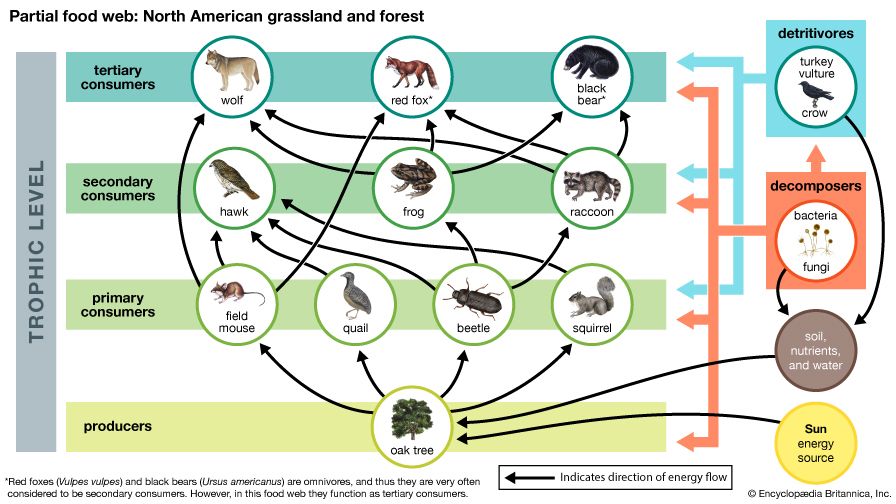
- Energy Foundation: As primary producers, photosynthetic organisms form the base of food webs. They convert solar energy into organic molecules that support nearly all higher life-forms, either through direct consumption or by supporting ecosystems through the flow of nutrients.910
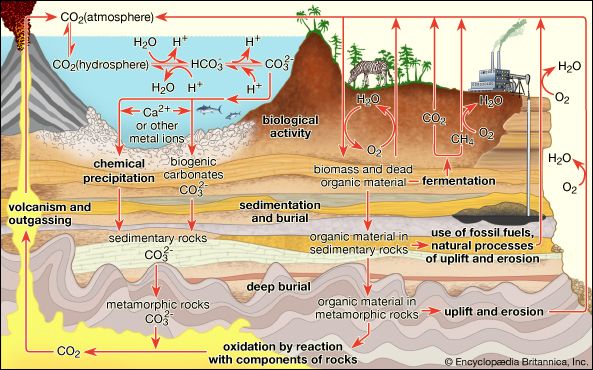
- Atmospheric Oxygen: Photosynthesis is responsible for the presence of oxygen in our atmosphere. By releasing oxygen as a by-product, this process sustains aerobic life and plays a critical role in the carbon cycle.9111
Without photosynthesis, the Earth’s atmosphere would eventually become devoid of oxygen, and the primary energy source for the biosphere would vanish.9
How do plants capture and use light energy in photosynthesis?
Plants capture and utilize light energy through a sophisticated process occurring within the chloroplasts, specifically within the thylakoid membranes.
Light Harvesting
The process begins with antenna complexes—clusters of hundreds of chlorophyll and carotenoid molecules. These pigments absorb photons across the solar spectrum and funnel the resulting electronic excitation energy to a specialized reaction center.138
Energy Conversion
Within the reaction center, the energy excites a special pair of chlorophyll molecules, enabling them to transfer an electron to an acceptor molecule. This initiates an electron-transport chain:1386
- Photosystem II: The lost electron is replaced by the splitting of water, which releases oxygen as a by-product and contributes to a proton gradient across the membrane.8146
- Photosystem I: Electrons are re-energized to facilitate the formation of NADPH.86
The resulting proton gradient and electrical charge across the membrane act like a biological battery, providing the potential energy necessary to drive the synthesis of ATP via photophosphorylation. Finally, the ATP and NADPH produced are used in the Calvin-Benson cycle to convert carbon dioxide into energy-rich carbohydrates.1314815
Sources
- Photosynthesis: Top Questions — Encyclopædia Britannica
- Plant - Basic mechanisms — Encyclopædia Britannica
- Photosynthesis - Basic products of photosynthesis — Encyclopædia Britannica
- What Does Photosynthesis Produce? — Encyclopædia Britannica
- Chlorophyll: Top Questions — Encyclopædia Britannica
- Photosynthesis - The Calvin-Benson cycle — Encyclopædia Britannica
- Photosynthesis - The light reactions — Encyclopædia Britannica
- cell - Trapping of light — Encyclopædia Britannica
- Climate change - Photosynthesis and atmospheric chemistry — Encyclopædia Britannica
- food: Top Questions — Encyclopædia Britannica
- photosynthesis Has Greek Roots — Merriam-Webster
- Photosynthesis - Carbon fixation in C 4 plants — Encyclopædia Britannica
- photochemical reaction - Photochemical steps in photosynthesis — Encyclopædia Britannica
- Photosynthesis - Step two: The conversion of light energy to ATP — Encyclopædia Britannica
- Photosynthesis - The pathway of electrons — Encyclopædia Britannica
Published on · 4 min read