Chloranthales
The order Chloranthales consists of a single family, Chloranthaceae, which is recognized as a basal branch of the angiosperm tree. These plants are…
What are the main characteristics of plants in the Chloranthales order?
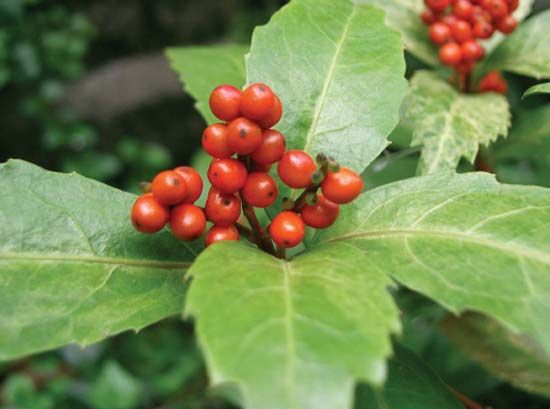
The order Chloranthales consists of a single family, Chloranthaceae, which is recognized as a basal branch of the angiosperm tree. These plants are characterized by the following features:1
- Growth Habit: They are typically soft-wooded, aromatic shrubs and trees.1
- Vegetative Morphology: The plants possess opposite, saw-toothed leaves and distinctively swollen nodes.1
- Floral Structure: The flowers are very small and often unisexual. They generally lack petals or tepals, though they may be subtended by leaflike bracts.1
- Reproductive Organs: Flowers contain either one to five stamens or a single carpel, which matures into a drupe.1
- Distribution: The order is pantropical, found in regions such as Madagascar, though it is notably absent from the African continent.1
Fossil evidence indicates that Chloranthaceae appeared very early in the history of flowering plants, and they are often compared to other early angiosperm groups due to their simple, small floral structures.12
How are Chloranthales plants used by humans, if at all?
Plants within the Chloranthales order, specifically those in the family Chloranthaceae, have limited but notable human uses:
- Medicinal and Culinary Use: Species belonging to the genus Chloranthus are used to prepare tea and have been utilized traditionally to combat fevers.1
- Ornamental Cultivation: The species Sarcandra glabra is cultivated by humans for its aesthetic value as an ornamental plant.1
Beyond these specific applications, the order is primarily studied for its significance as a basal branch of the angiosperm tree and its early appearance in the fossil record.1
Are there any unique adaptations found in Chloranthales plants?
Plants in the order Chloranthales (family Chloranthaceae) exhibit several distinct characteristics that reflect their status as a basal branch of the angiosperm tree. While they do not possess the complex, showy flowers associated with later-evolving flowering plants, they display specific structural adaptations:
- Simple Floral Morphology: Their flowers are very small, often unisexual, and lack petals or tepals. This simplicity is characteristic of early-diverging angiosperms, which often relied on wind or water for pollination rather than the specialized animal-pollinator relationships that drove the evolution of showy, nectar-rich flowers in other groups.12
- Vegetative Structure: These plants are typically soft-wooded, aromatic shrubs or trees featuring opposite, saw-toothed leaves and distinctively swollen nodes, which provide structural support for their growth habit.1
- Evolutionary Persistence: As one of the earliest lineages in the flowering plant fossil record, they represent an ancient evolutionary strategy. Their reproductive organs, consisting of 1–5 stamens or a single carpel that matures into a drupe, demonstrate a primitive yet effective method of seed production and dispersal that has allowed the family to persist for millions of years.12
What role do Chloranthales plants play in their native ecosystems?
The role of Chloranthales plants within their native ecosystems is primarily defined by their status as ancient, basal angiosperms. While specific ecological interactions for this order are less documented than those of more dominant tropical families, their presence contributes to the biodiversity of pantropical regions where they occur.8
Key aspects of their ecological role include:
- Structural Components: As aromatic shrubs and trees, they occupy specific niches within tropical environments, characterized by their distinct opposite, saw-toothed leaves and swollen nodes.8
- Reproductive Strategy: Their small, often unisexual flowers—which typically lack petals or tepals—suggest an evolutionary reliance on primitive pollination mechanisms, such as wind or water, rather than the specialized animal-pollinator relationships that characterize many later-evolving flowering plants.98
- Seed Dispersal: The development of their carpels into drupes indicates that these plants likely rely on fruit-eating animals for seed dispersal, a common strategy in tropical forest ecosystems.8
Because they represent an early branch of the flowering plant tree, they serve as vital subjects for understanding the evolutionary history and distribution of plant life in the tropics.98
Sources
- Chloranthales — Encyclopædia Britannica
- angiosperm - Paleobotany and evolution — Encyclopædia Britannica
- Caryophyllales - Other families — Encyclopædia Britannica
- chloroplast: Top Questions — Encyclopædia Britannica
- magnoliid clade - Evolution — Encyclopædia Britannica
- Chlamydomonas — Encyclopædia Britannica
- Algae - Reproduction and life histories — Encyclopædia Britannica
- Tropical rainforest - Flora — Encyclopædia Britannica
- pollination - Structural — Encyclopædia Britannica
- pollination — Encyclopædia Britannica
Published on · 3 min read