Coachwhip
The coachwhip (Masticophis flagellum) is a nonvenomous snake belonging to the Colubridae family. Found throughout the southern United States and into…
What is coachwhip?
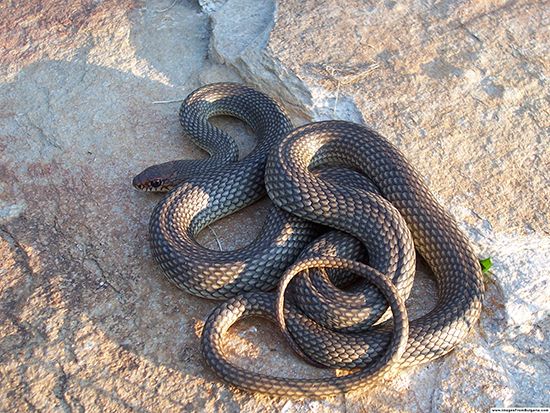
The coachwhip (Masticophis flagellum) is a nonvenomous snake belonging to the Colubridae family. Found throughout the southern United States and into west-central Mexico, this slender reptile typically averages 1.2 meters (4 feet) in length, though some individuals can reach twice that size.12
Its name is derived from its appearance; the snake’s tail features a scale pattern that resembles a braided or plaited whip. Coloration varies by region, with eastern subspecies appearing brownish, while western varieties—often referred to as red racers or whip snakes—tend to be reddish or black.12
As a swift-moving predator, the coachwhip feeds on lizards, small mammals, large insects, and occasionally other snakes, including rattlesnakes. It secures its prey by pinning it under its coils before biting. All coachwhips are egg-layers.1
How do coachwhip snakes hunt their prey?
The coachwhip is a swift-moving snake that relies on speed and agility to hunt its prey. Its diet consists of lizards, small mammals, large insects, and occasionally other snakes, such as rattlesnakes. rattlesnakes.1
When hunting, the coachwhip captures its prey by pinning it firmly under its coils. Once the prey is immobilized, the snake kills it by biting.1
What makes the coachwhip’s tail look like a braided whip?
The coachwhip (Masticophis flagellum) derives its name from the distinctive appearance of its tail, which features a scale pattern that resembles a braided or plaited whip. This unique arrangement of scales creates a textured, woven look that distinguishes the tail from the rest of the snake’s slender body.21
How do nonvenomous snakes protect themselves from predators?
Nonvenomous snakes employ a variety of defensive strategies to protect themselves from predators, ranging from passive concealment to active displays of aggression.
Concealment and Mimicry
Many snakes rely on camouflage to avoid detection. Their skin patterns—such as blotches, spots, or stripes—disrupt their body outline, allowing them to blend into their natural surroundings. Some species, like the vine snake, have evolved slender, green bodies that resemble local vegetation. Additionally, some harmless snakes utilize mimicry, adopting the bright, ringed color patterns of venomous species to deter predators that have learned to avoid dangerous snakes.45
Defensive Displays and Behavior
When concealment fails, snakes may use:
- Warning Displays: Some species expose brightly colored undersides by curling their tails or turning over, which may signal that they are distasteful or dangerous.5
- Aggressive Posturing: If threatened, some snakes strike at enemies. While some species strike with their mouths closed or open without biting, others, such as water snakes, will bite viciously in self-defense.6
Sources
- coachwhip — Encyclopædia Britannica
- coachwhip snake — Merriam-Webster
- whip snake — Merriam-Webster
- snake - Coloration — Encyclopædia Britannica
- reptile - Striking and biting — Encyclopædia Britannica
- reptile - Display of colour — Encyclopædia Britannica
Published on · 2 min read