Lizard
Lizards have evolved a remarkable array of adaptations to thrive in diverse environments, ranging from arid deserts to dense rainforests. These adaptations…
How have lizards adapted to survive in various environments?
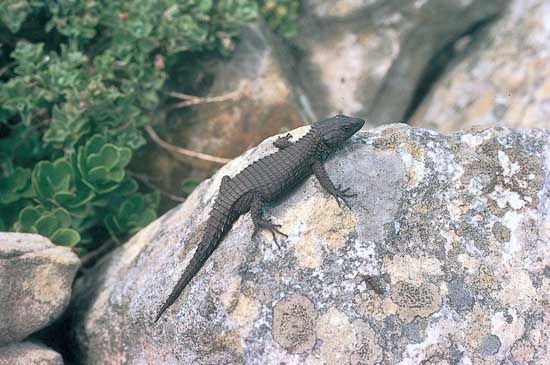
Lizards have evolved a remarkable array of adaptations to thrive in diverse environments, ranging from arid deserts to dense rainforests. These adaptations primarily focus on locomotion, thermoregulation, and survival strategies.
Locomotion and Physical Adaptations
Lizards exhibit specialized physical traits suited to their habitats:
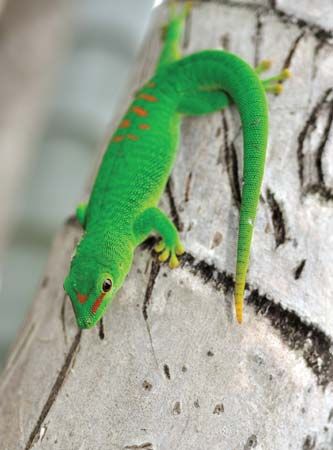
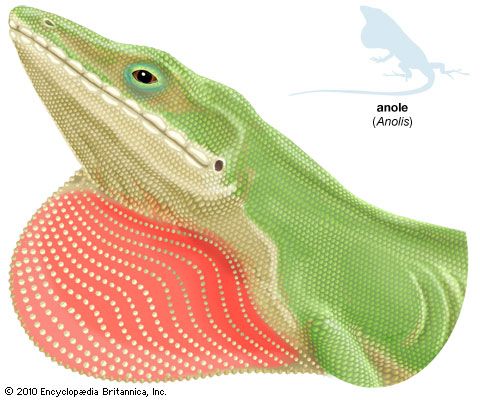
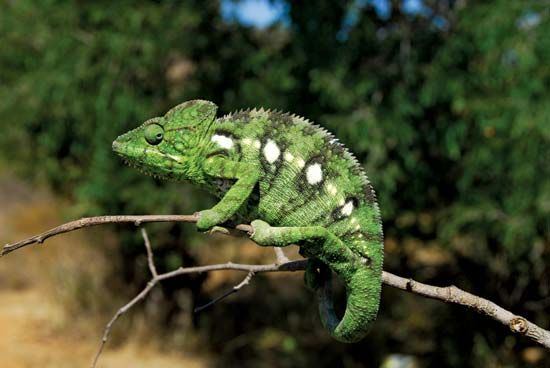
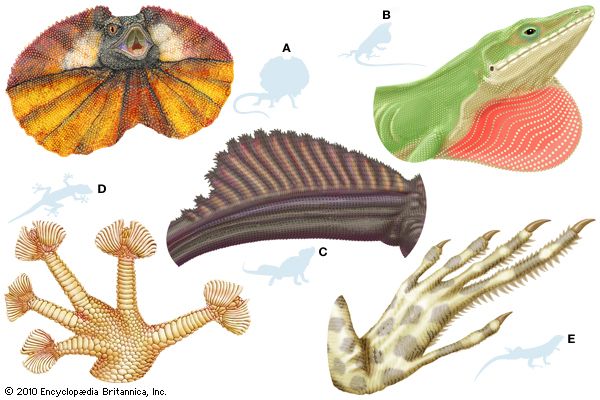
- Climbing and Adhesion: Arboreal species like geckos and anoles possess specialized toe pads with microscopic setae that allow them to cling to vertical surfaces via intermolecular forces. Chameleons have evolved unique, tonglike feet and prehensile tails to grip branches securely.12
- Sand and Burrowing: Desert-dwelling lizards often have fringed toes to prevent sinking into loose sand, while others, such as the California legless lizard, have evolved to “swim” through it.1
- Movement: Some species, like the basilisk, can run bipedally or even across water, while flying lizards use extensible skin folds to glide.1
Thermoregulation and Ecology
As ectothermic animals, lizards rely on behavioral thermoregulation to maintain optimal body temperatures. They use solar radiation to warm themselves and seek shade or microhabitats to cool down. This reliance on the environment dictates their activity patterns, with some species evolving to remain active at specific temperatures regardless of their geographic location.34
Survival and Defense
Lizards have developed efficient water conservation methods, such as excreting uric acid, which aids their survival in extreme deserts and on oceanic islands. To defend against predators, they employ various strategies:5
- Intimidation: The frilled lizard uses a throat frill to appear larger.6
- Physical Barriers: Species like the armadillo lizard protect themselves by curling into a spiny, impenetrable form.6
- Autotomy: Many lizards can autotomize (shed) their tails to distract predators while they escape.6
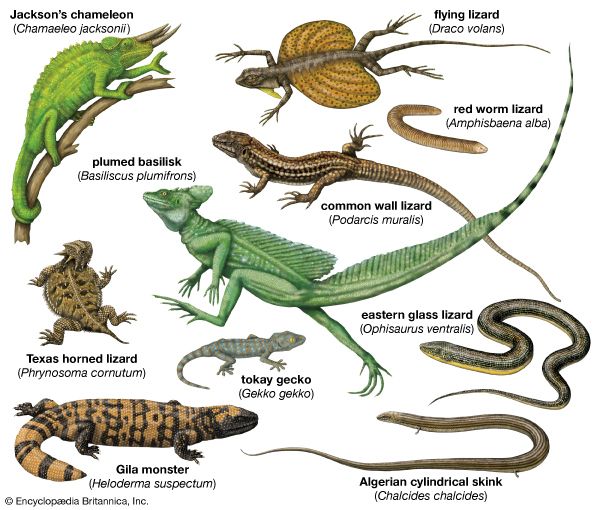
What are the main characteristics that define lizards as reptiles?
Lizards are classified as reptiles (class Reptilia) based on a combination of physiological, skeletal, and developmental characteristics. As vertebrates, they share the following defining features:
- Scaly Skin: Most reptiles possess a continuous external covering of epidermal scales composed primarily of keratin. This dry, scaly skin is a key distinction from amphibians and helps prevent water loss, allowing lizards to thrive in dry environments.89
- Ectothermic Metabolism: Lizards are ectothermic, meaning they lack internal mechanisms to regulate body temperature. They rely on behavioral thermoregulation—such as basking in the sun or seeking shade—to maintain the temperatures necessary for survival and activity.94
- Amniotic Development: Reptiles are members of the Amniota. Their embryos are encased in an amnion, a fluid-filled membrane that protects the developing embryo. Most lizards reproduce by laying shelled eggs on land, though some species exhibit internal development.810
- Skeletal Anatomy: Reptilian classification is supported by specific skeletal traits, such as having a single occipital condyle where the skull attaches to the spine and a lower jaw composed of several bones.810
How have lizards been portrayed in various cultures and mythologies throughout history?
Throughout history, lizards have been perceived through a complex lens, often blurring the lines between biological reality and mythological symbolism. While actual lizards are diverse reptiles ranging from tiny geckos to the massive Komodo dragon, their cultural portrayals frequently manifest as the dragon—a creature that holds vastly different meanings across global traditions.1213
Mythological Symbolism
- Western and Middle Eastern Traditions: In many Western and Middle Eastern cultures, the serpent or dragon-like creature is often associated with evil, darkness, or sin. In Christianity, the dragon became a symbol of paganism and temptation, frequently depicted being conquered by saints.13
- East Asian Traditions: Conversely, in East Asian mythologies, the dragon (such as the Chinese lung) is a highly prestigious and beneficent entity. It represents yang, the principle of heaven and activity, and has historically served as a powerful emblem of imperial authority.13
- Ancient Perspectives: The Greeks and Romans held nuanced views, sometimes viewing drakontes as sharp-eyed, protective dwellers of the Earth, while simultaneously adopting the Middle Eastern view of the serpent as a malevolent force.13
Cultural Misconceptions
In many indigenous cultures, small, harmless lizards like geckos have been falsely feared as highly venomous. This suspicion likely stems from their nocturnal habits, unique physical traits like elliptical pupils, and their ability to scale vertical surfaces, which some cultures interpreted as supernatural.12
How do lizards differ from other reptiles like snakes or turtles?
Lizards are members of the order Squamata, a group they share with snakes. While they are all reptiles, lizards are distinguished from other groups by several key anatomical and behavioral traits.10
Lizards vs. Snakes
Although snakes evolved from lizards and are considered a highly specialized, limbless group of squamates, they differ from most lizards in several observable ways:10
- Limbs and Ears: Most lizards possess legs and external ear openings, features that snakes lack.10
- Eyelids: Typical lizards have movable eyelids, whereas snakes do not.10
- Locomotion: While some lizards have evolved to be limbless, they generally move through lateral undulations or specialized limb movements, whereas snakes utilize unique methods like rectilinear movement or pushing against substrate curves.159
Lizards vs. Turtles
Turtles belong to the order Testudines and are structurally distinct from lizards:1
- Armor: The most defining feature of a turtle is its shell, which encases the body in a bony carapace (top) and plastron (bottom). Lizards lack this integrated shell structure.116
- Skull and Jaws: Turtles have toothless jaws, whereas lizards typically possess teeth. Additionally, turtle skulls lack the pineal opening found in some other reptilian groups.1
While these groups differ in form, they share fundamental reptilian characteristics, such as being ectothermic (relying on the environment to regulate body temperature) and having skin covered in keratinous scales.117
Sources
- lizard - Locomotion and limb adaptations — Encyclopædia Britannica
- lizard - Thermoregulation — Encyclopædia Britannica
- lizard - Water loss and other variables — Encyclopædia Britannica
- reptile - Thermal relationships — Encyclopædia Britannica
- reptile - Clinging and climbing — Encyclopædia Britannica
- lizard - Defensive strategies — Encyclopædia Britannica
- lizard - Scales and colour change — Encyclopædia Britannica
- reptile - General features — Encyclopædia Britannica
- 7 Questions About Lizards, Snakes, and Other Reptiles Answered — Encyclopædia Britannica
- lizard — Encyclopædia Britannica
- reptile - Distinguishing taxonomic features — Encyclopædia Britannica
- lizard - General features — Encyclopædia Britannica
- dragon: Top Questions — Encyclopædia Britannica
- dragon — Encyclopædia Britannica
- reptile - Annotated classification — Encyclopædia Britannica
- reptile - Walking and crawling — Encyclopædia Britannica
- reptile - Skeletal system — Encyclopædia Britannica
Published on · 5 min read