Cobra Plant
The cobra plant (Darlingtonia californica) captures prey using a specialized pitfall trap. Insects are lured to the plant's hooded, pitcher-like leaves by…
How does the cobra plant capture and digest its prey?
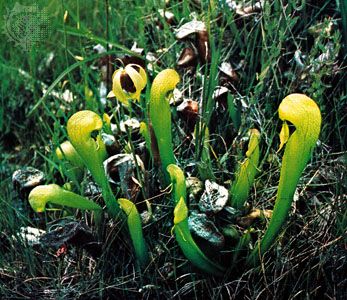
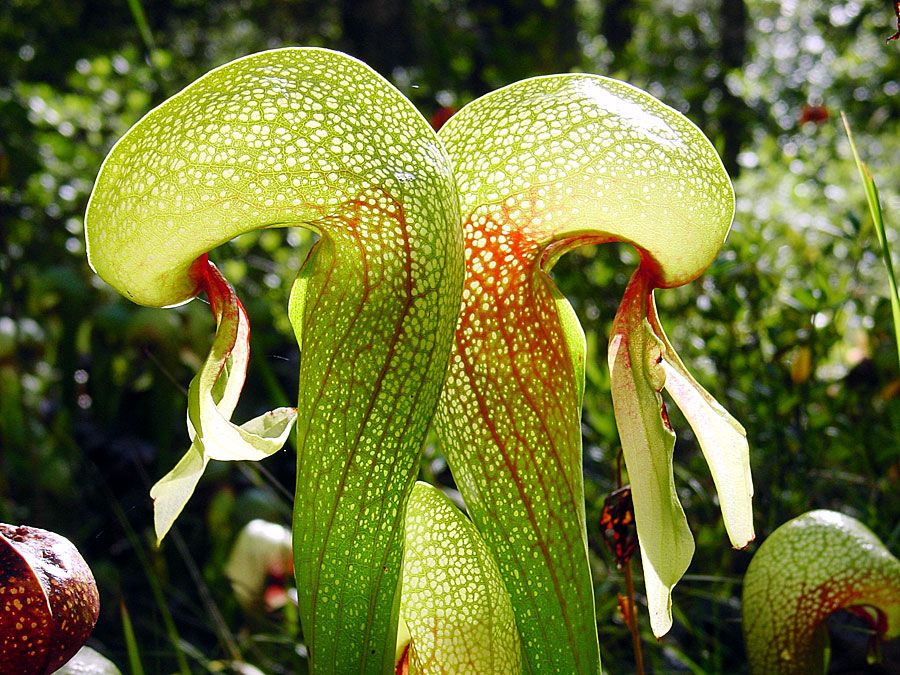
The cobra plant (Darlingtonia californica) captures prey using a specialized pitfall trap. Insects are lured to the plant’s hooded, pitcher-like leaves by nectar glands located on a ramplike “tongue.” Once inside, the prey is confused by translucent patches on the hood that resemble windows, causing the insects to tire as they attempt to escape. The plant further prevents exit through the use of slippery walls and downward-pointing hairs, eventually causing the prey to fall into fluid at the bottom of the pitcher.1
Unlike many other carnivorous plants, the cobra plant does not produce its own digestive enzymes. Instead, it relies on bacteria to break down the trapped insects, allowing the plant to absorb the resulting nutrients to supplement its growth in poor soil conditions.1
How does the cobra plant’s digestive process differ from other carnivorous plants?
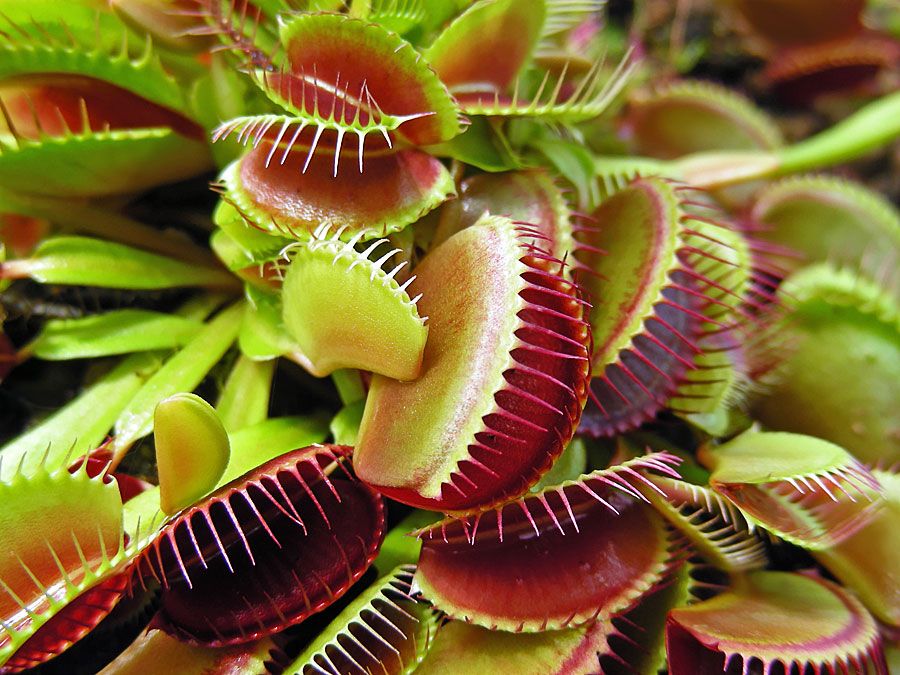
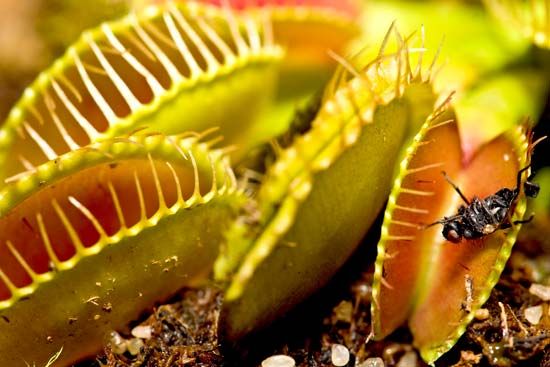
The primary difference between the cobra plant (Darlingtonia californica) and many other carnivorous plants lies in how they break down their prey. While many carnivorous species—such as the Venus flytrap—secrete their own digestive enzymes to dissolve captured insects, the cobra plant does not appear to produce these enzymes itself.12
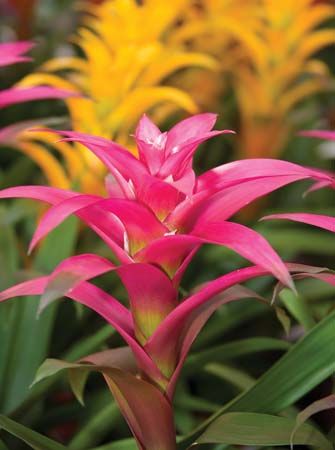
Instead, the cobra plant relies on a symbiotic relationship with bacteria to perform the digestive process. These bacteria break down the trapped prey into simpler, absorbable nutrients, a process similar to the extracellular digestion used by fungi and certain other organisms. This reliance on bacterial assistance is not unique to the cobra plant; it is also observed in some carnivorous species within the pineapple family (Bromeliaceae), such as Brocchinia reducta, which similarly lack their own digestive enzymes and depend on bacterial breakdown to obtain necessary nutrients like nitrogen from their environment.134
What adaptations make the cobra plant unique among carnivorous plants?
The cobra plant (Darlingtonia californica) possesses several unique adaptations that distinguish it from other carnivorous plants:
- Distinctive Morphology: Its hooded, pitcher-like leaves resemble a striking cobra, complete with purple-red appendages that mimic a snake’s forked tongue or fangs. These leaves are stalkless and spring directly from the rootstalk.16
- Sophisticated Trap Design: The plant uses a passive pitfall trap where nectar glands on the “tongue” lure prey to the pitcher’s mouth. Once inside, the plant employs translucent patches on the hood that act as “windows,” confusing insects and causing them to tire as they attempt to escape. The true exit is concealed, and the trap is reinforced with slippery walls and downward-pointing hairs to prevent escape.1
- Bacterial Digestion: Unlike most carnivorous plants that secrete their own digestive enzymes, the cobra plant relies on a symbiotic relationship with bacteria to break down its prey into absorbable nutrients. This adaptation allows the plant to thrive in nutrient-poor soil conditions in its native mountain swamps of northern California and southern Oregon.16
What are the specific environmental conditions required for cobra plants to thrive?
The cobra plant (Darlingtonia californica) is highly specialized and requires specific environmental conditions to thrive. It is native to the mountain regions of northern California and southern Oregon, where it is typically found in swampy habitats.1
Key environmental requirements include:
- Habitat: The plant grows in nutrient-poor soil, which necessitates its carnivorous behavior to supplement its nutritional intake.1
- Elevation: It thrives in redwood and red fir forests at elevations reaching up to 2,000 meters (6,000 feet) above sea level.1
- Temperature: The species prefers cool environments, generally requiring temperatures to remain below approximately 18 °C (65 °F).1
These conditions support the plant’s unique reliance on bacteria for digestion, as it does not produce its own enzymes to break down prey.1
Sources
- Cobra plant — Encyclopædia Britannica
- Venus flytrap — Encyclopædia Britannica
- Do Carnivorous Plants Eat Their Prey? — Encyclopædia Britannica
- Carnivorous plant — Encyclopædia Britannica
- digestion - Ingestion — Encyclopædia Britannica
- pitcher plant — Encyclopædia Britannica
Published on · 3 min read