Coca
Coca (Erythroxylum coca) is a tropical shrub native to regions of Peru, Bolivia, and Ecuador. While the provided search results note that Indigenous peoples…
How long has coca been cultivated by humans?
Coca (Erythroxylum coca) is a tropical shrub native to regions of Peru, Bolivia, and Ecuador. While the provided search results note that Indigenous peoples of these regions have chewed coca leaves for centuries to help withstand hunger, thirst, and strenuous working conditions, the specific timeline regarding when humans first began cultivating the plant is not explicitly stated in the available data.12
It is important to distinguish between coca and the cacao tree, which is used to produce cocoa. Archaeological evidence suggests that the cacao plant was consumed by humans as early as 5,000 years ago and was widely cultivated by the Maya, Toltec, and Aztec peoples more than 3,000 years ago.34

How is coca related to the production of cocaine, and what are the legal issues surrounding it?
The coca plant (Erythroxylum coca) is a tropical shrub whose leaves contain several alkaloids, most notably cocaine4. While Indigenous peoples in the Andes have traditionally used the leaves for centuries by chewing them to combat fatigue, hunger, and cold, the plant is also the raw material for the illicit production of the drug cocaine.451
Production of Cocaine
To produce cocaine, the active alkaloid is chemically extracted from the leaves and refined into a white crystalline powder known as cocaine hydrochloride. This substance can be further processed into other forms, such as crack or freebase, which are highly addictive and dangerous.4
Legal and Social Issues
The cultivation and trade of coca are deeply intertwined with complex legal and social challenges:
- Traditional vs. Illicit Use: While small quantities of coca are legally exported for medicinal purposes and consumed locally as tea or by chewing, the massive expansion of cultivation since the 1960s has been driven by the illegal international demand for cocaine.1
- Economic Impact: In countries like Bolivia, coca became a highly profitable cash crop that was difficult to replace with other agricultural products, leading to significant challenges for government-led crop substitution programs.1
- Enforcement and Corruption: The illegal cocaine trade has contributed to corruption among law enforcement and government officials. Efforts to curb production, including voluntary and forceful eradication programs, have been implemented by national governments and international partners, though demand in foreign markets continues to fuel the trade.16
- Public Health: Cocaine is a potent stimulant that carries high risks of addiction, toxic psychosis, and fatal outcomes, particularly when contaminated with synthetic opioids like fentanyl.45
We could dive deeper into the history of international drug policy or the specific physiological effects of cocaine on the nervous system.
What are the physical characteristics of the coca plant?
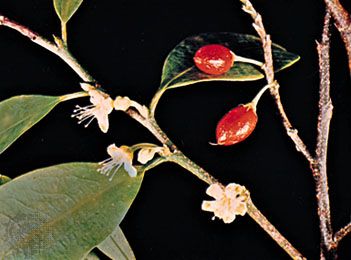
The coca plant (Erythroxylum coca) is a tropical shrub belonging to the family Erythroxylaceae that typically reaches a height of about 2.4 meters (8 feet).4
Its physical characteristics include:
- Branches and Leaves: The plant features straight branches and thin, opaque, oval-shaped leaves that taper at the ends. A distinctive feature of the leaf is an areolated portion defined by two longitudinal curved lines, one on each side of the midrib, which is most visible on the underside.4
- Flowers: The small flowers grow in clusters on short stalks. They consist of five yellowish-white petals, heart-shaped anthers, and a pistil formed by three carpels that create a three-chambered ovary.4
- Fruit: The flowers are followed by the development of red berries.4
The plant thrives in hot, damp environments like forest clearings, though the leaves preferred for harvest are often grown in drier, hilly areas. When mature, the leaves are brittle enough to break when bent.4
What are the main alkaloids found in coca leaves and their effects?
The primary alkaloid found in the leaves of the coca plant is cocaine, though the leaves contain several other alkaloids as well.15
Physiological Effects
Cocaine functions as both a potent stimulant and a local anesthetic by acting on the nervous system.4
- Stimulant Effects: By blocking the reuptake of neurotransmitters such as dopamine, norepinephrine, and serotonin, cocaine increases neural signaling. This results in heightened alertness, reduced fatigue, suppressed appetite, and feelings of euphoria.14
- Anesthetic Effects: It blocks voltage-gated sodium channels in peripheral nerves, preventing nerve impulses and causing localized numbness.4
Risks and Consequences
While traditional use involves chewing leaves to combat fatigue and hunger, the refined, concentrated form of the alkaloid is highly habit-forming. Prolonged or high-dose use leads to dysregulation of the brain’s reward pathways, causing depression, anxiety, insomnia, and paranoia. Severe abuse can trigger seizures and toxic psychosis, characterized by disturbing tactile hallucinations.14
Sources
- 9 Mind-Altering Plants - Coca ( Erythroxylum coca ) — Encyclopædia Britannica
- Cocoa bean — Encyclopædia Britannica
- cocoa - History of use — Encyclopædia Britannica
- coca — Encyclopædia Britannica
- cocaine — Encyclopædia Britannica
- Bolivia - Trade of Bolivia — Encyclopædia Britannica
- Andes Mountains - Agriculture and livestock — Encyclopædia Britannica
Published on · 4 min read