Cone Shell
There are approximately 500 species of cone shells, which are marine snails belonging to the genus Conus and the family Conidae. These predatory snails are…
How many species of cone shells exist, and which are the most common?
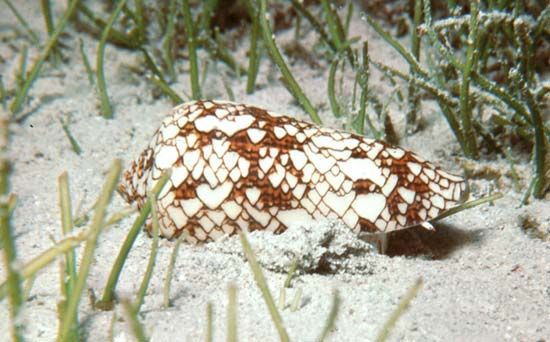
There are approximately 500 species of cone shells, which are marine snails belonging to the genus Conus and the family Conidae. These predatory snails are primarily found in the Indo-Pacific region, where they use a specialized dart to inject paralyzing toxins into their prey, which typically consists of worms, mollusks, or fish.1
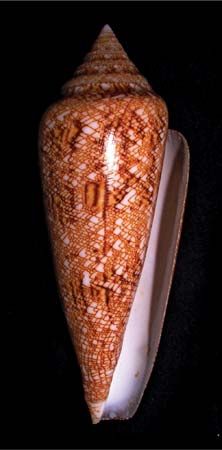
While the glory-of-the-seas cone (C. gloriamaris) was historically famous for its rarity and high value, the discovery of its habitat in 1969 led to the collection of hundreds of specimens, significantly reducing its rarity. The provided information does not specify which of the 500 species are considered the most common.1
How do scientists study and classify different species of cone shells?
Scientists study and classify cone shells through the broader field of marine biology, utilizing both historical and modern methodologies to understand these organisms.
Research and Classification Methods
- Morphological and Taxonomic Analysis: Researchers typically perform these studies on preserved specimens within museums and universities to categorize species based on their physical characteristics, such as shell shape and structure.1
- Field Collection: Historically, biologists used dredges, trawls, and hoop nets to capture specimens from the ocean floor. Today, direct observation in natural habitats is achieved through underwater cameras, diving equipment, and submersibles, which allow for the study of behavior and ecological roles.1
- Physiological and Embryological Studies: Investigations requiring living material are conducted at coastal biological stations, where specimens can be maintained in seawater using specialized circulating systems.1
- Toxin Research: Because cone shells produce complex toxins that target specific ion channels and cell surface receptors, neurobiologists study these substances to gain insights into the functioning of nervous systems in vertebratesous-system) in vertebrates.1
What are cone shells and where can they be found in the ocean?
Cone shells are predatory marine snails belonging to the genus Conus and the family Conidae, comprising approximately 500 distinct species. These organisms are characterized by their straight-sided shells, which feature a tapering body whorl, a low spire, and a narrow aperture.1
As predators, cone shells utilize a specialized dart to inject paralyzing toxins into their prey, which primarily consists of worms and mollusks, though some species also hunt fish. These toxins are highly effective, as they are designed to interfere with the nervous system by binding to specific ion channels and cell surface receptors.1
Regarding their habitat, most cone shell species are found throughout the Indo-Pacific region. They are often associated with sandy seafloors, such as those discovered near the Philippines and Indonesia, where they reside in their natural marine environments.1
What makes cone shells dangerous to humans?
Cone shells are dangerous to humans because they possess a specialized mechanism to inject a potent, paralyzing toxin using a dart-like structure. While these snails primarily use their venom to hunt prey such as worms, mollusks, and fish, some of the larger species are capable of delivering stings that can be fatal to humans.1
The danger lies in the composition of the venom, which is designed to interfere with a victim’s nervous system. These toxins function by binding to specific cell surface receptors and ion channels, which can lead to severe physiological effects. As a neurotoxic substance, the venom can cause nervous depression, potentially resulting in paralysis or the weakening and arrest of respiration and heartbeat.15
The severity of such an attack depends on factors like the potency of the venom, the location of the injury, and the age of the victim. Because of these risks, all cone snails are classified as venomous invertebrates.5
Sources
- cone shell — Encyclopædia Britannica
- conifer - Annotated classification — Encyclopædia Britannica
- Marine biology — Encyclopædia Britannica
- mollusk - Habitats, feeding habits, and associations — Encyclopædia Britannica
- Venom — Encyclopædia Britannica
Published on · 3 min read