Modiolopsis
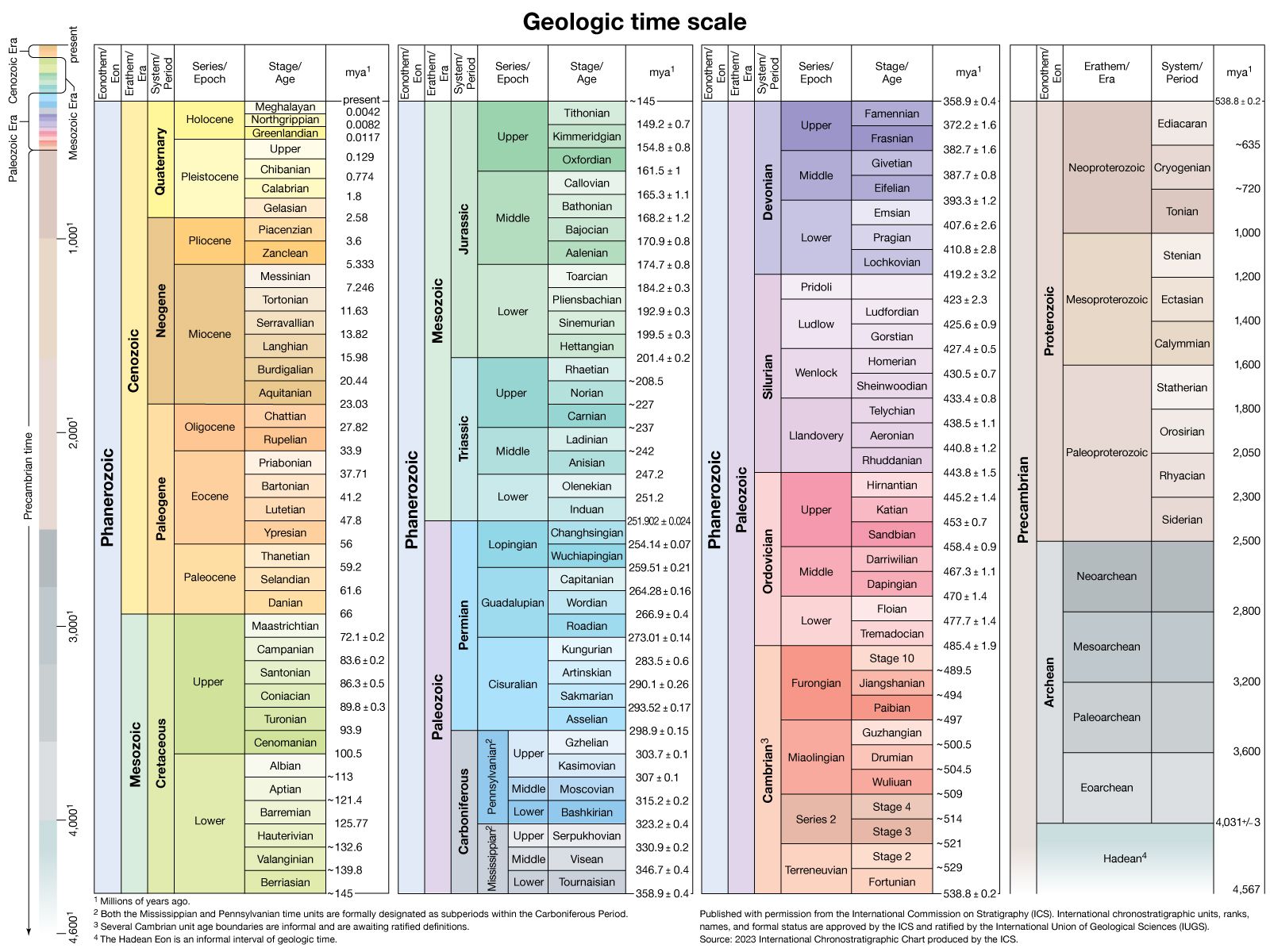
Modiolopsis is an extinct genus of pelecypods (clams) that lived during the Ordovician Period, approximately 488 million to 444 million years ago.
What is Modiolopsis?
Modiolopsis is an extinct genus of pelecypods (clams) that lived during the Ordovician Period, approximately 488 million to 444 million years ago.1
These organisms are characterized by an elliptical shell that is broader at the margins and marked by prominent, arcuate or concentric growth lines. Due to their distinct structure and presence in specific geological strata, they serve as a valuable guide fossil for identifying Ordovician rocks.1
What are guide fossils and why are they important?
A guide fossil, also known as an index fossil, is any plant or animal preserved in the rock record that is characteristic of a specific environment or span of geologic time.22
To be considered a useful guide fossil, an organism must meet several criteria:
- Distinctiveness: It must be easily recognizable.3
- Abundance: It should be found in large numbers.3
- Wide Distribution: It must have a broad geographic range.3
- Short Temporal Range: It should have existed for a relatively brief period, allowing for precise dating.3
These fossils are essential to geochronology because they serve as the primary basis for defining boundaries within the geologic time scale and for the correlation of rock strata across different regions. By matching the fossil content of separate rock outcrops, scientists can integrate sequences globally to construct a relative history of the Earth. While modern methods like radiometric dating provide numerical ages, biostratigraphy—the study of fossil distribution—remains a fundamental framework for historical geology.345
What characterizes the Ordovician period?
The Ordovician Period, spanning from approximately 485.4 to 443.8 million years ago, was a time of profound transformation in Earth’s plate tectonics, climate, and biological systems.6
Geological and Climatic Conditions
Rapid seafloor spreading led to some of the highest global sea levels in the Phanerozoic Eon, causing extensive flooding of the continents. Atmospheric carbon dioxide levels were significantly higher than today, fostering a warm, greenhouse climate. However, the period concluded with a brief, intense interval of glaciation in the Southern Hemisphere, likely triggered by the movement of the supercontinent Gondwana over the South Pole and a reduction in atmospheric carbon dioxide.768
Biological Evolution and Extinction
The period is defined by the “Ordovician radiation,” an intense diversification of marine life that saw the emergence of almost every modern phylum of marine invertebrate. Common life forms included brachiopods, bryozoans, trilobites, mollusks, echinoderms, and graptolites. Additionally, the first plants appeared on land. The period ended with the second-largest mass extinction in Earth’s history, which claimed roughly 85 percent of all species, driven by climatic shifts and falling sea levels.76910
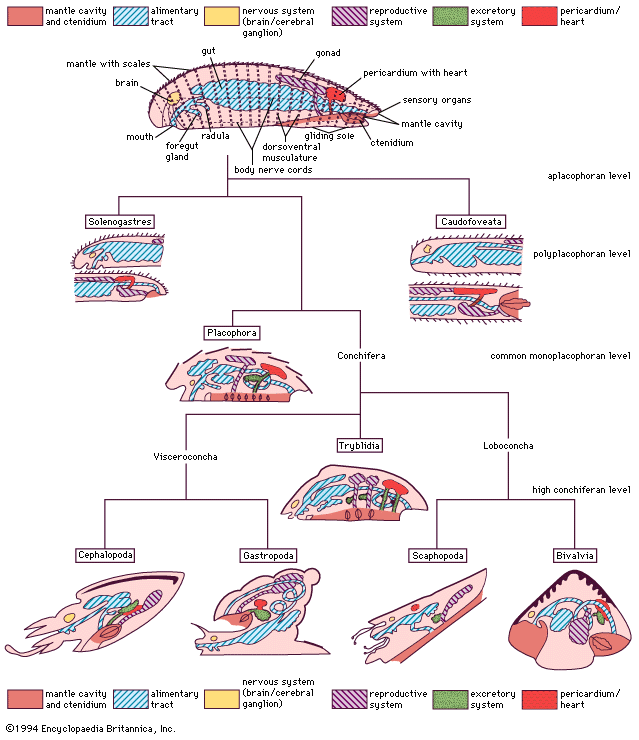
How do scientists classify extinct mollusks?
Scientists classify extinct mollusks primarily by analyzing their preserved hard body parts, as soft tissues are rarely available in the fossil record. Paleontologists rely on specific morphological features to distinguish between different groups and determine their evolutionary relationships.1112
Key Classification Criteria
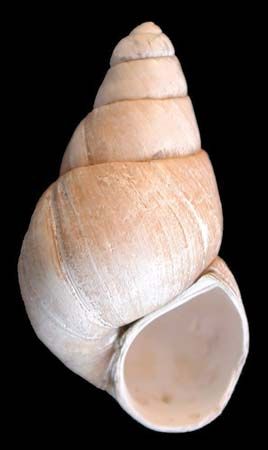
- Shell Morphology: For many extinct mollusks, classification is based on the general shape, type of coiling, and external sculpture of the shell.13
- Structural Details: In groups like bivalves, investigators examine the structure of the ligament, the arrangement of hinge teeth, and internal muscle scars that provide clues about the animal’s anatomy.11
- Sutures: For extinct cephalopods, such as ammonoids, the complex patterns of sutures—the lines where internal shell partitions meet the outer shell wall—are critical diagnostic features.13
- Microstructure and Mineralogy: The microscopic structure and mineral composition of the shell are often used to support broader taxonomic conclusions, helping to clarify the evolutionary history of groups that may have experienced parallel evolution.11
These methods allow scientists to organize extinct species into a taxonomic framework, which is essential for biostratigraphy and understanding the history of life on Earth.1114
Sources
- Modiolopsis — Encyclopædia Britannica
- index fossil — Encyclopædia Britannica
- guide fossil — Merriam-Webster
- geochronology — Encyclopædia Britannica
- Tertiary Period - Correlation of Tertiary strata — Encyclopædia Britannica
- A Journey Through Time Since the Precambrian - Ordovician Period: 485.4 million to 443.4 million years ago — Encyclopædia Britannica
- Ordovician Period - Invertebrates — Encyclopædia Britannica
- Ordovician Period — Encyclopædia Britannica
- Ordovician Period - Paleoclimate — Encyclopædia Britannica
- Silurian Period - Late Ordovician mass extinction — Encyclopædia Britannica
- bivalve - Classification — Encyclopædia Britannica
- list of mollusks — Encyclopædia Britannica
- cephalopod - Distinguishing taxonomic features — Encyclopædia Britannica
- bivalve - External features — Encyclopædia Britannica
- phylogeny - Evidence for specific phylogenies — Encyclopædia Britannica
Published on · 3 min read