Coneflower
Coneflower refers to any of three genera of weedy plants in the Asteraceae family, all native to North America. These plants are characterized by their…
What is Coneflower?
Coneflower refers to any of three genera of weedy plants in the Asteraceae family, all native to North America. These plants are characterized by their cone-shaped flower disks.12
The three genera include:
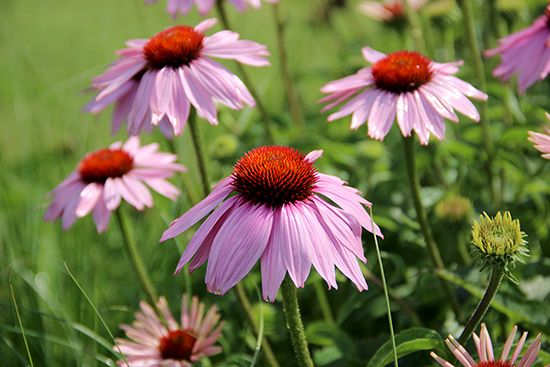
- Echinacea: Known as purple coneflowers, these perennials are often cultivated as border plants. Certain species, such as E. angustifolia and E. purpurea, are used in herbal remedies and dietary supplements for their purported immune-stimulating effects.13
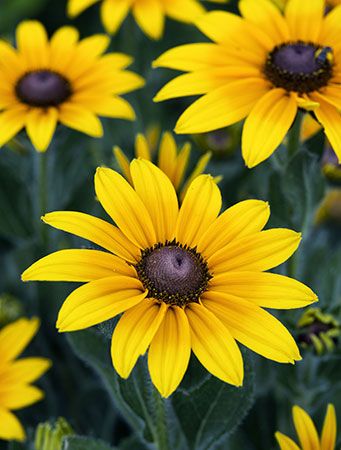
- Ratibida: These plants feature yellow ray flowers and brownish disk flowers. Varieties like the prairie coneflower are common in wildflower gardens.1
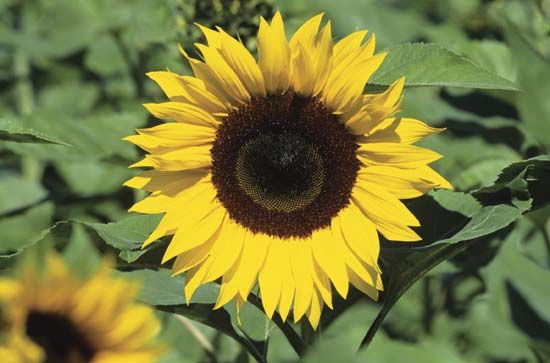
- Rudbeckia: This genus includes about 25 species, such as the Black-eyed Susan, which typically display yellow ray flowers and dark-colored disk flowers.1
The name Echinacea is derived from the Greek word for hedgehog, referencing the prickly appearance of the plant’s disk florets.3
What is the difference between Echinacea and Rudbeckia?
While both Echinacea and Rudbeckia are members of the Asteraceae family and are native to North America, they possess distinct botanical characteristics and uses.1
Key Differences
- Flower Color: Echinacea species are primarily known for their purple-flowered perennials. In contrast, Rudbeckia species typically feature yellow ray flowers paired with brown or black disk flowers.1
- Plant Morphology: Echinacea plants are characterized by hairy stems, strong-smelling black roots, and basal leaves on long leafstalks. Rudbeckia species, which include about 25 annual, biennial, and perennial varieties, have simple or segmented leaves.1
- Historical Classification: The genus Echinacea was originally classified by Linnaeus as Rudbeckia purpurea before being established as a separate genus by German botanist Conrad Moench in 1794.3
- Usage: Echinacea is widely recognized for its use in herbal remedies and dietary supplements, often cited for its potential immune-stimulating effects. Rudbeckia species, such as the Black-eyed Susan, are primarily cultivated as ornamental border plants.31
How do coneflowers attract pollinators like bees and butterflies?
Coneflowers, which belong to the Asteraceae family, attract pollinators like bees and butterflies through a combination of visual signals and accessible rewards.
Attraction Mechanisms
- Visual Signaling: Coneflowers utilize bright colors and intricate patterns to capture the attention of insects. Many flowers in the Asteraceae family feature nectar guides—darkly colored patterns near the center of the flower—that orient pollinators toward the proper location for feeding and pollination.45
- Floral Structure: These plants provide a landing platform, which is a key characteristic of bee-pollinated flowers. The structure of the flower head is well-adapted to facilitate visits from diverse insect species.4
- Accessible Rewards: The individual flowers of most Asteraceae species are relatively small, making the nectar within the corolla tube readily available to a wide variety of insect visitors without requiring specialized mouthparts.6
- Secondary Pollination: These plants employ a system known as plunger pollination. As the style elongates, it pushes pollen out on specialized hairs, presenting it to pollinators. This ensures that pollen is easily picked up by insects as they forage on the flower head.6
What are the common medicinal claims about Echinacea?
Echinacea, which refers to the dried rhizomes, roots, or other parts of specific purple coneflowers, is primarily utilized in dietary supplements and herbal remedies.3
The most common medicinal claim associated with these plants is that they possess a stimulating effect on the immune system.3
Sources
- Coneflower — Encyclopædia Britannica
- coneflower — Merriam-Webster
- echinacea — Merriam-Webster
- Major types of pollinators - Bees — Encyclopædia Britannica
- coloration - Interspecific signals — Encyclopædia Britannica
- Asteraceae - Pollination — Encyclopædia Britannica
- Botanical Sex: 9 Alluring Adaptations — Encyclopædia Britannica
Published on · 2 min read