Cornales
Sorry, the Britannica knowledge base does not contain information regarding specific threatened or endangered species within the Cornales order.
Are there any threatened or endangered species within the Cornales order?
Sorry, the Britannica knowledge base does not contain information regarding specific threatened or endangered species within the Cornales order.
The order comprises six families—Cornaceae, Hydrangeaceae, Loasaceae, Curtisiaceae, Grubbiaceae, and Hydrostachyaceae—which include over 590 species of flowering plants. While the provided text details the botanical characteristics, distribution, and economic uses of these families, it does not address their conservation status.
What are the main families included in the Cornales order?
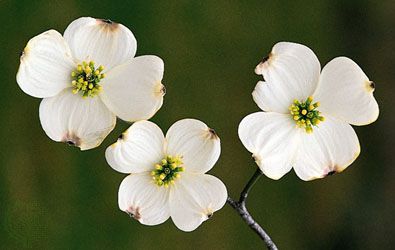
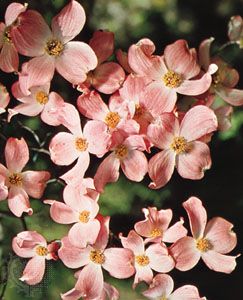
The order Cornales consists of six families of flowering plants, comprising more than 590 species. These plants are primarily woody, characterized by flower parts in multiples of four, unjoined petals, and inferior ovaries.1
The six families included in the order are:
- Cornaceae: The largest family in the order, known as the dogwood family. It includes two genera, Cornus and Alangium.1
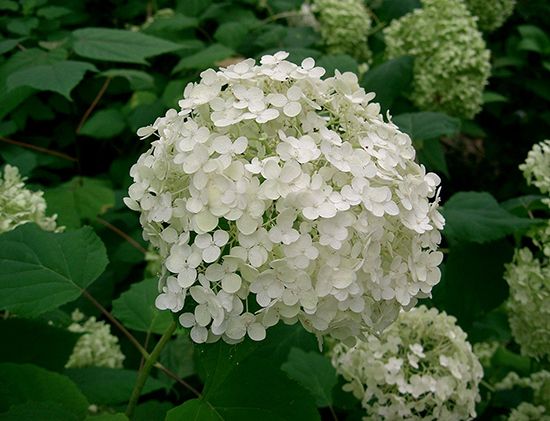
- Hydrangeaceae: The hydrangea family, which includes 17 to 19 genera (such as Hydrangea, Philadelphus, and Deutzia) and is widely recognized for its ornamental shrubs and vines.12
- Loasaceae: Known as the stickleaf family, this group contains 14 genera, including Loasa, Caiophora, and Mentzelia, often featuring stinging hairs.1
- Hydrostachyaceae: A family consisting of a single genus (Hydrostachys) of aquatic herbs native to Africa and Madagascar.1
- Grubbiaceae: A small family represented by the single genus Grubbia, which consists of heathlike shrubs found in South Africa.1
- Curtisiaceae: A family containing only one genus and one species, Curtisia, a South African tree valued for its timber.1
What is the evolutionary history of the Cornales order?
The evolutionary history of the Cornales order places it as the basalmost lineage within the core asterid clade of flowering plants, according to the Angiosperm Phylogeny Group III (APG III) classification system.4
As part of the core eudicots, Cornales shares a common ancestor with other asterid orders. While many core eudicots exhibit a highly stereotyped floral structure—typically featuring five sepals, five petals, and specific whorls of stamens and carpels—Cornales retains distinct characteristics that reflect its position at the base of this lineage. For instance, while many asterids are characterized by fused petals forming a corolla tube, members of the Cornales order generally possess unjoined petals.41
The order is considered a monophyletic group, meaning all its members descend from a single common ancestor. Its evolutionary development is marked by the transition toward the specialized floral morphologies seen in more derived asterid groups, though Cornales maintains its own unique evolutionary trajectory within the broader angiosperm lineage.41
Where are Cornales plants typically found in nature?
Plants in the Cornales order are found in diverse environments across the globe, though their distribution varies significantly by family:
- Cornaceae: The dogwood family is notably found in North America and East Asia, where its woody species are common.1
- Hydrangeaceae: Members of this family are primarily located in warmer temperate zones, though some species extend into tropical regions.16
- Loasaceae: This family is predominantly found in North America, but it also has a presence in South America, Africa, and the Marquesas Islands.1
- Hydrostachyaceae: These aquatic herbs are native to central and southern Africa and Madagascar.1
- Grubbiaceae and Curtisiaceae: Both of these small families are restricted to southern South Africa, where they exist as heathlike shrubs or trees.1
Sources
- Cornales — Encyclopædia Britannica
- Hydrangeaceae — Encyclopædia Britannica
- Cornaceae — Merriam-Webster
- Asterales — Encyclopædia Britannica
- angiosperm - Eudicots — Encyclopædia Britannica
- Laurales - Distribution and abundance — Encyclopædia Britannica
- Hydrangeaceae — Merriam-Webster
Published on · 3 min read