Crater
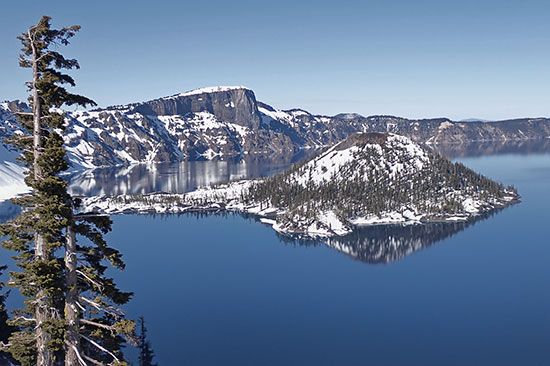
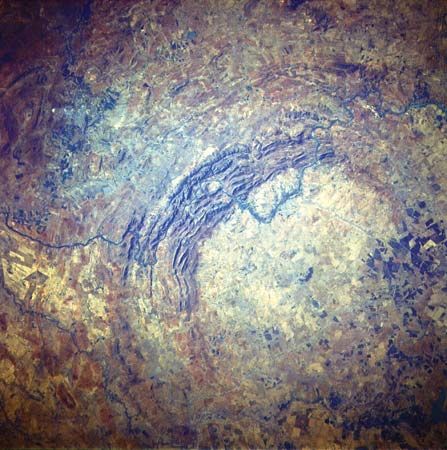
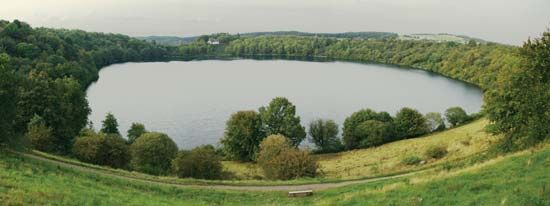
A crater is a circular depression found on the surface of a planetary body. These features are primarily formed through two distinct processes:
What is Crater?
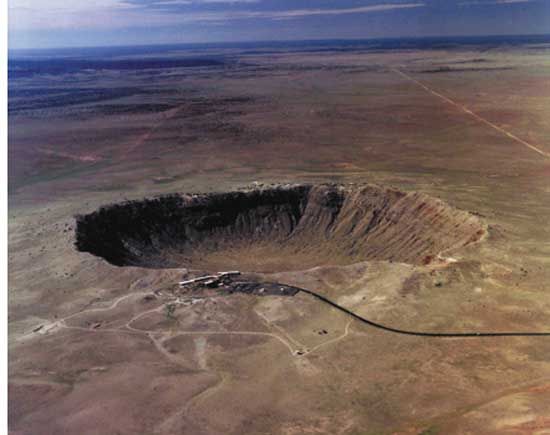
A crater is a circular depression found on the surface of a planetary body. These features are primarily formed through two distinct processes:1
- Impacts: Most craters are created by the impact of meteorites. When a large object strikes a surface at high velocity, it releases massive amounts of kinetic energy, often vaporizing the impactor and creating a bowl-shaped cavity. These are common on bodies like the Moon and Mars.231
- Volcanic Activity: Craters can also result from volcanic explosions. While the terms “crater” and “caldera” are sometimes used interchangeably, calderas are specifically large volcanic depressions (typically over 1 km in diameter) formed by the inward collapse of land following the expulsion of magma.145
On Earth, impact craters are less common than on other celestial bodies because erosion and the atmosphere often obscure or destroy them over time.1
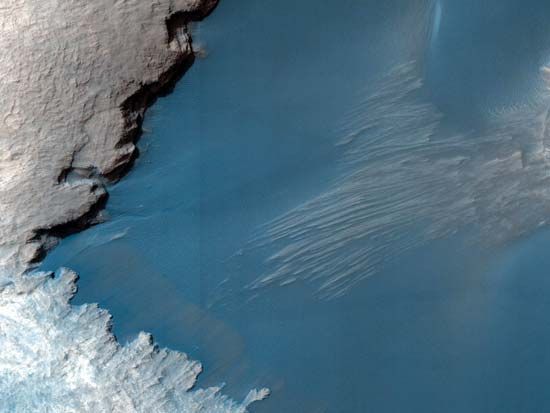
What is the difference between a simple crater and a complex crater?
The primary difference between a simple crater and a complex crater lies in their size and the geological processes that occur after the initial impact excavation.2
Simple Craters
A simple crater is a relatively small, bowl-shaped depression. Its formation is straightforward: the impact creates a parabolic cavity, and the process ends once the excavation phase is complete. These craters typically have a diameter about four times their depth, and their rims are slightly elevated above the surrounding terrain due to the accumulation of ejected material.2
Complex Craters
As impact craters increase in size, the initial parabolic hole becomes too large to remain stable, leading to a “modification stage” where the structure collapses. This collapse results in a complex crater, which features more intricate internal structures:2
- Flat Floors: Smaller complex craters often have flat floors caused by the rebound of material from beneath the crater after the initial excavation.2
- Central Peaks and Rings: Larger complex craters may feature a central peak, while even larger ones can develop a raised circular ring within the crater.2
- Faulting: The modification stage often involves downward faulting, creating terraces of large material blocks along the inner rim. Very large structures with “megaterraces” are classified as impact basins.2
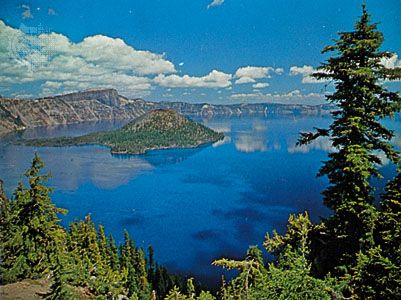
Why are there more visible craters on the Moon than on Earth?
The Moon appears significantly more “pockmarked” with craters than Earth primarily because the Moon is geologically quiet and lacks an atmosphere, whereas Earth is a highly active planet that constantly reshapes its surface.9
While both bodies have experienced similar numbers of large impact events throughout their history, the following factors explain why Earth’s craters are far less visible:
- Erosion: On Earth, erosion caused by wind, rain, and water is the dominant force that destroys or obscures craters over time. These processes do not exist on the airless Moon.89
- Geologic Activity: Earth’s surface is continuously altered by plate tectonics and volcanism. These internal processes can bury, shift, or completely eliminate ancient impact structures.89
- Biological Activity: Over time, vegetation and other biological processes can overgrow and hide impact sites on Earth, a factor absent on the Moon.9
In contrast, the Moon’s lack of weather and tectonic activity allows craters to remain preserved for billions of years, providing a clear record of the solar system’s history.89
How do scientists distinguish between a volcanic crater and an impact crater?
Scientists distinguish between volcanic and impact craters by examining their geological features, formation processes, and the presence of specific shock-induced evidence.
Impact Craters
Impact craters are formed by hypervelocity collisions with asteroids or comets, which release massive amounts of kinetic energy, often vaporizing the impactor upon contact. Key identifiers include:2
- Shock Structures: The most definitive evidence is the presence of shatter cones, which are conically shaped, radiating fractures in the bedrock caused by the intense, sudden pressure of an impact.13
- Deformation: Impact sites often contain fused silica glass and crushed, deformed bedrocksilica](https://www.britannica.com/science/silica) glass and crushed, deformed bedrock.14
- Geometry: These craters typically form parabolic bowls (simple craters) or complex structures with central peaks, rings, and terraced inner rims caused by material rebounding and collapsing after the initial excavation.2
- Ejecta: They are surrounded by an ejecta blanket of excavated material.2
Volcanic Craters
Volcanic craters, such as calderas, are formed by internal geological processes rather than external collisions.7
- Formation: They typically result from the collapse of a volcanic cone following the rapid withdrawal of magma from an underlying reservoir.7
- Structural Context: Volcanic depressions often show evidence of associated volcanic activity, such as nearby lava flows, smaller secondary cones on the floor, or hydrothermal features like fumaroles13.7
- Tectonic Influence: Some volcanic depressions, known as volcano-tectonic depressions, have irregular or angular outlines governed by existing crustal faults and joints rather than the circular symmetry typical of impacts.7
Sources
- Crater — Encyclopædia Britannica
- Meteorite crater - The impact-cratering process — Encyclopædia Britannica
- Moon - Effects of impacts and volcanism — Encyclopædia Britannica
- Meteor and meteoroid - Meteorites —meteoroids that survive atmospheric entry — Encyclopædia Britannica
- volcano - Calderas — Encyclopædia Britannica
- Did you know? — Merriam-Webster
- caldera — Encyclopædia Britannica
- 8 Questions About the Moon Answered — Encyclopædia Britannica
- Meteorite crater - Meteorite craters as measures of geologic activity — Encyclopædia Britannica
- Meteorite crater - Variations in craters across the solar system — Encyclopædia Britannica
- Meteor and meteoroid - Reservoirs of meteoroids in space — Encyclopædia Britannica
- Meteorite — Encyclopædia Britannica
- volcano - Other volcanic structures and features — Encyclopædia Britannica
- impact structure — Encyclopædia Britannica
Published on · 4 min read