Maar
A maar is a small, generally circular volcanic crater created by a low-temperature volcanic explosion. Unlike many other volcanic features, a maar is not…
What is maar?
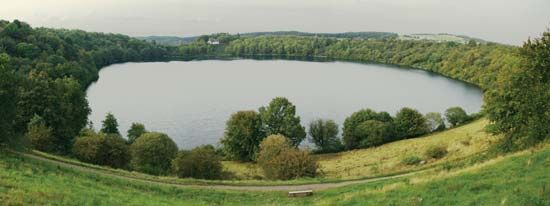
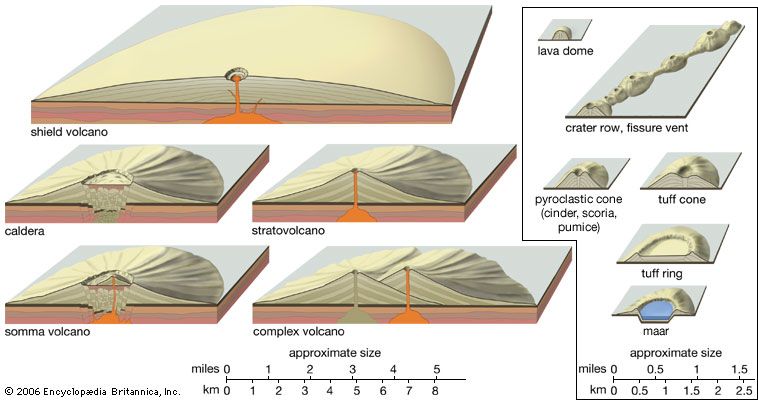
A maar is a small, generally circular volcanic crater created by a low-temperature volcanic explosion. Unlike many other volcanic features, a maar is not associated with a volcanic cone; instead, it forms in areas of low relief where the rim of ejected fragmental material is often very low and inconspicuous.12
These craters are frequently found in flat-lying, nonvolcanic rock formations and often contain a lake, pond, or marsh. The most well-known examples are located in the Eifel region of Germany, where many of these craters hold picturesque lakes.12
How does groundwater interact with magma to create a maar?
A maar is formed by a low-temperature volcanic explosion, but the provided search results do not contain specific details regarding the interaction between groundwater and magma in this process. While we know that magma is molten rock that rises toward the Earth’s surface due to heat and pressure, the exact mechanism involving groundwater in the creation of a maar is not addressed in the available documentation.
We could dive deeper into the general processes of volcanic eruptions or the geological characteristics of craters if you would like to explore those topics further.
What is the difference between a maar and a caldera?
While both maars and calderas are volcanic depressions that can contain lakes, they differ significantly in their formation, size, and structure.
Maar
A maar is a relatively small, circular crater produced by a low-temperature volcanic explosion. They typically form in areas of low relief and are not associated with a volcanic cone. The rim of ejected material surrounding a maar is generally very low and inconspicuous.14
Caldera
A caldera is a much larger, bowl-shaped depression, typically exceeding one kilometer in diameter. Unlike maars, calderas generally form through the inward collapse of a volcanic cone or landform following the rapid evacuation of an underlying magma reservoir4. They are often rimmed by steep, inward-facing scarps. While a crater can exist within a caldera, a caldera cannot form within a maar.56
Feature
Maar
Caldera
Formation
Explosive blast
Structural collapse
Size
Small
Large (>1 km)
Associated Landform
None (no cone)
Volcanic cone or mountain
Why do many maars eventually become lakes?
Maars often become lakes because they are formed as deep, circular craters blasted into the ground by low-temperature volcanic explosions. Because these craters are excavated into the surrounding landscape, they frequently create natural depressions that can collect and hold water from precipitation or groundwater seepage.127
These formations, which are sometimes referred to as explosion craters, are particularly common in areas of flat-lying, nonvolcanic rock. Once the explosive activity ceases, the resulting basin serves as a catchment area, allowing water to accumulate and form the characteristic lakes or marshes often associated with these sites, such as those found in the Eifel region of Germany.172
Sources
- maar — Merriam-Webster
- maar — Encyclopædia Britannica
- What Causes a Volcano to Erupt? — Encyclopædia Britannica
- caldera — Encyclopædia Britannica
- Did you know? — Merriam-Webster
- volcano - Calderas — Encyclopædia Britannica
- lake - Basins formed by tectonism , volcanism, and landslides — Encyclopædia Britannica
Published on · 2 min read