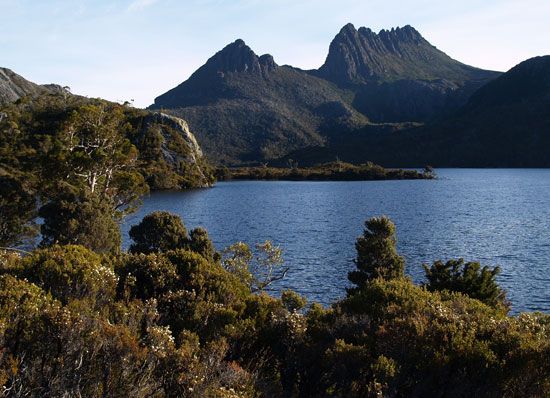
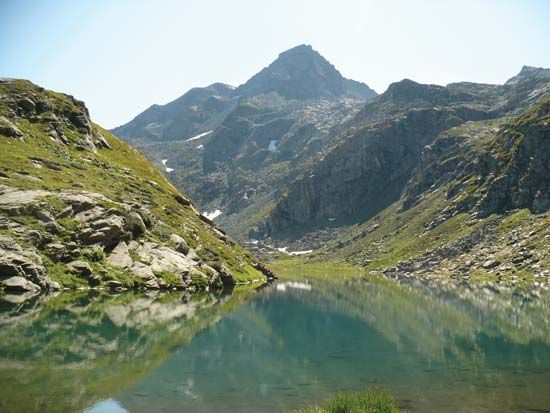
Crazy Mountains
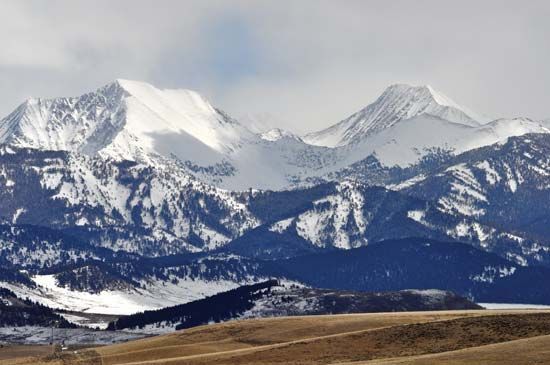
The Crazy Mountains (often referred to as "the Crazies") are a mountain range located in south-central Montana, forming a segment of the northern Rocky…
What is Crazy Mountains?
The Crazy Mountains (often referred to as “the Crazies”) are a mountain range located in south-central Montana, forming a segment of the northern Rocky Mountains.12
Spanning 30 miles between the Musselshell and Yellowstone rivers, the range is defined by its steep slopes and notably jagged summits. The area features over 30 peaks reaching elevations between 10,000 and 11,000 feet, with the highest point being Crazy Peak at 11,230 feet (3,423 meters). The landscape also encompasses approximately 56 alpine lakes and is situated within a portion of the Gallatin National Forest.12
How do alpine lakes form in mountain ranges?
Alpine lakes are primarily formed through the mechanical action of glaciers, which have been the most significant force in shaping lake basins in mountainous regions.4
The formation process typically occurs in the following ways:
- Glacial Scouring: As glaciers move through mountain valleys, they deepen and excavate the ground, creating large, often deep, basins. A specific type of circular basin, known as a cirque, is formed at the head of a glaciated valley through the freezing and thawing of névé.45
- Moraine Damming: When glaciers retreat at the end of a glacial period, they leave behind moraines—deposits of waste material such as rock and sediment. These deposits can act as natural dams, blocking valleys and confining water to create a lake.45
- Tectonic and Volcanic Activity: While glaciation is the most common cause, some mountain lakes form due to tectonism, such as faulting that creates depressions or grabens7. Additionally, volcanic activity can create basins through the formation of calderas or by lava flows that interrupt existing drainage patterns.6
What are the characteristics of the Rocky Mountains?
The Rocky Mountains form a massive cordilleran system stretching approximately 3,000 miles from northern Alberta and British Columbia down to New Mexico. This vast range, which can reach widths of 300 miles, serves as a major geographic backbone for North America.9
Physiography and Geology
The Rockies are composed of at least 100 separate ranges, categorized into four primary groups:
- Canadian and Northern Rockies: Characterized by thick sheets of Paleozoic limestone thrust eastward during the Laramide Orogeny.910
- Middle Rockies: Defined by compressional folding and high-angle faulting, featuring sharp ridge lines and deep, transverse canyons created by superposed streams.10
- Southern Rockies: The highest section of the range, with many peaks exceeding 14,000 feet, including Mount Elbert.10
- Colorado Plateau: A high-elevation region known for its “stairstep” plateaus, deep canyons, and unique cliff-and-bench topography.10
Key Characteristics
- Elevation and Relief: Many peaks exceed 13,000 feet, with vertical relief between bases and summits typically ranging from 5,000 to 7,000 feet.9
- Climate: The range acts as a significant atmospheric barrier, forcing moist air upward to create precipitation on windward slopes while leaving lee slopes arid. Climate zones range from cool temperate at lower elevations to alpine tundra at higher altitudes.1112
- Natural Features: The landscape is marked by spectacular scenery shaped by past glaciation and volcanic activity, alongside significant mineral wealth.910
Why are the Crazy Mountains considered an outlier of the Rockies?
The Crazy Mountains are considered an outlier because they are a distinct, isolated mountain segment located in south-central Montana that stands apart from the main, continuous chains of the northern Rocky Mountains.
While they are geologically associated with the Rockies, their physical separation—stretching 30 miles between the Musselshell and Yellowstone rivers—creates a distinct, island-like appearance on the landscape. The range is noted for its dramatic, rugged topography, featuring extremely jagged summits and steep slopes that rise sharply from the surrounding plains, with over 30 peaks reaching elevations between 10,000 and 11,000 feet.1
Sources
- Crazy Mountains — Encyclopædia Britannica
- Crazy Mountains — Merriam-Webster
- Montana - Plant and animal life — Encyclopædia Britannica
- lake - Basins formed by glaciation — Encyclopædia Britannica
- Quaternary - Landforms — Encyclopædia Britannica
- Alpine lakes — Encyclopædia Britannica
- lake - Basins formed by tectonism , volcanism, and landslides — Encyclopædia Britannica
- lake - Basins formed by wind action , animal activity, and meteorites — Encyclopædia Britannica
- Rocky Mountains — Encyclopædia Britannica
- Colorado - Plant and animal life — Encyclopædia Britannica
- Atmosphere - Mountain barriers — Encyclopædia Britannica
- Rocky Mountains - Physiography — Encyclopædia Britannica
- Rocky Mountains - Climate — Encyclopædia Britannica
Published on · 3 min read